Fully Automated Detection of Structural Heart Disease from Apple Watch ECGs Using a Noise-Adapted AI Algorithm: The WATCH-SHD Study
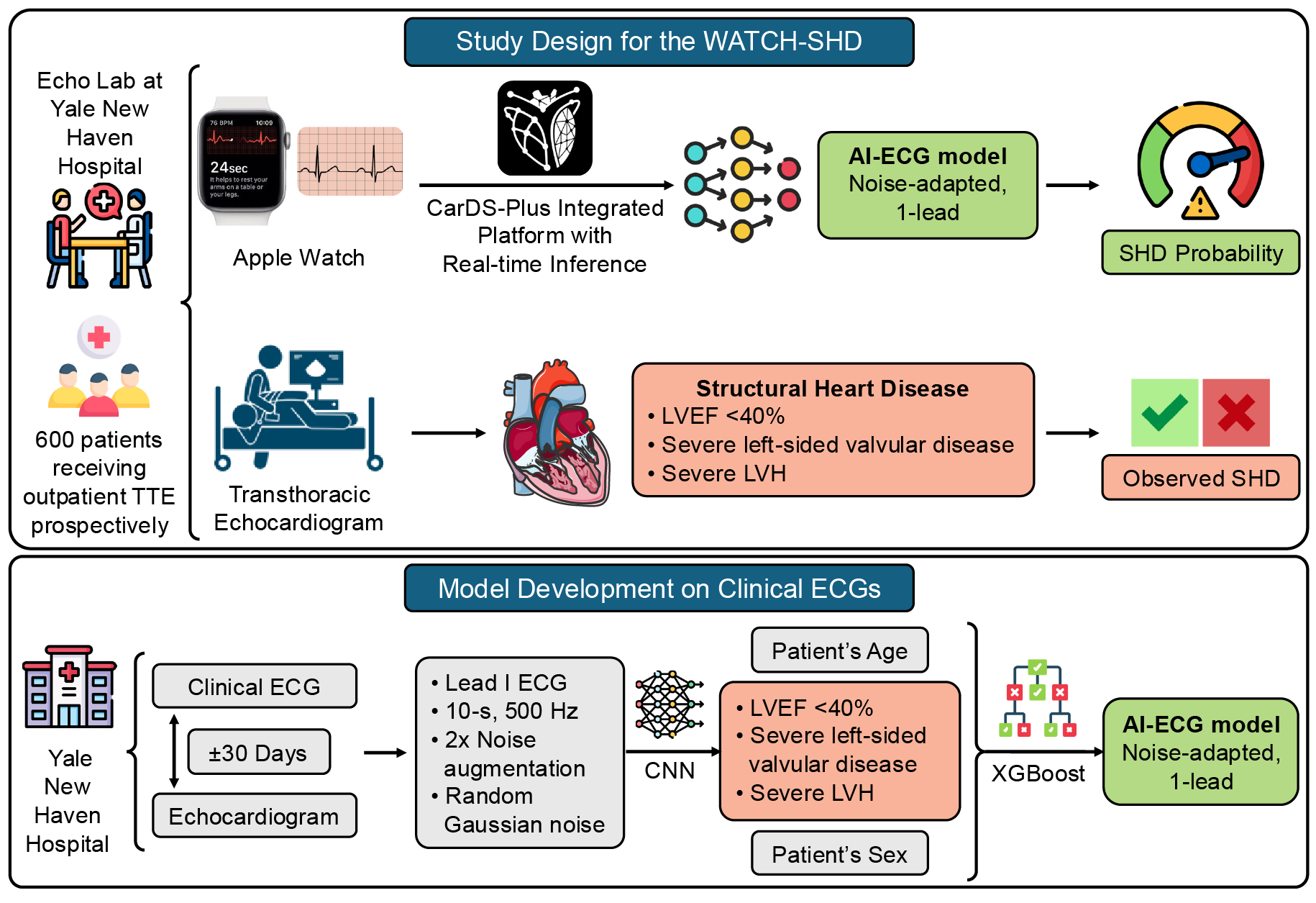
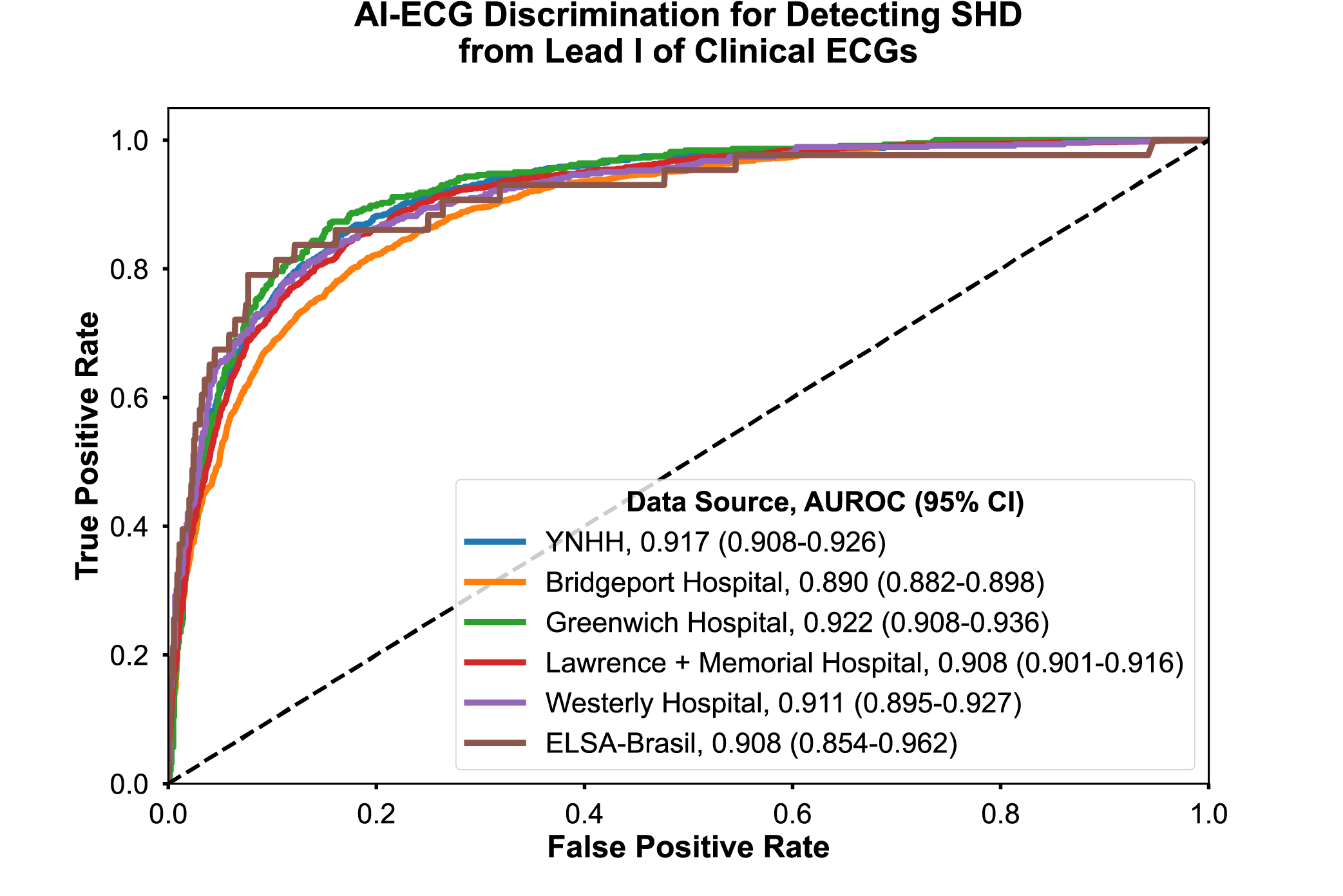
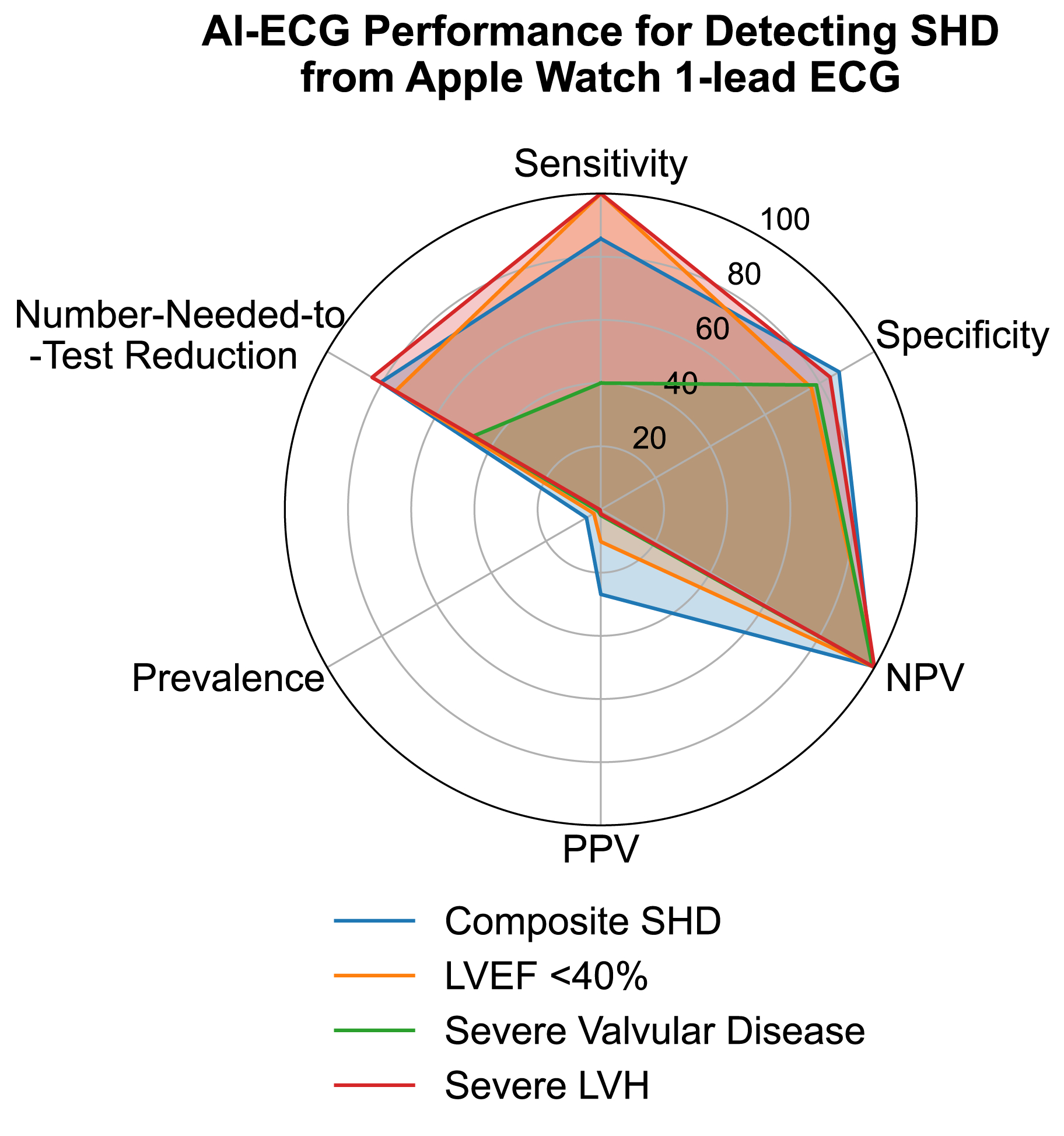
Abstract Body (Do not enter title and authors here): Background: Wearable devices can capture 1-lead ECGs but are primarily used for detecting rhythm disorders. AI deployed on these ECGs could enable scalable detection of structural heart diseases (SHDs). However, wearable ECGs are noisier than clinical ECGs, and it is essential to develop and validate noise-resilient models that reliably detect SHD on real-world wearable devices. Aim: We first developed and externally validated a noise-adapted AI-ECG model to detect SHD from lead I of clinical ECGs. In the prospective WATCH-SHD study, we then assessed its performance in detecting SHD from an Apple Watch-acquired 1-lead ECG. Methods: Using 266,054 ECGs from 110,006 patients at Yale (2015–23), we developed an AI-ECG algorithm to detect SHD from lead I ECGs (resembling Apple Watch 1-lead ECGs) paired with echocardiograms within 30 days. SHD was defined as a composite of LVEF <40%, severe left-sided valvular disease, or severe LVH (IVSd >15 mm + LV diastolic dysfunction). ECGs were augmented with random Gaussian noise during training to improve the model’s robustness against noisy signal acquisition. The model was then externally validated in 44,591 patients across 4 community hospitals and 3,014 participants from the population-based ELSA-Brasil. Subsequently, we prospectively enrolled 600 participants undergoing an outpatient echocardiogram at Yale and obtained a 30-s, 1-lead ECG with an Apple Watch to assess the AI tool’s performance in detecting SHD. ECG acquisition and inference were conducted in real-time using the CarDS-Plus app. Results: The AI model had an AUROC of 0.92 (95% CI, 0.91-0.93) for detecting SHD from lead I of clinical ECGs in the Yale test set and generalized well to the external cohorts, with AUROCs ranging from 0.89 to 0.92. In the prospective WATCH-SHD, 596 of 600 participants (99.3%; median age 62 years [IQR, 46–71]; 52% women) successfully obtained a 1-lead ECG on the Apple Watch, of whom 21 (5.3%) had SHD. This included 15 with LVEF <40%, 5 with severe valvular disease, and 1 with severe LVH. The AI model had an AUROC of 0.88 (0.78–0.98) for detecting SHD from Apple Watch-acquired 1-lead ECG. At the threshold for optimizing Youden’s index, the model’s sensitivity was 86%, specificity 87%, NPV 99%, and PPV 27% for detecting SHD. Conclusions: A noise-adapted AI tool integrated with an automated platform can detect SHD from a 30-s, 1-lead ECG acquired with an Apple Watch. This has the potential to transform SHD screening in communities.
Aminorroaya, Arya
(
Yale School Of Medicine
, New Haven , Connecticut , United States )
Vasisht Shankar, Sumukh
(
Yale University
, New Haven , Connecticut , United States )
Khan, Mariam
(
Yale University
, Hamden , Connecticut , United States )
Carter, Madeleine
(
Yale School Of Medicine
, New Haven , Connecticut , United States )
Dhingra, Lovedeep
(
Yale School Of Medicine
, New Haven , Connecticut , United States )
Khunte, Akshay
(
Yale University
, New Haven , Connecticut , United States )
Lombo, Bernardo
(
YALE UNIVERSITY
, New Haven , Connecticut , United States )
Mcnamara, Robert
(
YALE UNIVERSITY
, New Haven , Connecticut , United States )
Oikonomou, Evangelos
(
Yale School of Medicine
, New Haven , Connecticut , United States )
Pedroso, Aline
(
Yale School of Medicine
, New Haven , Connecticut , United States )
Khera, Rohan
(
Yale School of Medicine
, New Haven , Connecticut , United States )
Author Disclosures:
Arya Aminorroaya:DO NOT have relevant financial relationships
| Aline Pedroso:DO NOT have relevant financial relationships
| Rohan Khera:DO have relevant financial relationships
;
Research Funding (PI or named investigator):Bristol-Myers Squibb:Active (exists now)
; Research Funding (PI or named investigator):NovoNordisk:Active (exists now)
; Research Funding (PI or named investigator):BridgeBio:Active (exists now)
| Sumukh Vasisht Shankar:No Answer
| Mariam Khan:DO NOT have relevant financial relationships
| Madeleine Carter:DO NOT have relevant financial relationships
| Lovedeep Dhingra:DO NOT have relevant financial relationships
| Akshay Khunte:DO NOT have relevant financial relationships
| Bernardo Lombo:No Answer
| Robert McNamara:DO NOT have relevant financial relationships
| Evangelos Oikonomou:DO have relevant financial relationships
;
Consultant:Caristo Diagnostics, Ltd:Past (completed)
; Consultant:Ensight-AI, Inc:Active (exists now)
; Ownership Interest:Evidence2Health, LLC:Active (exists now)