Association between Dementia Caregiving and Psychological Health, Physical Activity, and Heart Rate Variability: Women and Caregivers Study
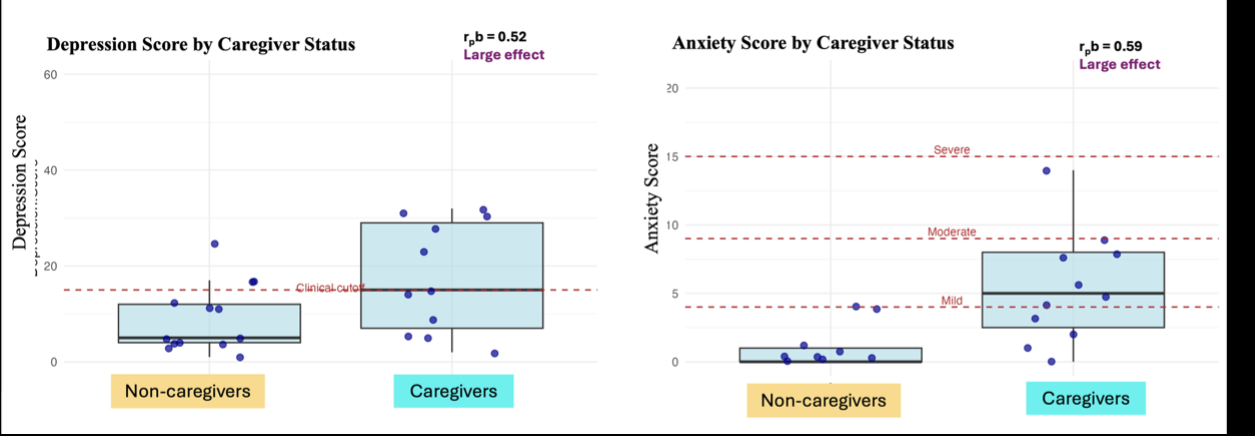
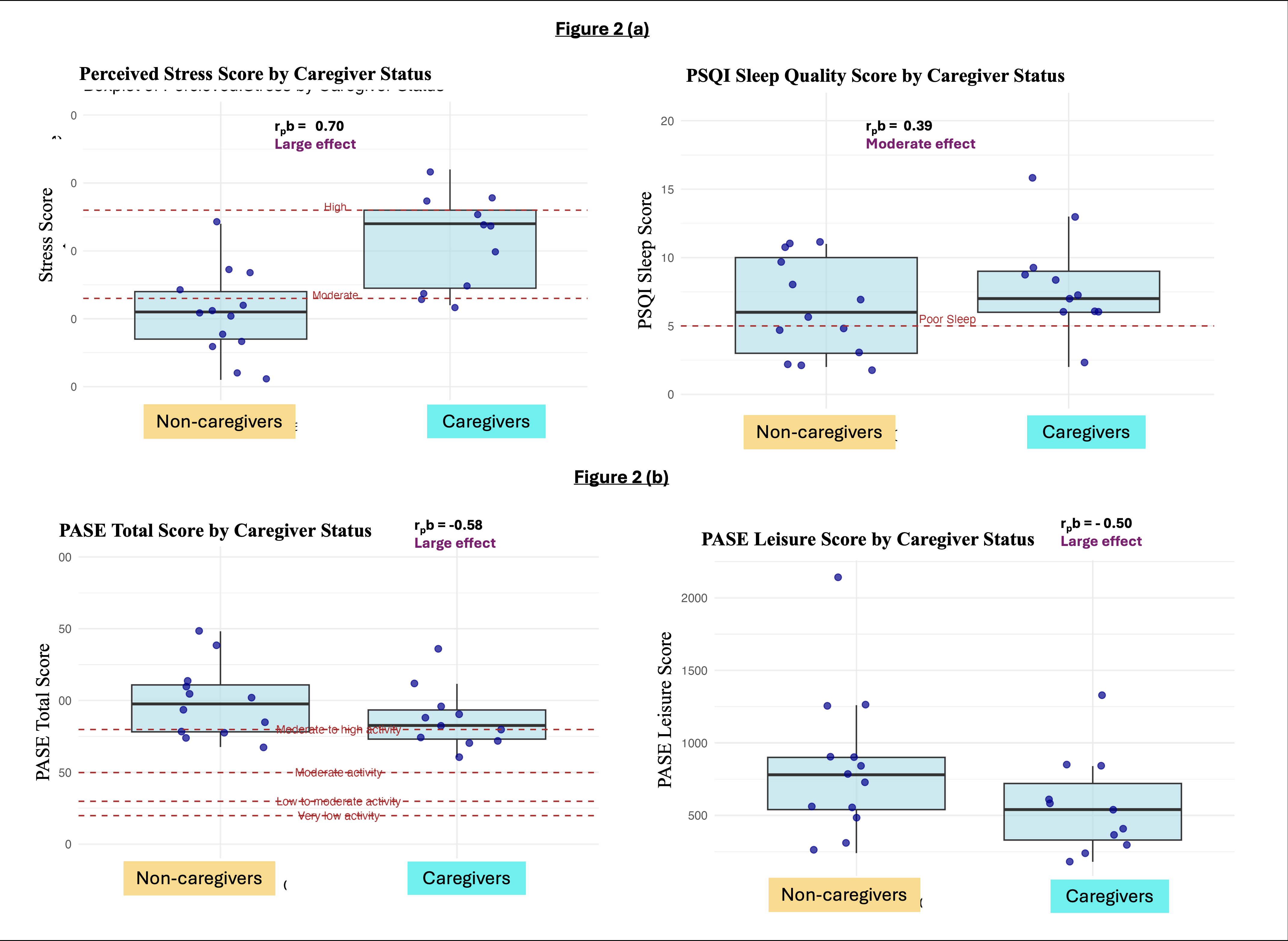
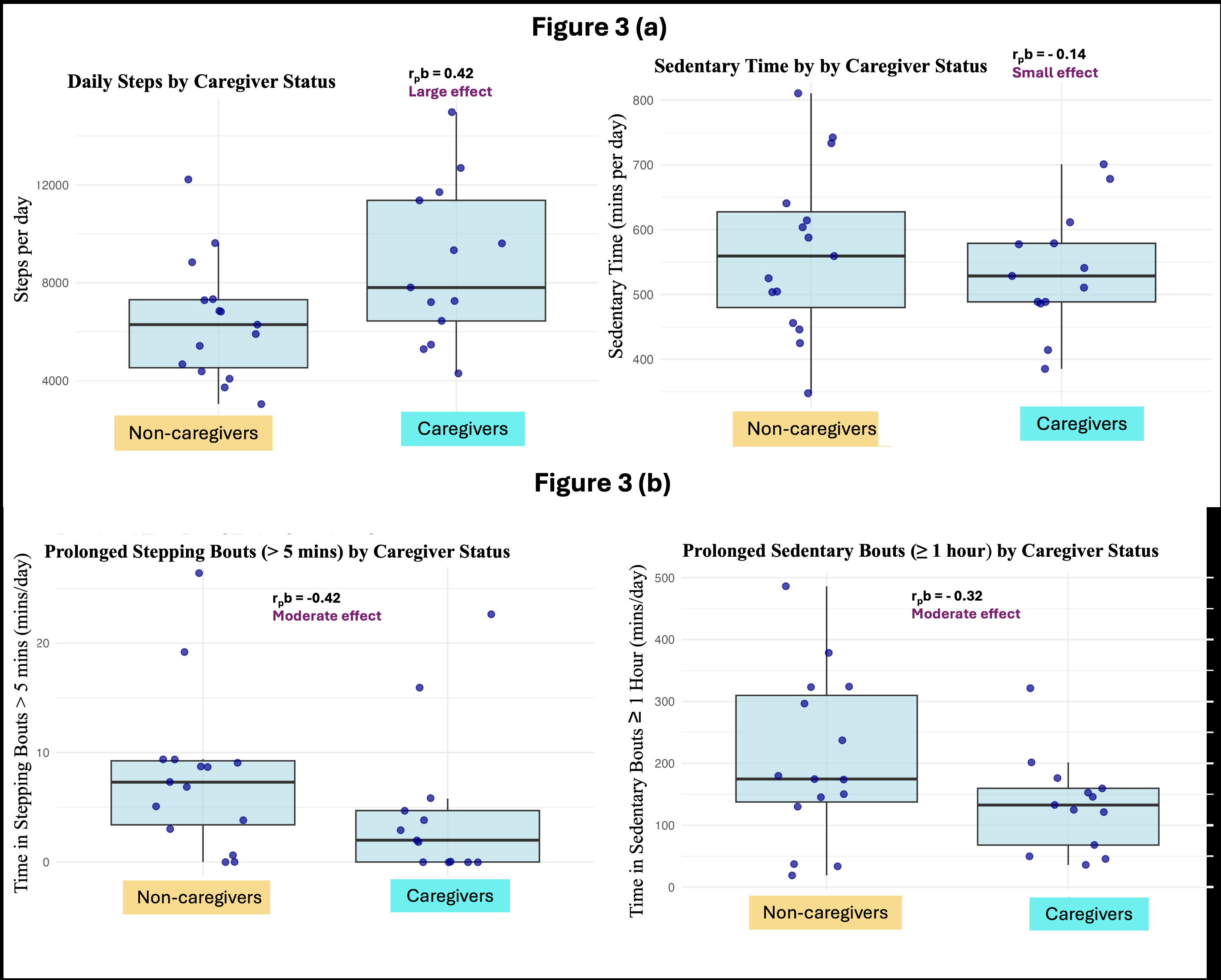
Abstract Body: Dementia caregiving is a prolonged and demanding role that poses significant psychological and physiological health risks. Despite known stress-related consequences, few studies have employed objective wearable measures to capture real-time behavioral and autonomic markers of health in this population. This study compared physical activity, sedentary behavior, heart rate variability (HRV), and psychological and cardiovascular health between older women dementia caregivers and age-matched women non-caregivers. Methods: In a cross-sectional design, 31 women aged 50+ (15 caregivers, 16 non-caregivers) wore a wrist-based EmbracePlus and thigh-worn ActivPal for 8 days. They completed surveys on depression, anxiety, stress, sleep, caregiving burden and diagnosis of cardiovascular risk factors. Group differences were analyzed using Mann-Whitney U tests, and rank-biserial correlations. Results: Compared to non-caregivers, caregivers (73% versus 31%) reported poor psychological health including significantly higher depression and anxiety (r > 0.5). Caregivers had higher stress scores (r = 0.71) and worse sleep quality (r = 0.39). While caregivers had higher daily step counts, more sit-to-stand transitions (r > 0.4), they engaged in lower self-reported leisure time activity and fewer sustained accelerometer -measured walking bouts (≥5 minutes) (r > -0.4), and greater time in prolonged sedentary bouts ≥1 hour (r > 0.3). Among caregivers, higher caregiving burden was associated with lower HRV day-to-night ratio (r = -0.4), greater sitting time (r = 0.7), less physical activity at higher cadence, and shorter sleep duration (r > 0.4). No significant differences were observed in cardiovascular diagnoses. Conclusions: Dementia caregiving is linked to significant psychological strain and impaired autonomic recovery, particularly among those with higher burden. Caregivers, despite taking more daily steps, accumulated greater time in prolonged sedentary bouts, engaged in fewer sustained walking bouts, and reported less leisure physical activity. Cardiovascular diagnoses were similar between groups, yet caregivers’ elevated psychological and behavioral risk profiles suggest subclinical vulnerability. Simply increasing physical activity may not be the most effective intervention strategy for caregivers. Instead, caregiver-focused approaches combining real-world monitoring, mental health support, and tailored activity interventions may better reduce long-term risks.
Bajpai, Shivangi
(
University of Massachusetts Amherst
, Amherst , Massachusetts , United States )
Paluch, Amanda
(
University of Massachusetts Amherst
, Amherst , Massachusetts , United States )