Machine Learning-Enabled Papillary Muscle Fibrosis Assessment in 51,000 Individuals Reveals Independent Links to Cardiac Structure, Function, and Disease and Identifies Genetic Susceptibility Loci
Abstract Body (Do not enter title and authors here): Background Mitral valve prolapse (MVP) affects 1–3% of the population and is linked to sudden cardiac death (SCD). Papillary muscle (PM) fibrosis, detectable by cardiac magnetic resonance imaging (MRI), is a recognized risk factor for SCD in MVP. However, the prevalence, clinical relevance, and genetic underpinnings of PM fibrosis in the general population—beyond the context of MVP—remain poorly understood. We hypothesized that PM T1, a measure of interstitial fibrosis, is associated with cardiovascular (CV) disease independent of left ventricular (LV) myocardial fibrosis and has a unique genetic architecture.
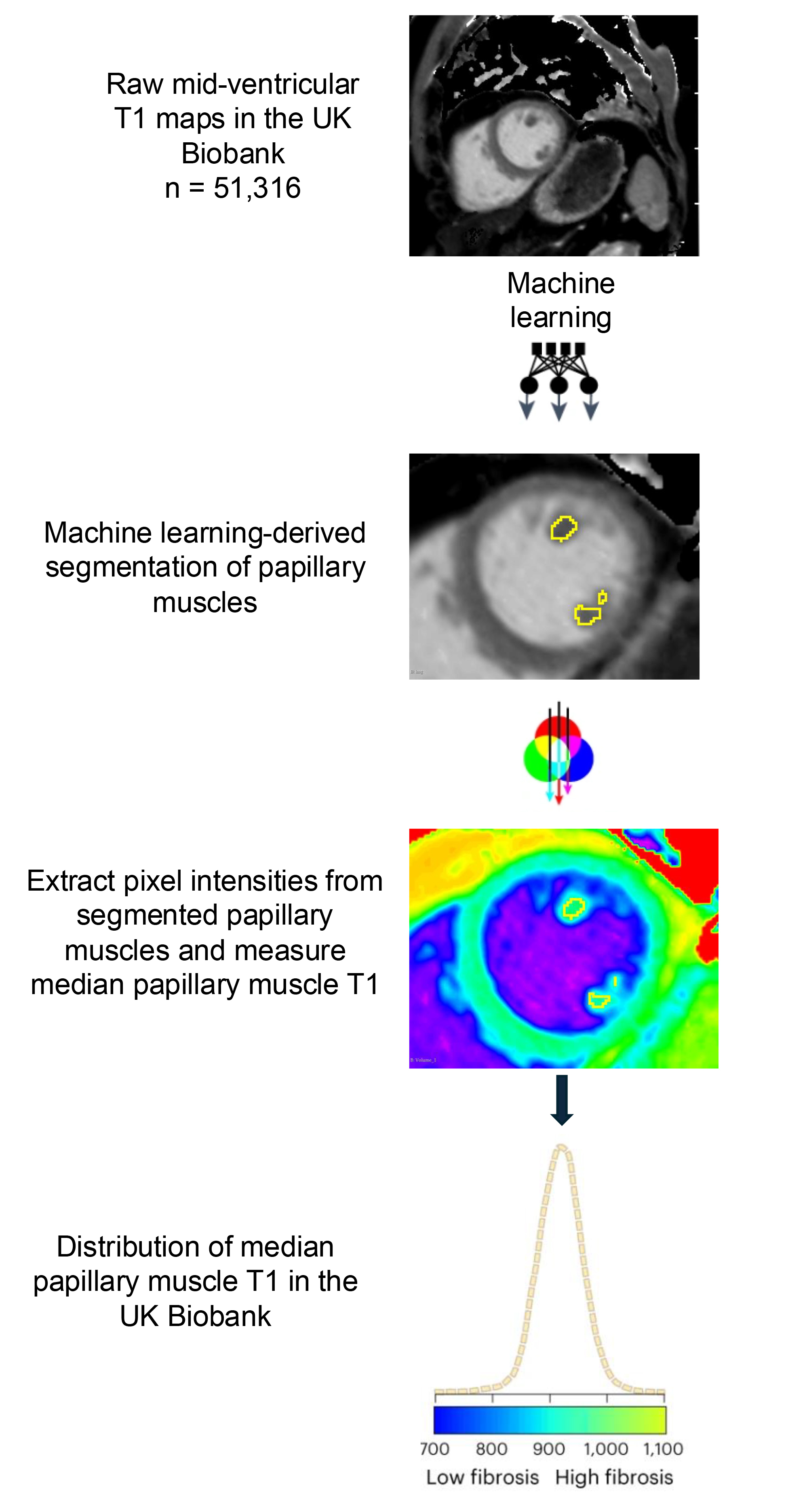
Methods We trained a deep learning model to segment PMs using 447 manually labelled cardiac T1 maps in the UK Biobank. In a test set (n=49), we demonstrated excellent correlation between model- and manually-derived PM T1 (r=0.94, 95% CI 0.89-0.97). We then applied the model to our full dataset (n=51,316) to segment PMs and measure PM T1 (Fig. 1). Using multivariable models, adjusting for age, sex, body mass index, and LV T1, we examined the association of PM T1, independent of LV myocardial fibrosis, with relevant prevalent CV diseases and MRI measures of atrial/ventricular structure and function. Lastly, we performed a genome-wide association study (GWAS) of PM T1 across 9,855,505 imputed common variants.
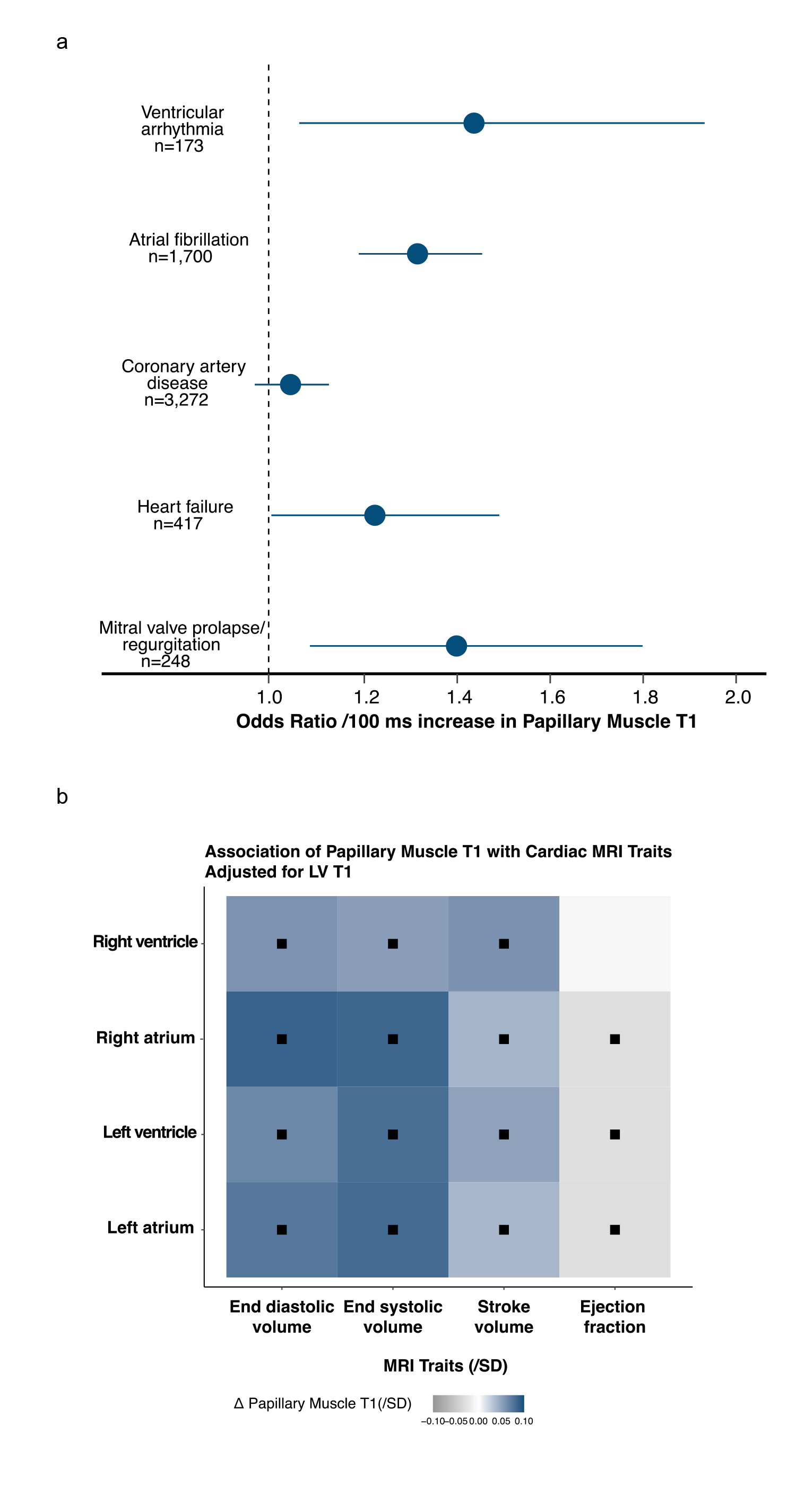
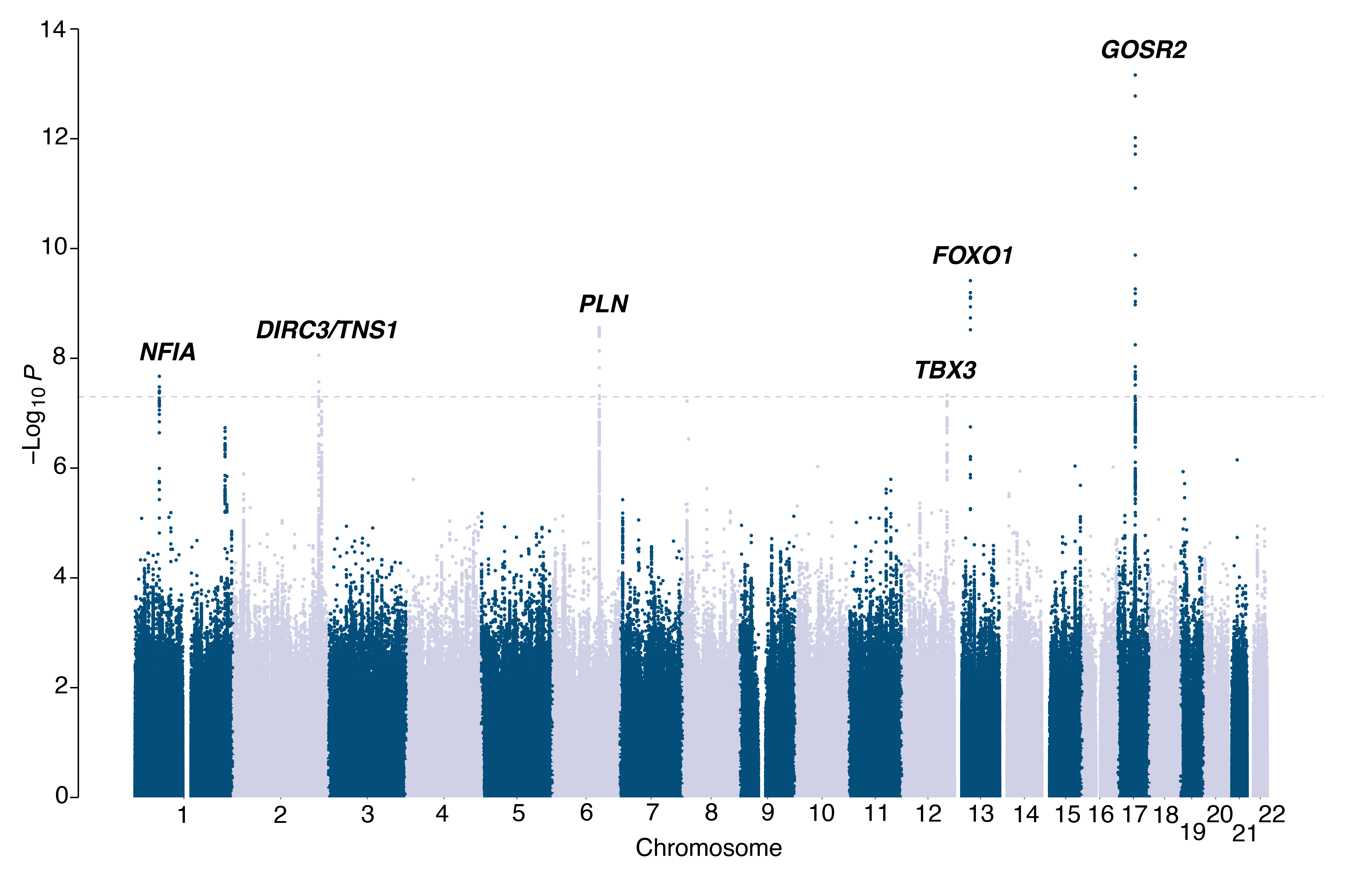
Results Mean age was 65.4 ± 7.7 years and 51.2% were women. PM T1 was 83.6 ms (95% CI 82.9-84.1 ms) higher than LV T1, with mean values of 1,008±57.9 ms and 924.8±34.6 ms, respectively. After adjustment for LV T1, PM T1 (/100 ms) was significantly associated with a 39%, 22%, 31% and 43% increase in the odds of prevalent MVP/mitral regurgitation, heart failure, atrial fibrillation and ventricular arrhythmias, respectively (Fig. 2a). PM T1 was also independently associated with increased atrial and ventricular volumes and lower atrial and left ventricular ejection fraction (Fig. 2b). In our GWAS, we identified 6 genome-wide significant loci associated with PM T1 implicating genes linked to MVP (DIRC3/TNS1 and TBX3), mitral annular diameter (GOSR2), arrhythmogenic cardiomyopathy (PLN), cardiac conduction/arrhythmias (NFIA), and cardiac hypertrophy (FOXO1) (Fig. 3).
Conclusions In this first large-scale study of PM fibrosis, we highlight PM T1 as an imaging biomarker independently associated with CV disease and adverse cardiac remodeling. Furthermore, our genetic analysis yields new insights into biologically relevant pathways underlying PM fibrosis.
Nauffal, Victor
(
Brigham and Women's Hospital
, Boston , Massachusetts , United States )
Pace, Danielle
(
Broad Institute
, Cambridge , Massachusetts , United States )
Balasubramanian, Aadhi
(
Broad Institute
, Cambridge , Massachusetts , United States )
Kassir, Jad
(
Broad Institute
, Cambridge , Massachusetts , United States )
Danik, Katherine
(
Broad Institute
, Cambridge , Massachusetts , United States )
Friedman, Sam
(
Broad Institute
, Cambridge , Massachusetts , United States )
Simonson, Bridget
(
Broad Institute
, Cambridge , Massachusetts , United States )
Chilazi, Michael
(
Broad Institute
, Cambridge , Massachusetts , United States )
Maddah, Mahnaz
(
Broad Institute
, Cambridge , Massachusetts , United States )
Kwong, Raymond
(
Brigham and Women's Hospital
, Boston , Massachusetts , United States )
Ellinor, Patrick
(
Broad Institute
, Cambridge , Massachusetts , United States )
Author Disclosures:
Victor Nauffal:DO have relevant financial relationships
;
Consultant:Abbott:Past (completed)
; Research Funding (PI or named investigator):Novo Nordisk:Active (exists now)
| Raymond Kwong:No Answer
| Patrick Ellinor:No Answer
| Danielle Pace:DO NOT have relevant financial relationships
| Aadhi Balasubramanian:No Answer
| Jad Kassir:No Answer
| Katherine Danik:No Answer
| Sam Friedman:No Answer
| Bridget Simonson:DO NOT have relevant financial relationships
| Michael Chilazi:No Answer
| Mahnaz Maddah:No Answer