Immunomodulatory therapy sheds light on the treatment for vasospastic angina
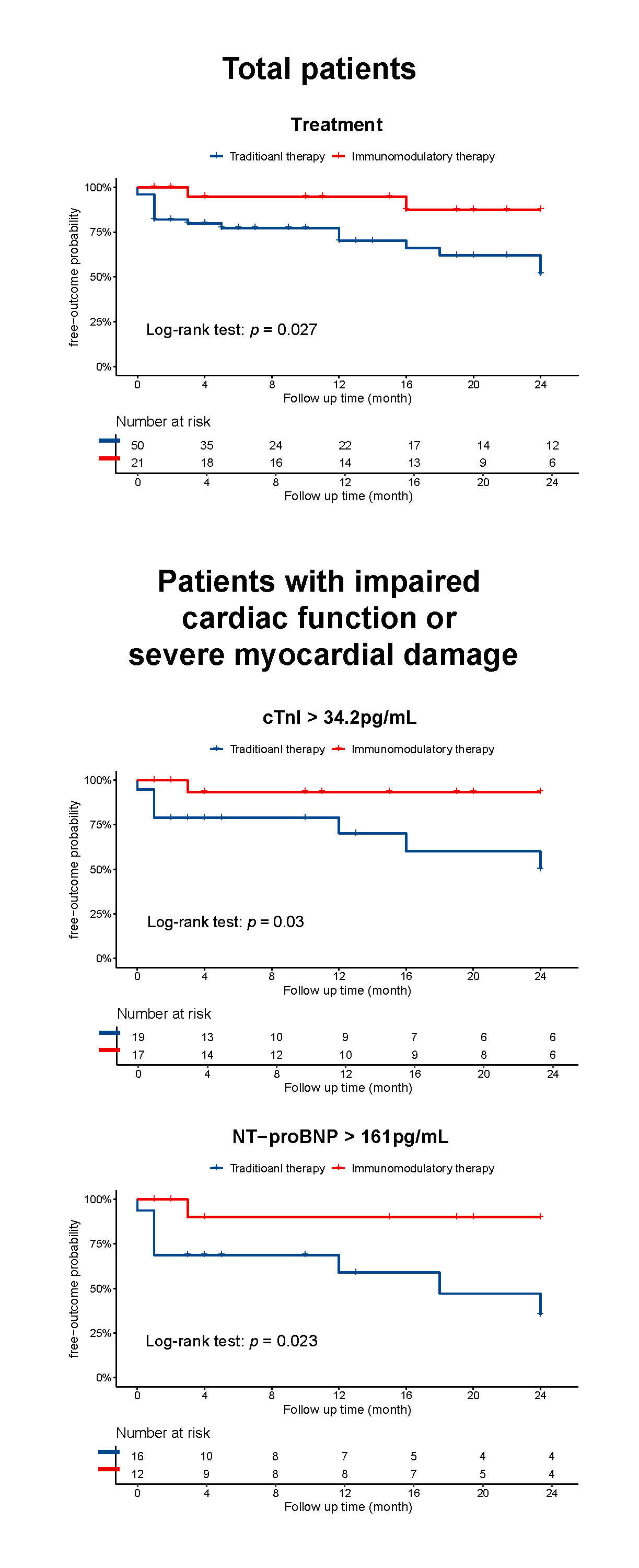
Abstract Body (Do not enter title and authors here): Introduction Vasospastic angina (VSA) is caused by brief spasms of the main coronary artery and its major branches, resulting in varying degrees of luminal occlusion. Although vasodilator therapy is widely used and significantly alleviates VSA symptoms, it has not led to notable improvements in the prognosis of patients with VSA. Recent studies have suggested that inflammation plays a crucial role in VSA. This study aimed to evaluate the potential effectiveness of immunomodulatory therapy for improving patient prognosis. Research Questions/Hypothesis Immunomodulatory therapy can improve the prognosis of patients with vasospastic angina Methods A total of 71 VSA patients from three medical centers were selected and divided into traditional therapy and immunomodulatory therapy groups according to their in-hospital treatment to evaluate the effects of immunomodulatory therapy on clinical outcomes. The traditional therapy group received widely used treatments for VSA, including nitrate esters, CCBs, anti-platelet agents, statins and et al. The immunomodulatory therapy group was treated with glucocorticosteroids and/or IVIG, in addition to traditional therapy Results Patients receiving immunomodulatory therapy, including corticosteroids and intravenous immunoglobulin, exhibited significantly superior overall free-outcome probability (90.5% vs. 63.5%, p=0.03) and a trend toward reduced death rates (0/20 vs. 3/51, p=0.27) compared to those receiving traditional therapy. High LDL levels, statin use, and immunomodulatory therapy were identified as protective factors for the occurrence of adverse outcomes. Elevated neutrophil counts and immunomodulatory therapy remained significant in the stepwise multi-cox model, with hazard ratio2.06 (95% confidence interval: 1.22 - 3.48, p=0.01) and 0.19 (95% confidence interval: 0.04 - 0.93, p=0.04), respectively. Subgroup analysis revealed that participants with a serious state, higher plasma cTnI and NT-proBNP levels exhibited a higher free-outcome probability when they received immunomodulatory therapy, in comparison with those received traditional therapy. Conclusion This study indicates that immunomodulatory therapy effectively reduces the occurrence of adverse outcomes in patients with VSA, supporting the idea that myocarditis represents the main pathogenesis of VSA; therefore, it should be an indispensable approach for VSA.
Wang, Dao Wen
(
Tongji Hospital
, Wuhan , Hubei , China )
Author Disclosures:
Qu Zhao:DO NOT have relevant financial relationships
| Huihui Li:DO NOT have relevant financial relationships
| Dao Wen Wang:DO NOT have relevant financial relationships