
Cardiac Branched-Chain Amino Acid Metabolic Dysfunction in a Novel Model of Diabetic Cardiomyopathy
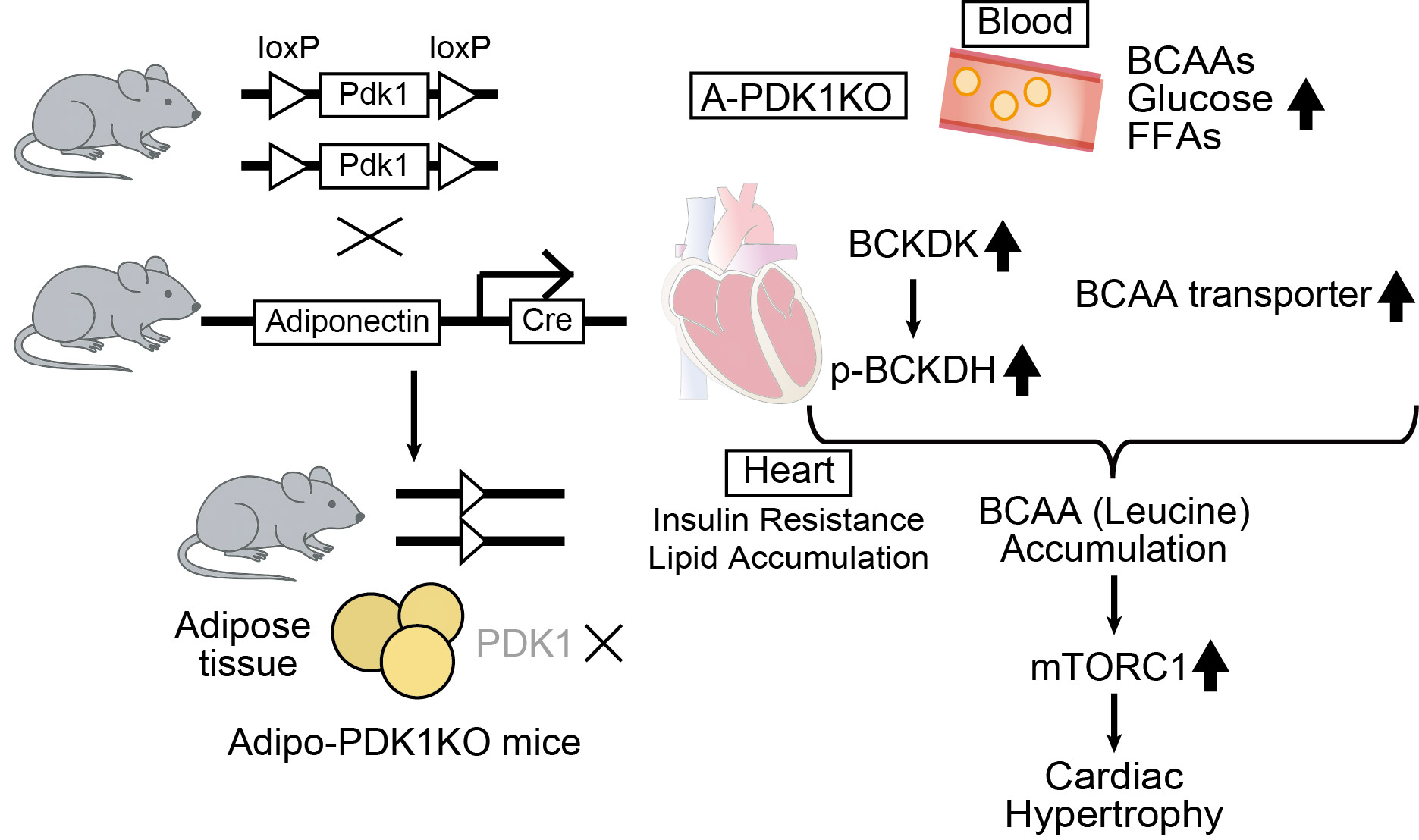
Abstract Body (Do not enter title and authors here): Background: Systemic insulin resistance is a central contributor to the pathogenesis of type 2 diabetes and its complications. While impaired branched-chain amino acid (BCAA) metabolism has been implicated in the development of diabetes, the specific roles of cardiac BCAA in the progression of diabetic cardiomyopathy (DbCM) remain poorly understood. Hypothesis: We hypothesized that insulin resistance impairs cardiac BCAA metabolism, thereby contributing to the development of DbCM. Methods: We used adipocyte-specific 3′-phosphoinositide–dependent kinase 1 knockout (A-PDK1KO) mice as a novel model of DbCM. Cardiac structure and function were evaluated using histological staining and echocardiography. Cardiac metabolites were analyzed by mass spectrometry, and myocardial glucose utilization was assessed using in vivo stable isotope tracing with labeled glucose. Additionally, transcriptomic profiling was performed using RNA sequencing. Protein expression of enzymes involved in BCAA metabolism was assessed by Western blotting. Results: A-PDK1KO mice developed cardiac hypertrophy and exhibited marked cardiac insulin resistance with impaired glucose utilization, consistent with phenotypes characteristic of DbCM. RNA sequencing revealed increased expression of BCAA transporters, indicating enhanced BCAA uptake in diabetic hearts. Despite this, Western blot analysis showed downregulation of key BCAA-catabolizing enzymes, resulting in BCAA accumulation in the myocardium. Among these, leucine accumulation activated mammalian target of rapamycin complex 1 (mTORC1) signaling, contributing to hypertrophic remodeling. Conclusions: A-PDK1KO mice recapitulate key structural and metabolic features of human DbCM and demonstrate impaired cardiac BCAA and glucose metabolism. This model provides new insights into the metabolic pathophysiology of DbCM and may facilitate the development of targeted metabolic therapies.
Nagao, Manabu
(
Kobe University
, Kobe , Japan )
Asakura, Junko
(
Kobe University
, Kobe , Japan )
Hosooka, Tetsuya
(
University of Shizuoka
, Shizuoka , Japan )
Kuwahara, Naoya
(
Kobe University
, Kobe , Japan )
Kaneshiro, Kenta
(
Kobe University
, Kobe , Japan )
Tanaka, Hidekazu
(
KOBE UNIVERSITY
, Kobe , Japan )
Ishida, Tatsuro
(
KOBE UNIVERSITY
, Kobe , Japan )
Otake, Hiromasa
(
Kobe University
, Kobe , Japan )
Shinohara, Masakazu
(
Division of Epidemiology
, Kobe-city , Japan )
Author Disclosures:
Manabu Nagao:DO NOT have relevant financial relationships
| JUNKO ASAKURA:DO NOT have relevant financial relationships
| Tetsuya Hosooka:No Answer
| Naoya Kuwahara:DO NOT have relevant financial relationships
| Kenta Kaneshiro:No Answer
| Hidekazu Tanaka:No Answer
| Tatsuro Ishida:No Answer
| Hiromasa Otake:DO NOT have relevant financial relationships
| Masakazu Shinohara:DO NOT have relevant financial relationships