
Logo

American Heart Association

  23
  0


Final ID: MP377

Factors Associated with Physician Modifications to Automated ECG Interpretations

Abstract Body (Do not enter title and authors here): Introduction:
Accurate automated diagnoses contribute to the improvement of clinical workflows and the enhancement of patient care. Commercially available automated electrocardiogram (ECG) interpretation systems often requires physician manual modification despite its widespread use. This study investigates the frequency and characteristics of the modifications from automated ECG report in routine clinical practice.

Methods and Results:
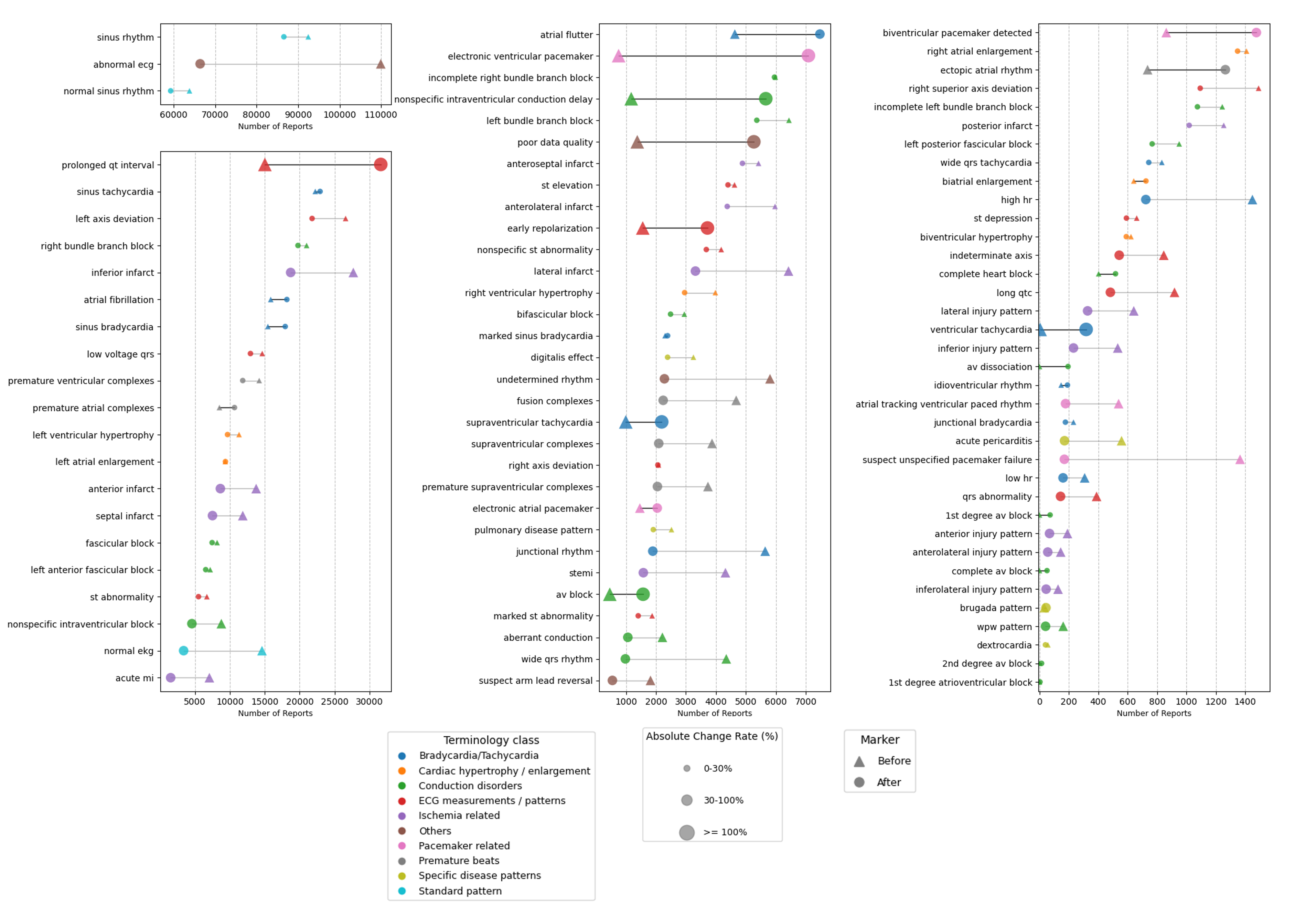
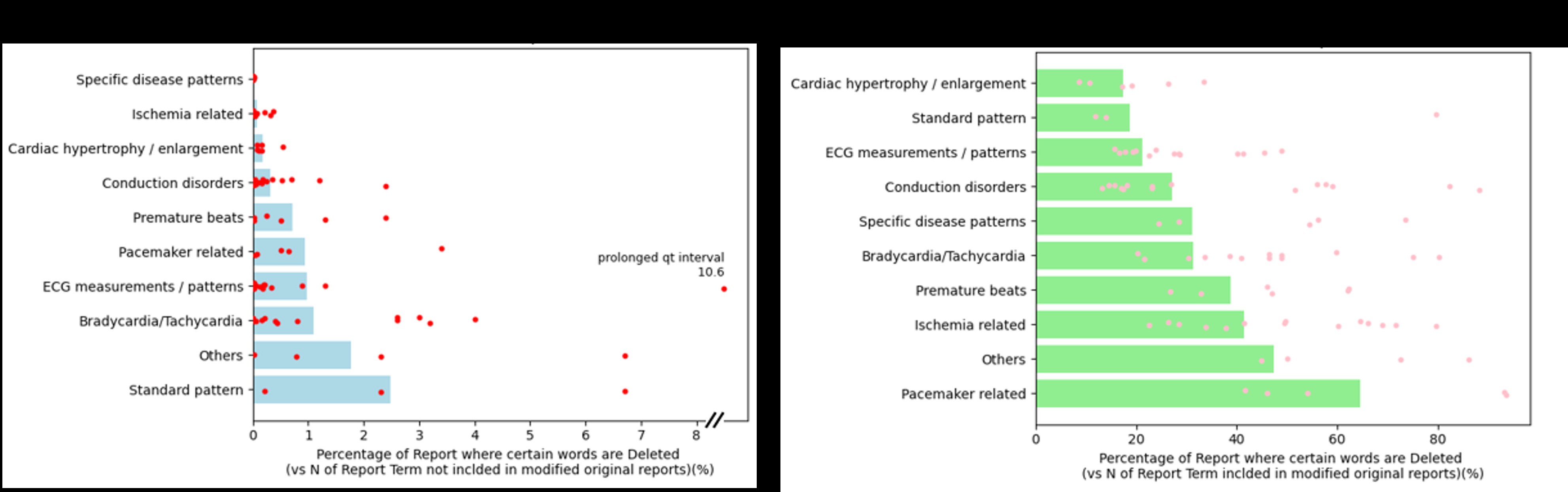
We retrospectively analyzed 769,093 ECGs from 2011 to 2023 and compared automated ECG reports generated by the Marquette 12SL ECG analysis program with physician-finalized reports. A modification was defined as any textual difference between the initial and final reports. Our analysis revealed that 25.5% of all ECG reports underwent some forms of modification by physicians. We analyzed the frequency of 90 pre-defined ECG-related terms before and after physician review, categorizing modifications as unchanged, deleted, or newly added. Modifications were more frequent for ECGs performed during off-hours, in patients with higher ventricular rates and longer QRS durations. At the term level, critical diagnoses such as "prolonged QT interval" (newly-added from 10.6% of original reports) and "atrial fibrillation" (newly-added from 4.0% of original reports) were frequently added by physicians, while general terms like "normal EKG" and "abnormal ECG" were frequently deleted from automated ECG reports (79.6% and 44.9% automated reports with these terms required the removal). Modification rates varied by ECG term category, physician experience, and ECG acquisition year.

Conclusion:
This large-scale real-world study demonstrated the high frequency of physicians’ modification in automated ECG interpretation. The identified patterns of modifications, including the addition of specific diagnoses and the removal of non-specific terms, highlight the limitations of current rule-based systems in handling complex cases and nuanced ECG findings.
  • Sahashi, Yuki  ( Cedars-Sinai Medical Center , Beverly Hills , California , United States )
  • Chiu, I-min  ( Cedars-Sinai Medical Center , Beverly Hills , California , United States )
  • Chugh, Sumeet  ( Cedars-Sinai Medical Center , Beverly Hills , California , United States )
  • Ouyang, David  ( Kaiser Permanente , Pleasanton , California , United States )
  • Author Disclosures:
    Yuki Sahashi: DO have relevant financial relationships ; Consultant:m3:Active (exists now) | I-Min Chiu: DO NOT have relevant financial relationships | Sumeet Chugh: DO have relevant financial relationships ; Research Funding (PI or named investigator):National Heart Lung and Blood Institute:Past (completed) | David Ouyang: DO have relevant financial relationships ; Consultant:InVision:Active (exists now) ; Consultant:Pfizer:Past (completed) ; Consultant:Ultromics:Past (completed) ; Consultant:EchoIQ:Past (completed) ; Consultant:AstraZeneca:Active (exists now)
Meeting Info:

Scientific Sessions 2025

2025

New Orleans, Louisiana

Session Info:
More abstracts on this topic:
Documentation of Elevated Blood Pressure Measurements in the Emergency Department: Exploratory Analysis of Factors Associated with Discussion and Comparison to Other Settings

Chapman Cole, Faine Brett, Carter Barry, Talan David, Polgreen Philip, Polgreen Linnea

9-Year Longitudinal Assessment of the 12-lead Electrocardiogram of Volunteer Firefighters

Bae Alexander, Dzikowicz Dillon, Lai Chi-ju, Brunner Wendy, Krupa Nicole, Carey Mary, Tam Wai Cheong, Yu Yichen

More abstracts from these authors:
Multi-View Deep Learning for Automated Quantification of Aortic Stenosis

Ieki Hirotaka, Vukadinovic Milos, Sahashi Yuki, He Bryan, Cheng Paul, Ouyang David

Multi-View Deep Learning for Automated Quantification of Mitral Stenosis

Ieki Hirotaka, Vukadinovic Milos, Sahashi Yuki, He Bryan, Cheng Paul, Ouyang David

You have to be authorized to contact abstract author. Please, Login
Not Available