EPI-Lifestyle Scientific Sessions 2026
/
Poster Session 1
/
The Rising Toll of Environmental Toxins: An Age-, Sex-, and Region-Stratified Analysis of Cardiovascular Disease Attributable to Lead Exposure Across 204 Countries (1990–2023)
American Heart Association
64
0
Final ID: TU144
The Rising Toll of Environmental Toxins: An Age-, Sex-, and Region-Stratified Analysis of Cardiovascular Disease Attributable to Lead Exposure Across 204 Countries (1990–2023)
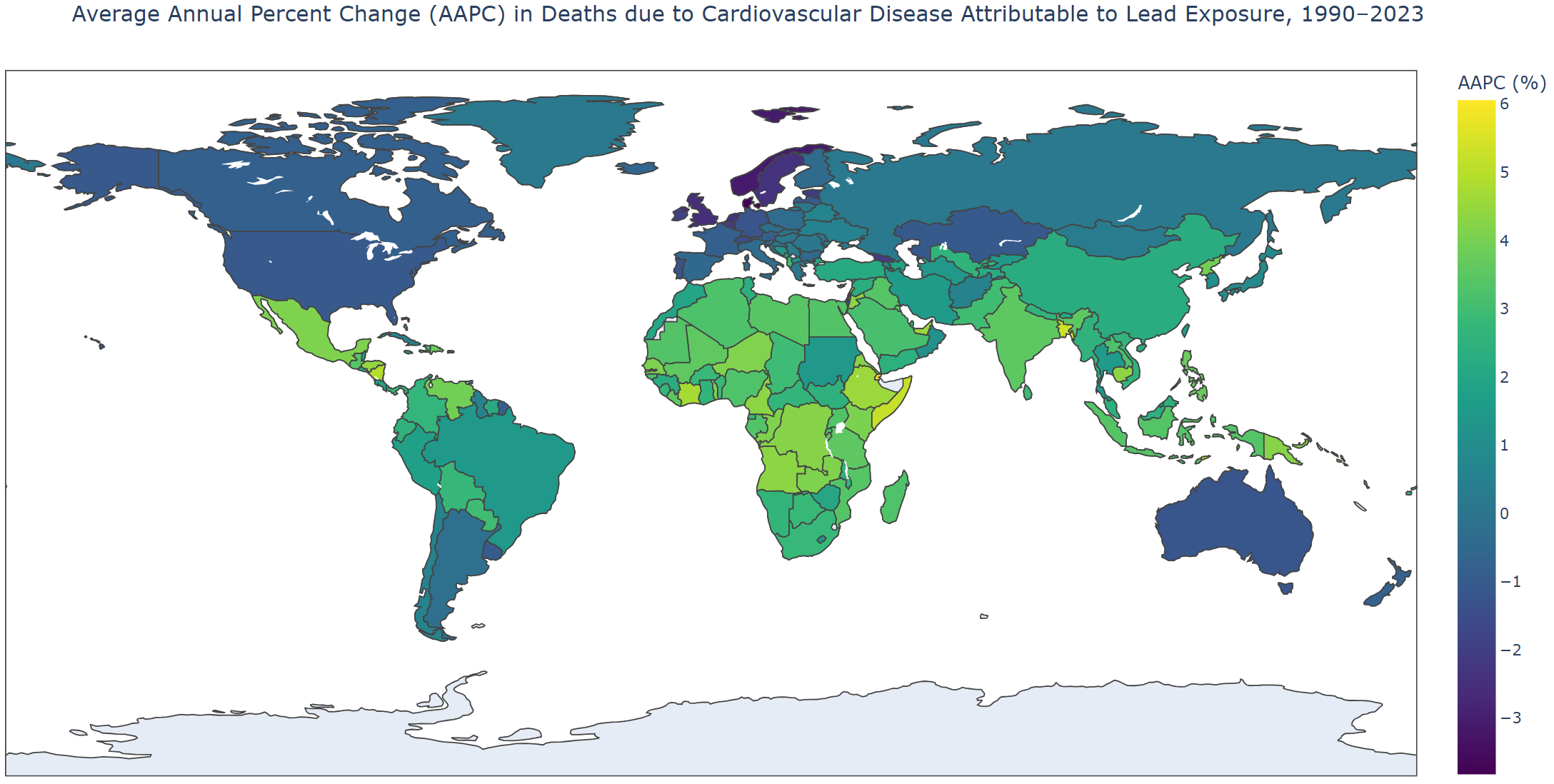
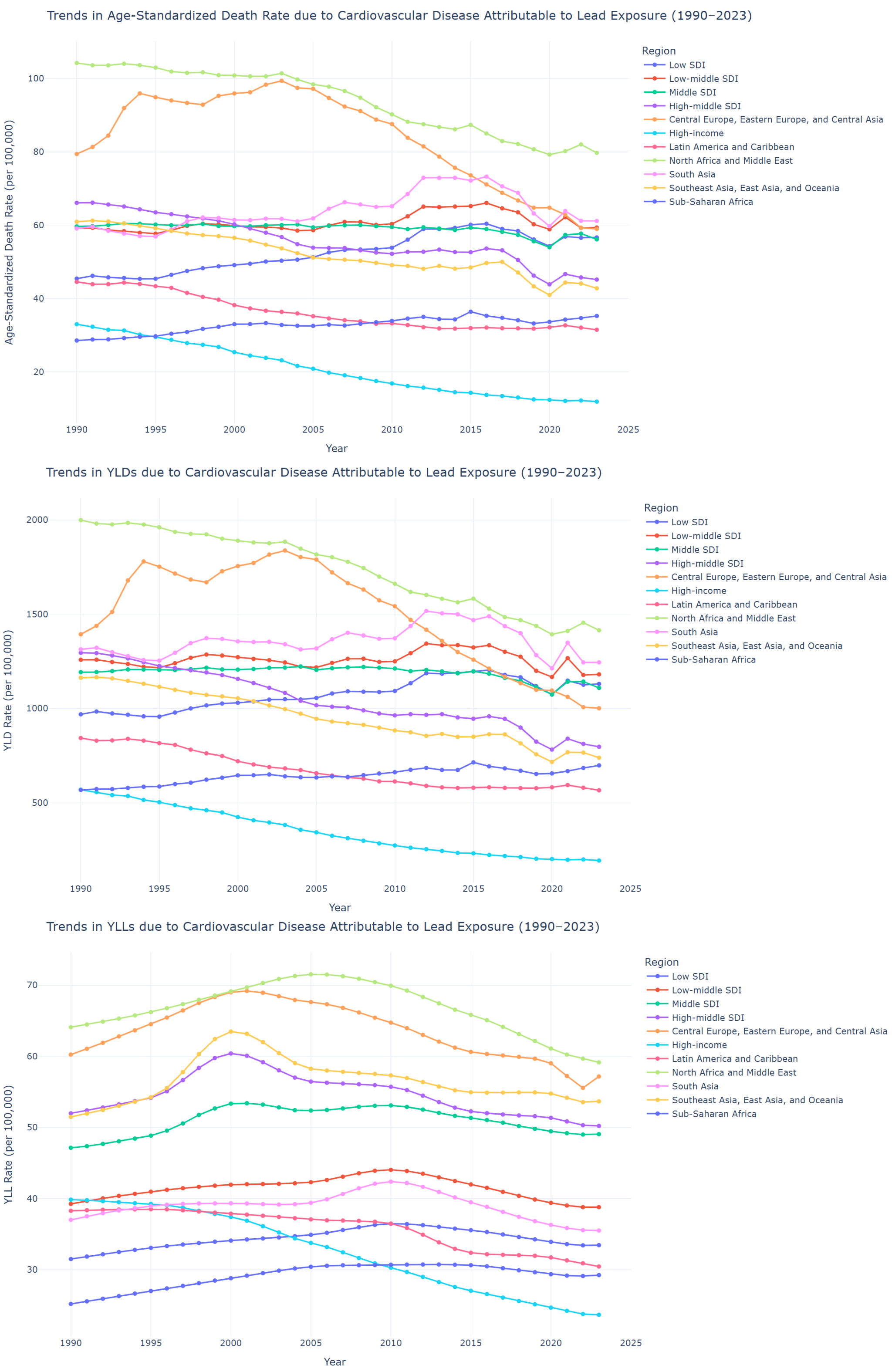
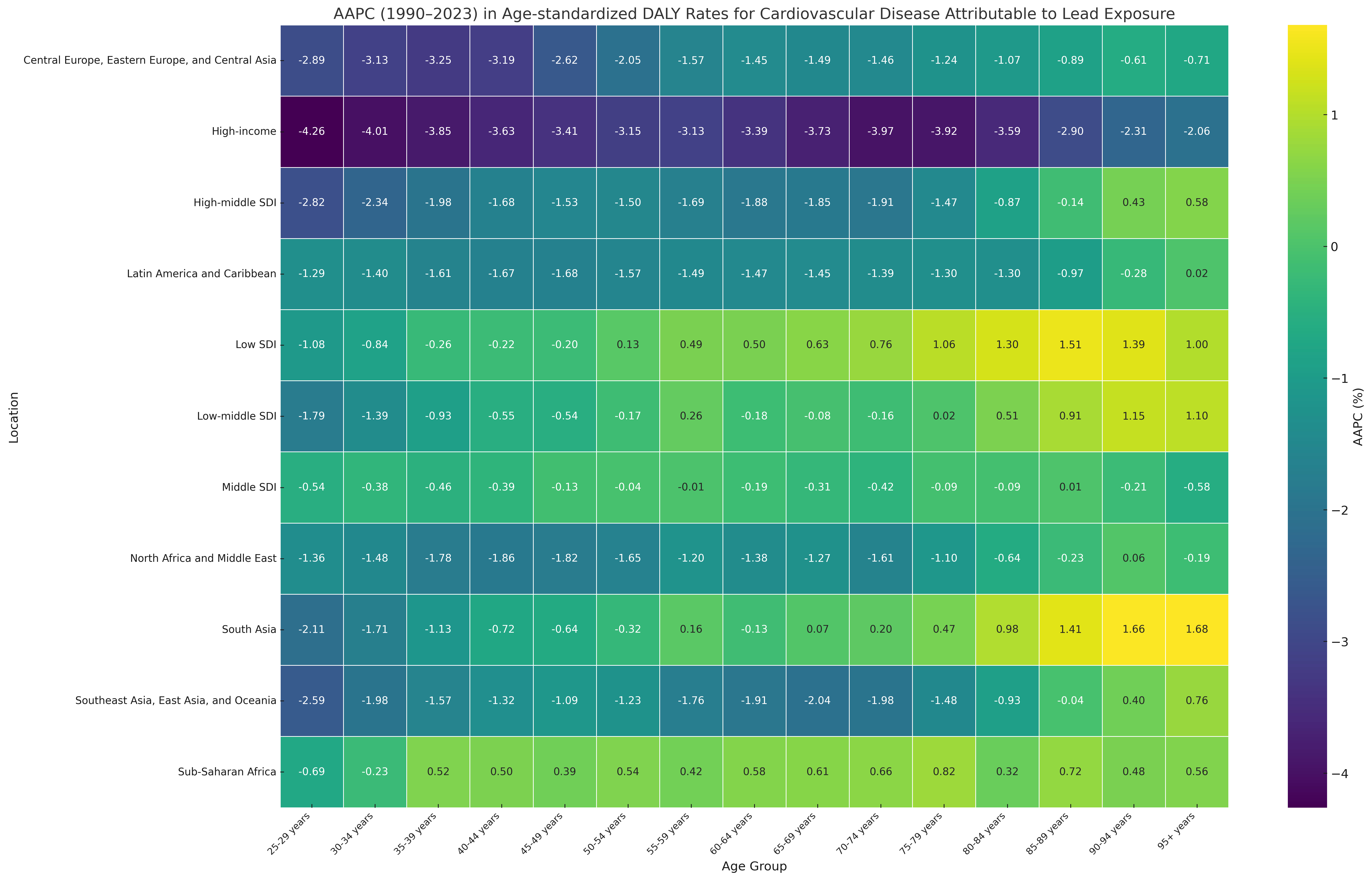
Abstract Body: Background: Lead exposure (LE) remains a widespread environmental toxin with no known safe threshold and has been increasingly recognized as a modifiable risk factor for cardiovascular disease (CVD). Understanding its global burden is critical for informing prevention strategies and public health policy. Methods: We estimated the global CVD burden attributable to LE (1990–2023, 204 locations) using the GBD 2023 comparative risk assessment. Population Attributable Fractions (PAFs) were calculated by integrating blood lead levels and relative risks, then applied to estimate attributable deaths, YLDs, YLLs, and DALYs, stratified by standard demographics. Result: Between 1990 and 2023, total deaths due to CVD attributable to LE increased from 1.8 million (95% UI: 1.3–2.3) in 1990 to 3.4 million (2.5–4.2) in 2023. YLDs nearly doubled, rising from 1.8 million (1.1–2.6) to 3.7 million (2.2–5.5), while YLLs increased from 39.2 million (29.1–51.4) to 66.3 million (50.5–82.1). Regionally, age-standardized DALY rates declined across most areas, with the greatest annual reductions observed in High-income regions (AAPC: –3.41%) and Central Europe, Eastern Europe, and Central Asia (AAPC: –1.45%). In contrast, Low SDI regions showed an increasing trend (AAPC: +0.63%), indicating rising burden. The steepest increases in age-standardized DALY rates were observed in South Asia among those aged 95+ years (AAPC: +1.68%) and 90–94 years (+1.66%), while the most significant declines occurred in High-income regions, particularly among individuals aged 25–29 years (AAPC: –4.26%) and 30–34 years (–4.01%). Sex-stratified analysis demonstrated that females experienced a slightly larger decline in age-standardized death rates (AAPC: –1.12%) and YLLs (–1.23%) compared to males (–0.99% and –1.16%, respectively). However, YLDs declined marginally for both sexes (females: –0.42%; males: –0.48%). Conclusion: Despite global efforts to reduce environmental LE, the burden of CVD attributable to lead has continued to rise in absolute terms, with widening disparities across regions and demographic groups. While high-income regions have achieved notable reductions, older adults in low-income and South Asian settings are increasingly affected. These findings underscore the urgent need for equitable, targeted policies to eliminate LE and mitigate its long-term cardiovascular impacts, particularly in aging populations of low-resource settings.
Parisapogu, Anusha
(
University of Connecticut
, Hartford , India )
Gera, Asmita
(
Maimonides medical Center,
, Brooklyn , New York , United States )
Sami, Shahzad Ahmed
(
DCH RMC/university of Alabama ,
, Tuscaloosa , Alabama , United States )
Varma, Revati
(
Cook County Health
, Chicago , Illinois , United States )
Vummaneni, Siri
(
Detroit Medical Center/Wayne State University. 4201 St. Antoine St Detroit,
, Detroit , Michigan , United States )
Ghani, Muhammad Usman
(
Central Michigan University
, Saginaw , Michigan , United States )
Vennapusa, Yojan Chandra Reddy
(
Apollo institute of medical sciences and research,
, Chittoor , , Andhrapradesh , India )
Aleem, Abdul
(
Central Michigan University CMU School of Medicine Mount Pleasant
, Mount Pleasant , Michigan , United States )
Desai, Hardik Dineshbhai
(
Independent Public Health Researcher
, Ahmedabad , Gujarat , India )