Evaluating Remote Versus Clinic-Based Follow-Up in Postpartum Hypertension: A Systematic Review and Meta-Analysis
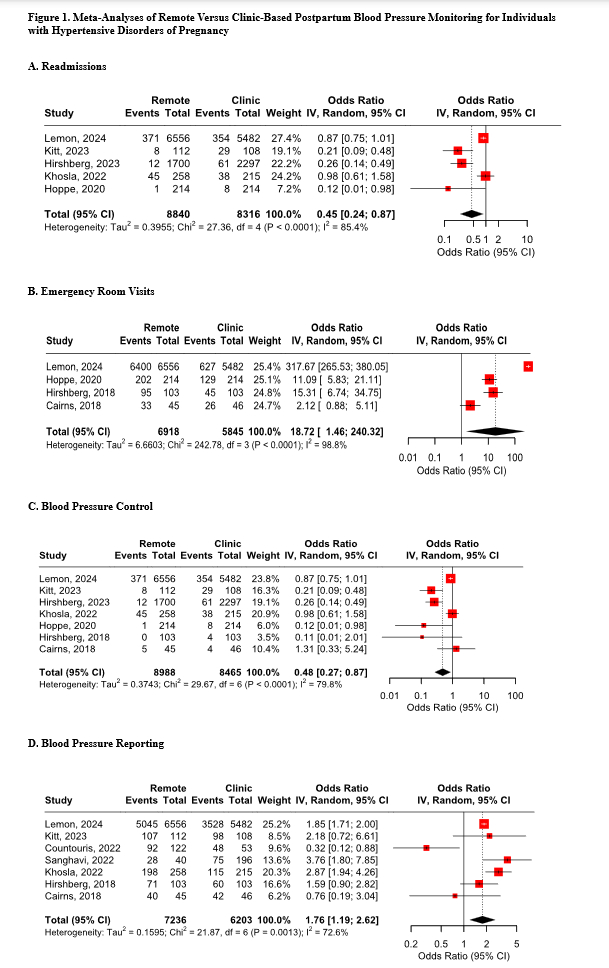
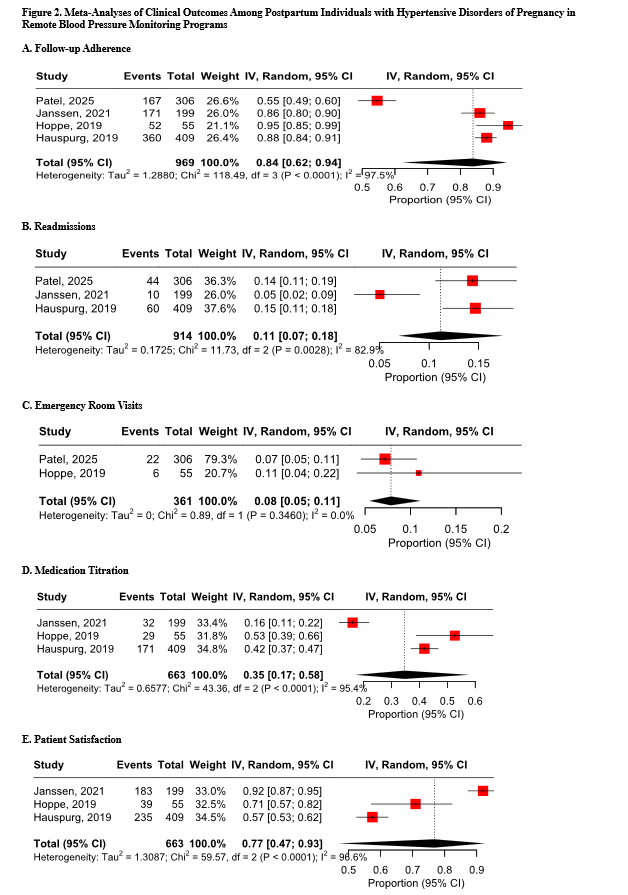
Abstract Body (Do not enter title and authors here): Introduction Hypertensive disorders of pregnancy (HDP) contribute to postpartum complications and readmissions. Remote blood pressure monitoring (RBPM) offers an effective alternative for tracking postpartum health. However, evidence on its benefits compared to OB-GYN clinic visits is limited. This study aims to determine whether remote postpartum blood pressure monitoring improves clinical outcomes over traditional follow-ups for individuals with a history of hypertensive disorders during pregnancy. Methods A literature search was conducted following PRISMA guidelines across PubMed, Google Scholar, and Embase for studies on postpartum outcomes using RBPM via text, telehealth, home-based platforms, or clinic care. Primary outcomes were blood pressure control, follow-up adherence, and hospital readmissions. Secondary outcomes included blood pressure reporting, emergency room visits, and patient satisfaction. Random-effects models analyzed pooled proportions with 95% confidence intervals (CI). Statistical significance was set at p<0.05. Results Thirteen studies included over 18,833 postpartum individuals with HDP. Compared with clinic-based care, remote monitoring significantly reduced readmissions (OR: 0.45; 95% CI: 0.24-0.87; p=0.017), improved blood pressure control (<140/90mmHg) (OR: 0.48; 95% CI: 0.27-0.87; p=0.016), and increased blood pressure reporting (OR: 1.76; 95% CI: 1.19-2.62; p=0.005) (Fig 1). However, remote monitoring was associated with increased emergency room visits (OR: 18.72; 95% CI: 1.46-240.32; p=0.025), possibly indicating earlier triage. Single-arm analyses (Fig 2) of RBPM cohorts reported high follow-up adherence (OR: 14.63; 95% CI: 0.88-242.19; p=0.061), low readmission rates (OR: 0.13; 95% CI: 0.07-0.22; p<0.001), and low emergency visit rates (OR: 0.08; 95% CI: 0.05-0.11; p<0.001). Medication titration was moderate (OR: 0.52; 95% CI: 0.39-0.66; p<0.001), and patient satisfaction was high (OR: 2.95; 95% CI: 0.61-14.39; p=0.179). Moderate to High heterogeneity was observed among all the analyses. Conclusion RBPM improves postpartum management by enhancing follow-up adherence, control, and reporting, while lowering readmission rates. Increased emergency visits indicate timely detection rather than negative outcomes. Further research is needed to assess the impact of socioeconomic factors, insurance coverage, and access to care on the implementation and effectiveness of interventions across diverse populations.
Kodali, Lakshmi Sai Meghana
(
University of Michigan-Flint
, Flint , Michigan , United States )
Sharma, Garima
(
Inova Fairfax Medical Campus
, Falls Church , Virginia , United States )
Spitz, Jared
(
Inova Schar Heart and Vascular
, Fairfax , Virginia , United States )
Metlock, Faith
(
Johns Hopkins University
, North Bethesda , Maryland , United States )
Author Disclosures:
Lakshmi Sai Meghana Kodali:DO NOT have relevant financial relationships
| Garima Sharma:DO NOT have relevant financial relationships
| Jared Spitz:DO NOT have relevant financial relationships
| Faith Metlock:DO NOT have relevant financial relationships