AI-enabled ECG for Structural Heart Disease Diagnosis Improves Triage of Echocardiography Referral in a Low-Resource Setting: The PROVAR+ Study
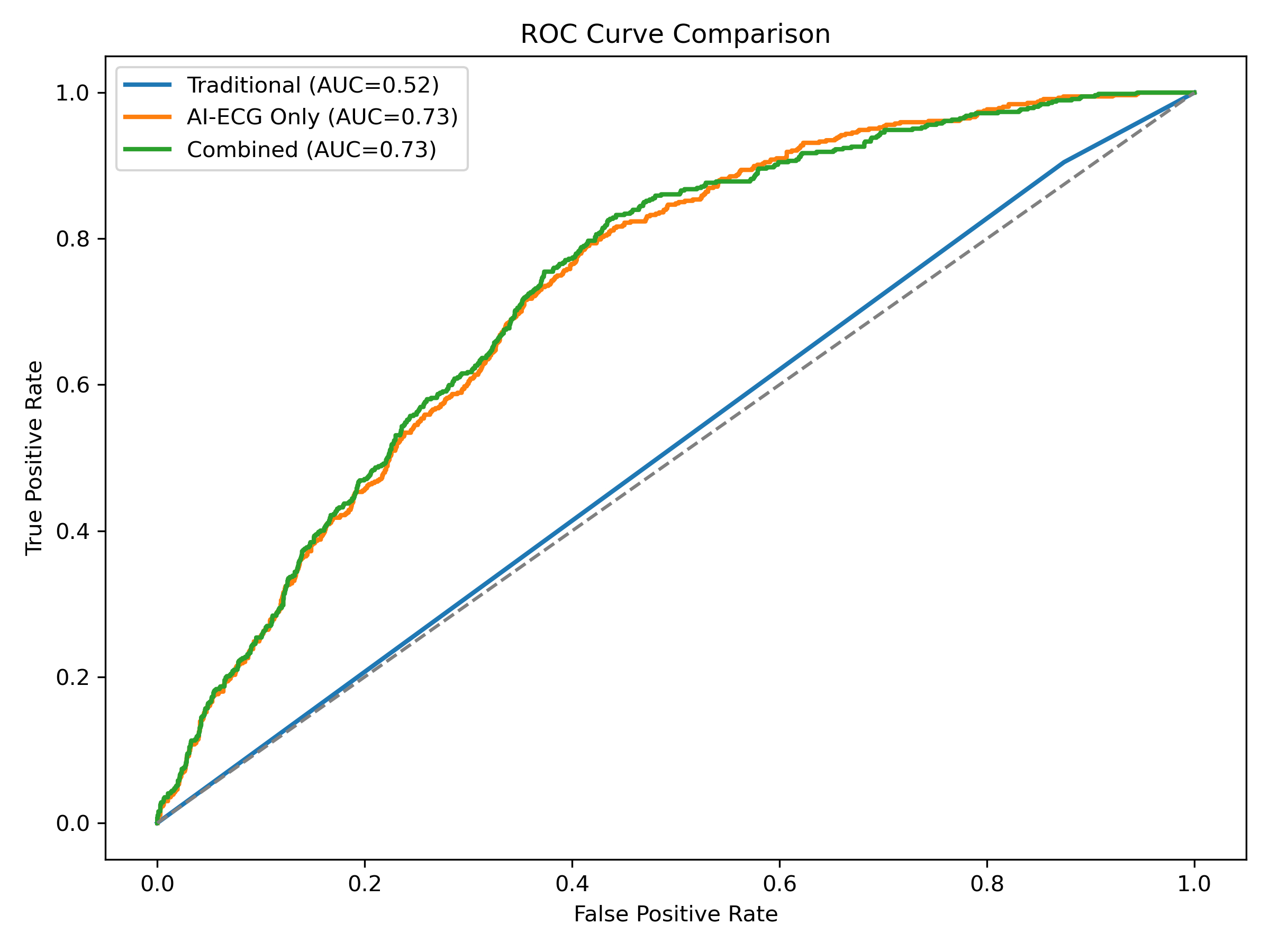
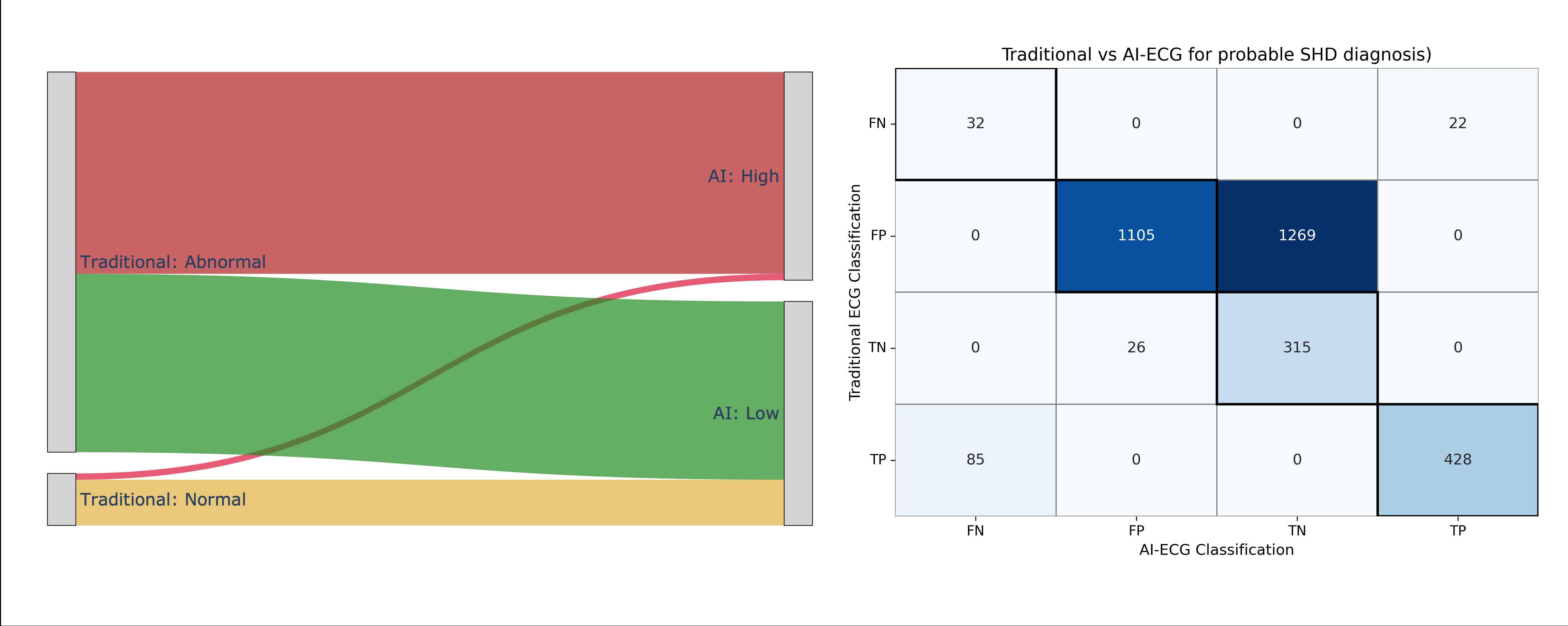
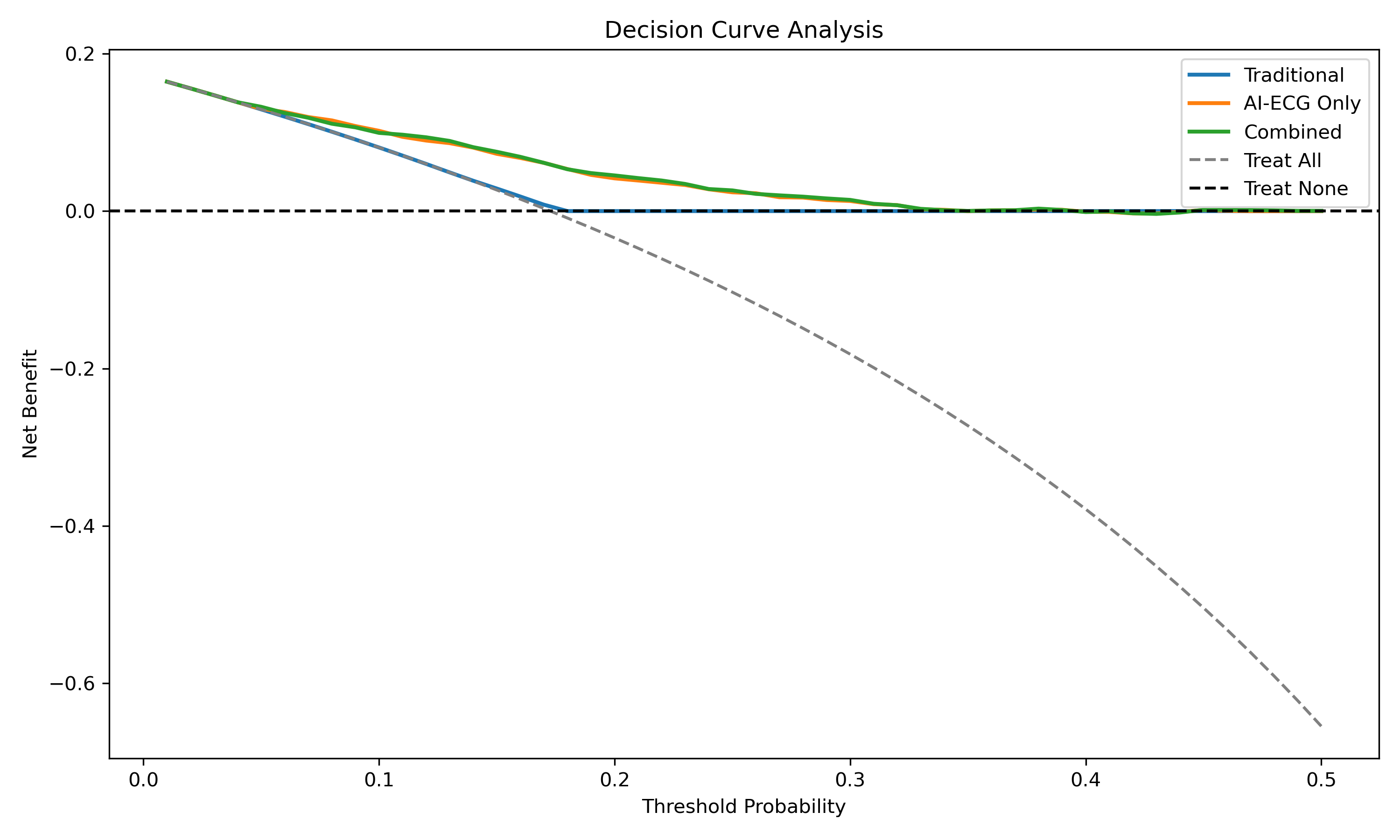
Abstract Body (Do not enter title and authors here): Background: Echocardiography is resource-intensive, limiting its use in screening for structural heart diseases (SHD). Broader use of point-of-care ultrasound (POCUS) by trained paramedical staff may improve early SHD detection, but effective patient selection is essential. ECGs may enable triage for POCUS use, with either traditional ECG interpretation for major abnormalities or the use of AI to detect subtle patterns of SHD from ECGs. Aim: To compare the performance of AI vs traditional ECG interpretation for detecting probable SHD on cardiac POCUS. Methods: PROVAR+ is an international collaborative study in Divinopolis, Brazil. In 2023-25, 6,488 consecutive patients who underwent clinical ECGs were centrally adjudicated for presence of major ECG abnormalities based on Minnesota Code criteria. Patients with major abnormalities, along with controls without these abnormalities at a 5:1 ratio, were prospectively enrolled for cardiac POCUS. We compared a validated SHD model (AUROC 0.91 against gold standard SHD diagnosis in multiple cohorts, including ELSA-Brasil) against traditional ECG interpretation for probable SHD on POCUS, defined as LVEF <40%, moderate-to-severe left-sided valve disease, or severe LV hypertrophy. We assessed the relative sensitivity and specificity of each approach, evaluated reclassification performance using net reclassification index (NRI), and examined clinical utility through decision curve analysis. Results: A total of 3,282 patients (67±40y; 48% female, 88% with ECG abnormalities) underwent POCUS, and 567 (17%) had probable SHD. Traditional ECG abnormalities had limited discrimination for probable SHD (AUROC 0.52, PPV 0.18, NPV 0.86). In contrast, AI-ECG had substantially higher performance (AUROC 0.73; PPV 0.29, NPV 0.93 at Youden’s J threshold). Traditional ECG interpretation did not have additive predictive performance with AI-ECG (AUROC, AI-ECG + traditional, 0.73) (A). AI-ECG substantially improved SHD risk classification, with an NRI of 0.35, driven by 46% improvement in correctly downgrading non-events (B). In decision curve analysis (C), AI-ECG had net benefit across a range of clinically relevant decision thresholds (0.05-0.35), outperforming traditional ECG interpretation. Conclusions: AI-ECG significantly optimizes the yield of screening POCUS without such a benefit from traditional ECG interpretation. It reduces false positives and can improve the role of large-scale screening for SHD in resource-constrained settings.
Pedroso, Aline
(
Yale School of Medicine
, New Haven , Connecticut , United States )
Dhingra, Lovedeep
(
Yale School Of Medicine
, New Haven , Connecticut , United States )
Nascimento, Bruno
(
Universidade Federal de MG
, Belo Horizonte , Brazil )
Vasisht Shankar, Sumukh
(
Yale University
, New Haven , Connecticut , United States )
Sable, Craig
(
Ochsner Children's Hospital
, New Orleans , Louisiana , United States )
Brant, Luisa
(
FEDERAL UNIVERSITY of MINAS GERAIS
, Belo Horizonte , Brazil )
Paixao, Gabriela
(
FEDERAL UNIVERSITY OF MINAS GERAIS
, Belo Horizonte , Brazil )
Oliveira, Clara
(
FEDERAL UNIVERSITY of MINAS GERAIS
, Belo Horizonte , Brazil )
Ribeiro, Antonio
(
Federal University of Minas Gerais
, Belo Horizonte , Brazil )
Khera, Rohan
(
Yale School of Medicine
, New Haven , Connecticut , United States )
Author Disclosures:
Aline Pedroso:DO NOT have relevant financial relationships
| Rohan Khera:DO have relevant financial relationships
;
Research Funding (PI or named investigator):Bristol-Myers Squibb:Active (exists now)
; Research Funding (PI or named investigator):NovoNordisk:Active (exists now)
; Research Funding (PI or named investigator):BridgeBio:Active (exists now)
| Lovedeep Dhingra:DO NOT have relevant financial relationships
| Bruno Nascimento:DO NOT have relevant financial relationships
| Sumukh Vasisht Shankar:No Answer
| Craig Sable:DO NOT have relevant financial relationships
| Luisa Brant:DO NOT have relevant financial relationships
| Gabriela Paixao:DO NOT have relevant financial relationships
| Clara Oliveira:No Answer
| Antonio Ribeiro:No Answer