
Logo

American Heart Association

  23
  0


Final ID: MP2339

Residual Learning Networks for Automated Detection of Hypertensive Retinopathy: A Multi-Institutional Validation Study

Abstract Body (Do not enter title and authors here): Introduction:
Cardiovascular-retinal pathophysiology represents an emerging frontier in precision medicine, with hypertensive retinopathy (HR) serving as a critical biomarker for systemic vascular compromise. Contemporary neural architectures have revolutionized medical imaging interpretation through sophisticated feature extraction capabilities. ResNet18, distinguished by its residual learning framework and skip connections, addresses the vanishing gradient problem inherent in deep networks while maintaining computational efficiency. This architecture's unique capacity for hierarchical feature propagation makes it particularly advantageous for detecting subtle microvascular changes characteristic of hypertensive retinopathy, potentially transforming cardiovascular risk stratification paradigms.

Methods:
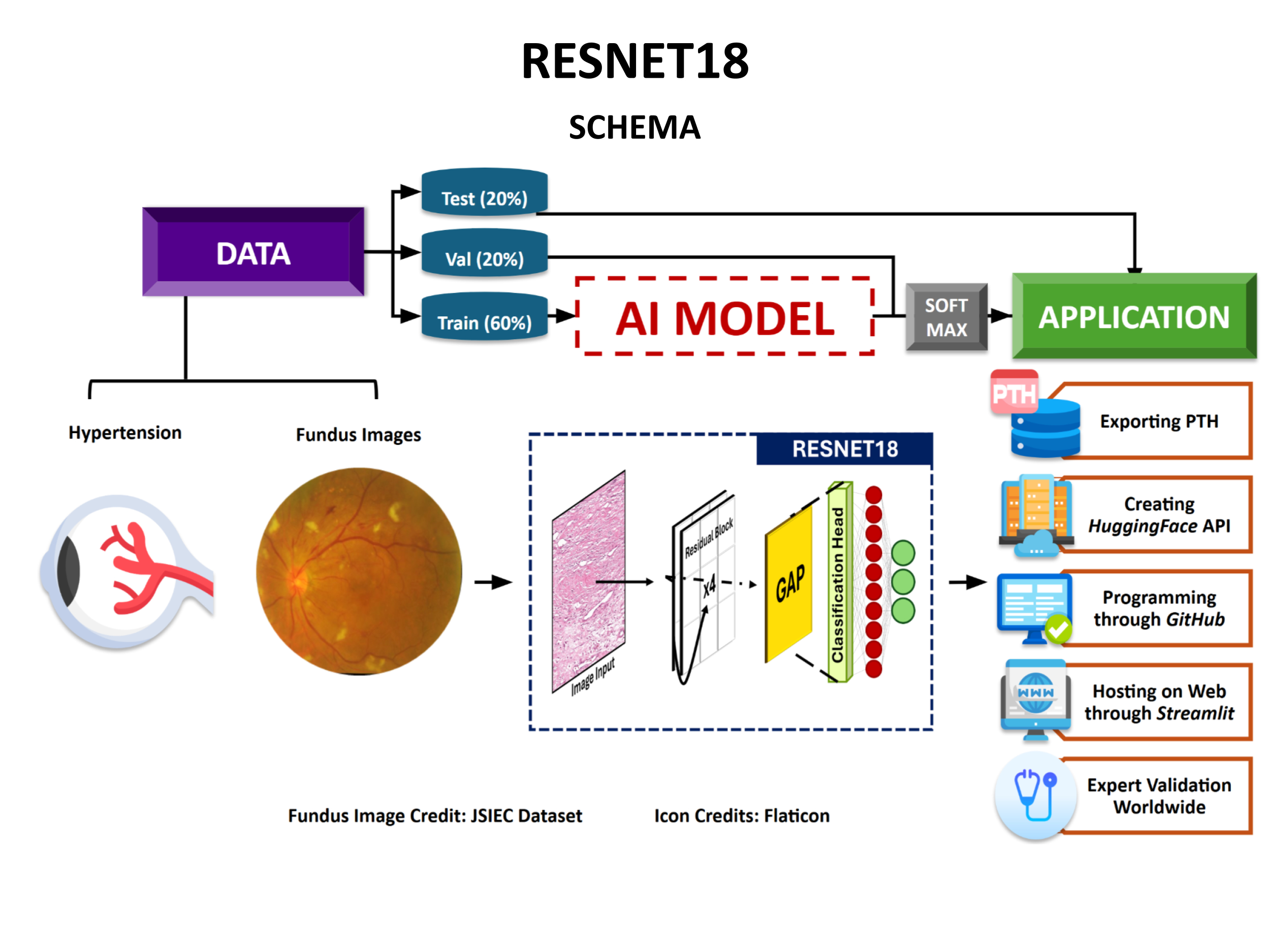
Following institutional ethics approval, a comprehensive dataset encompassing retinal fundus photographs was curated, representing seven distinct pathological entities: HR, age-related macular degeneration (AMD), diabetic retinopathy (DR), cataract, glaucoma, pathological myopia, and normal variants. The ResNet18 architecture was implemented with systematic data partitioning (60% training, 20% validation, 20% testing) and standardized preprocessing protocols. Model optimization employed transfer learning with fine-tuning strategies specific to ophthalmic imaging characteristics. Performance validation utilized comprehensive metrics including area under the curve analysis and multi-class precision-recall evaluation.

Results:
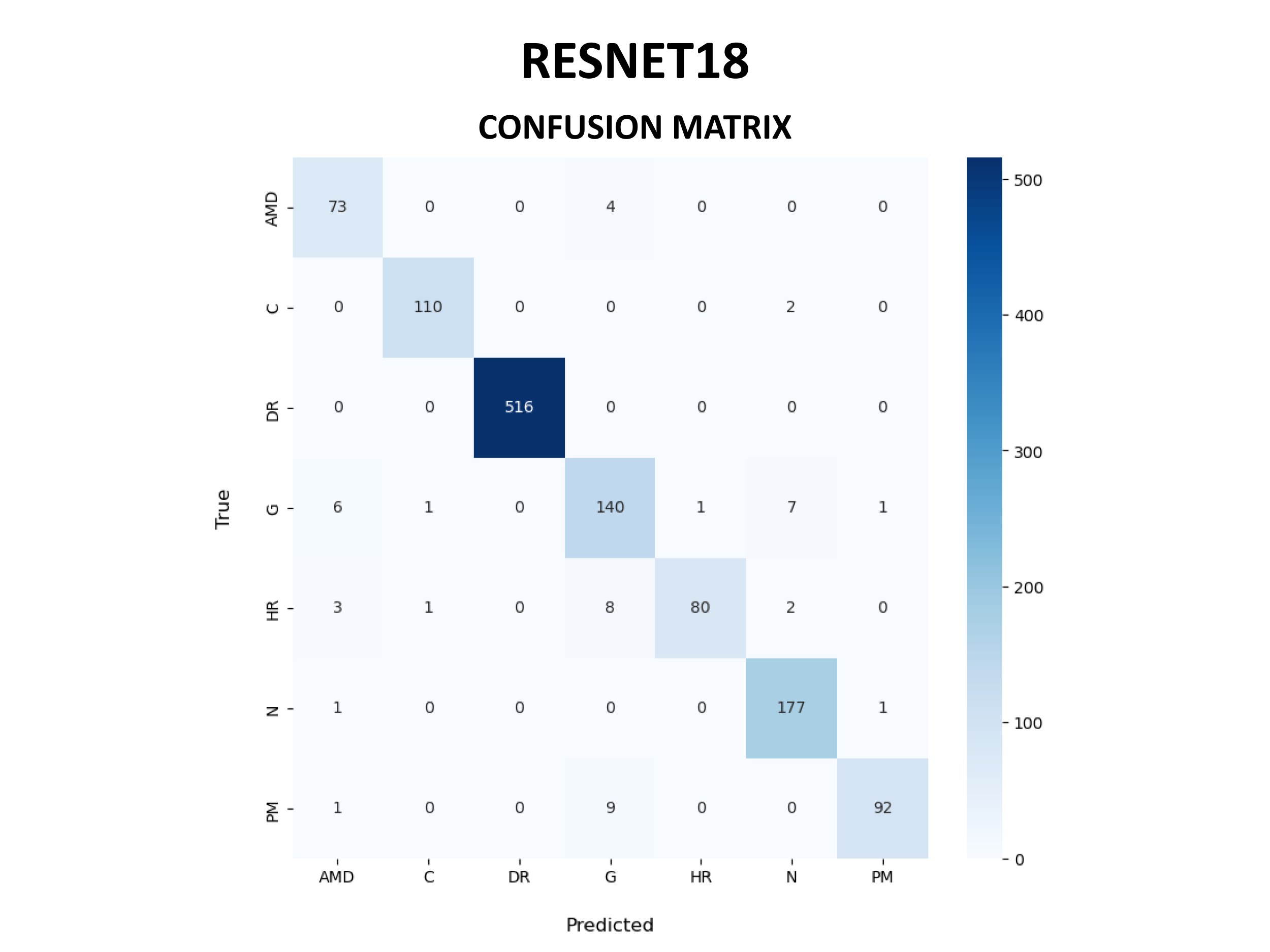
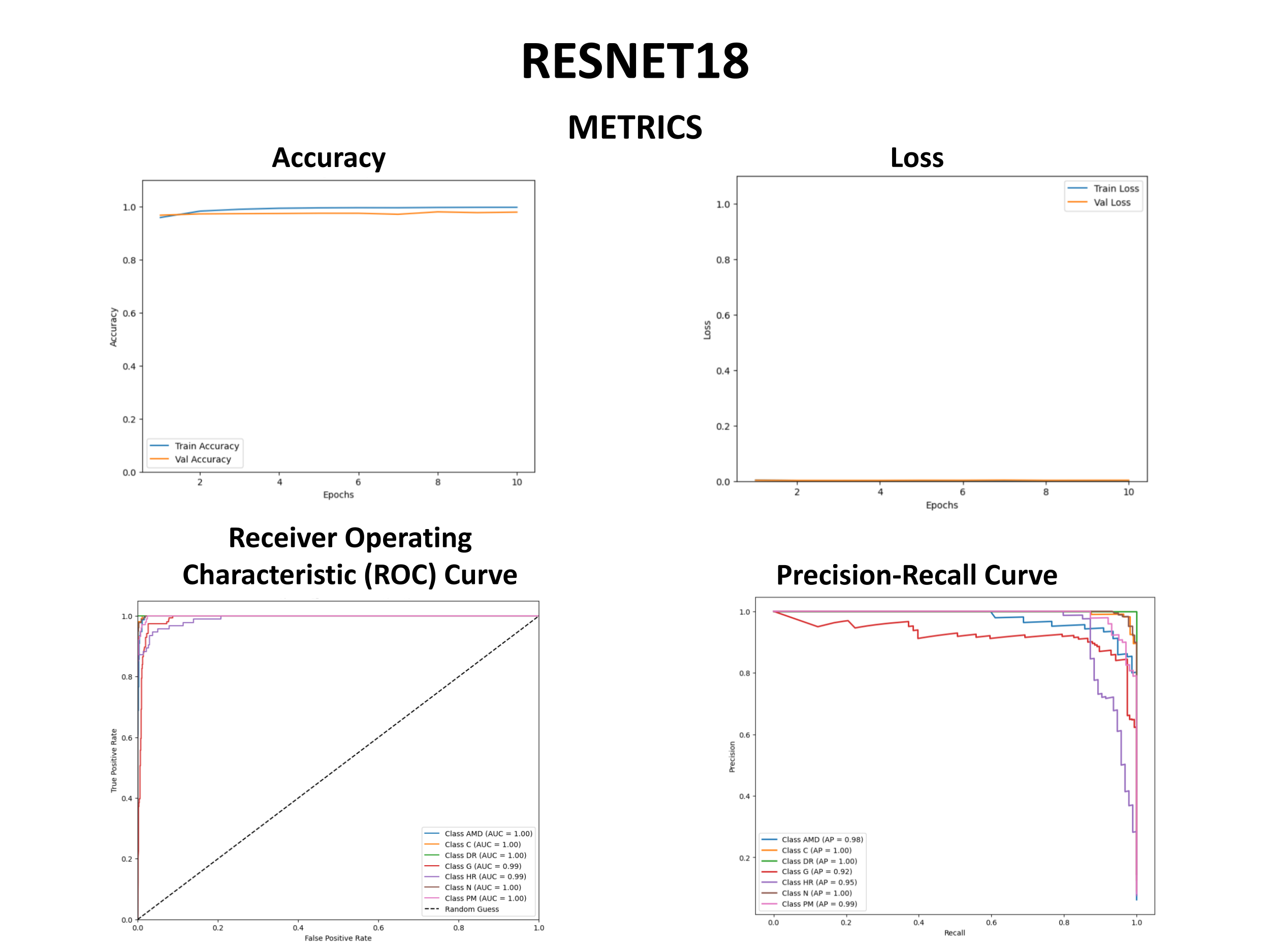
ResNet18 demonstrated exceptional discriminatory performance across all pathological categories. The confusion matrix revealed optimal classification accuracy: DR achieved perfect identification (516/516), while HR demonstrated 85.1% sensitivity (80/94 correct classifications). Cross-validation accuracy consistently exceeded 99%, with area under the receiver operating characteristic curve approaching unity for all disease categories. Precision-recall analysis confirmed robust model generalizability with minimal overfitting characteristics.

Conclusions:
These findings establish ResNet18's superiority in automated hypertensive retinopathy detection, offering scalable deployment potential for cardiovascular risk assessment. The residual learning paradigm enables precise microvascular phenotyping, advancing personalized medicine approaches in ophthalmologic and cardiologic practice.
  • Krishnan, Elangovan  ( AIM DOCTOR , Thiruvallur, India , India )
  • Patel, Tirth  ( G.M.E.R.S. Medical College , Ahmedabad , India )
  • Patel, Harshkumar  ( GMERS Medical College Himmatnagar , Himmatnagar , India )
  • Vaghela, Rushi  ( Smt. NHL Municipal Medical College , Ahmedabad, , India )
  • Habib, Ashna  ( Dow University of Health Sciences , Karachi , Pakistan )
  • Qureshi, Umar  ( Akhter Saeed Medical College , Lahore , Pakistan )
  • Hussain, Syed Ibad  ( Jinnah sindh medical university , Karachi , Pakistan )
  • Sethuraj, Jansi  ( UTHealth Houston , HOUSTON , Texas , United States )
  • Elangovan, Kavin  ( AIM DOCTOR , Houston , Texas , United States )
  • Elangovan, Ramya  ( AIM DOCTOR , Houston , Texas , United States )
  • Alrouh, Mohamad Amro  ( alexandria university , AL AIN , Egypt )
  • Franklin Johnson, Alan Oswald  ( Christian Medical College, Vellore , Chennai , India )
  • Author Disclosures:
    Elangovan Krishnan: DO NOT have relevant financial relationships | Tirth Patel: DO NOT have relevant financial relationships | Harshkumar Patel: DO NOT have relevant financial relationships | RUSHI VAGHELA: DO NOT have relevant financial relationships | Ashna Habib: DO NOT have relevant financial relationships | Umar Qureshi: DO NOT have relevant financial relationships | Syed ibad Hussain: DO NOT have relevant financial relationships | Jansi Sethuraj: No Answer | Kavin Elangovan: No Answer | Ramya Elangovan: DO NOT have relevant financial relationships | Mohamad Amro Alrouh: DO NOT have relevant financial relationships | ALAN OSWALD FRANKLIN JOHNSON: DO NOT have relevant financial relationships
Meeting Info:

Scientific Sessions 2025

2025

New Orleans, Louisiana

Session Info:

AI-Powered Multimodal Imaging and ECG for Disease-Specific Diagnostics

Monday, 11/10/2025 , 12:15PM - 01:25PM

Moderated Digital Poster Session

More abstracts on this topic:
A Cross-scale Causal Machine Learning Framework Pinpoints Mgl2+ Macrophage Orchestrators of Balanced Arterial Growth

Han Jonghyeuk, Kong Dasom, Schwarz Erica, Takaesu Felipe, Humphrey Jay, Park Hyun-ji, Davis Michael E

A Machine Learning Approach to Predict Percutaneous Coronary Intervention in Patients with Critical Illness and Signs of Myocardial Injury

Mueller Joshua, Stepanova Daria, Chidambaram Vignesh, Nakarmi Ukash, Al'aref Subhi

More abstracts from these authors:
Analysing the Capabilities of Recent Artificial Intelligence Models in Detecting Atrial Fibrillation Using Patient Electrocardiograms

Krishnan Elangovan, Qureshi Umar, Hamna Syeda, Elangovan Ramya, Sethuraj Jansi, Elangovan Kavin, Patel Krish, Franklin Johnson Alan Oswald, Patel Harshkumar

Smarter Together: How Artificial Intelligence Algorithms are Enhancing Clinicians in Early Detection of CHD Congenital Heart Disease?

Vaghela Rushi, Sethuraj Jansi, Elangovan Ramya, Patel Krish, Dontulwar Taral, Elangovan Kavin, Dantu Gayathri, Krishnan Elangovan

You have to be authorized to contact abstract author. Please, Login
Not Available