Smarter Together: How Artificial Intelligence Algorithms are Enhancing Clinicians in Early Detection of CHD Congenital Heart Disease?
Abstract Body (Do not enter title and authors here): Background: Congenital heart disease (CHD) is the most common congenital anomaly, affecting 8–10 per 1,000 live births globally, and is a leading cause of perinatal morbidity and mortality. Despite advances in fetal imaging, early and accurate CHD detection remains challenging, hindered by operator dependency and the subtlety of prenatal cardiac anomalies. Artificial intelligence (AI), particularly deep learning algorithms, offers a novel analytical framework for automated, high-throughput analysis of fetal cardiac imaging, with the potential to transform prenatal diagnostic pathways.
Objectives: To systematically evaluate and quantitatively synthesize the diagnostic performance of AI algorithms in detecting fetal CHD.
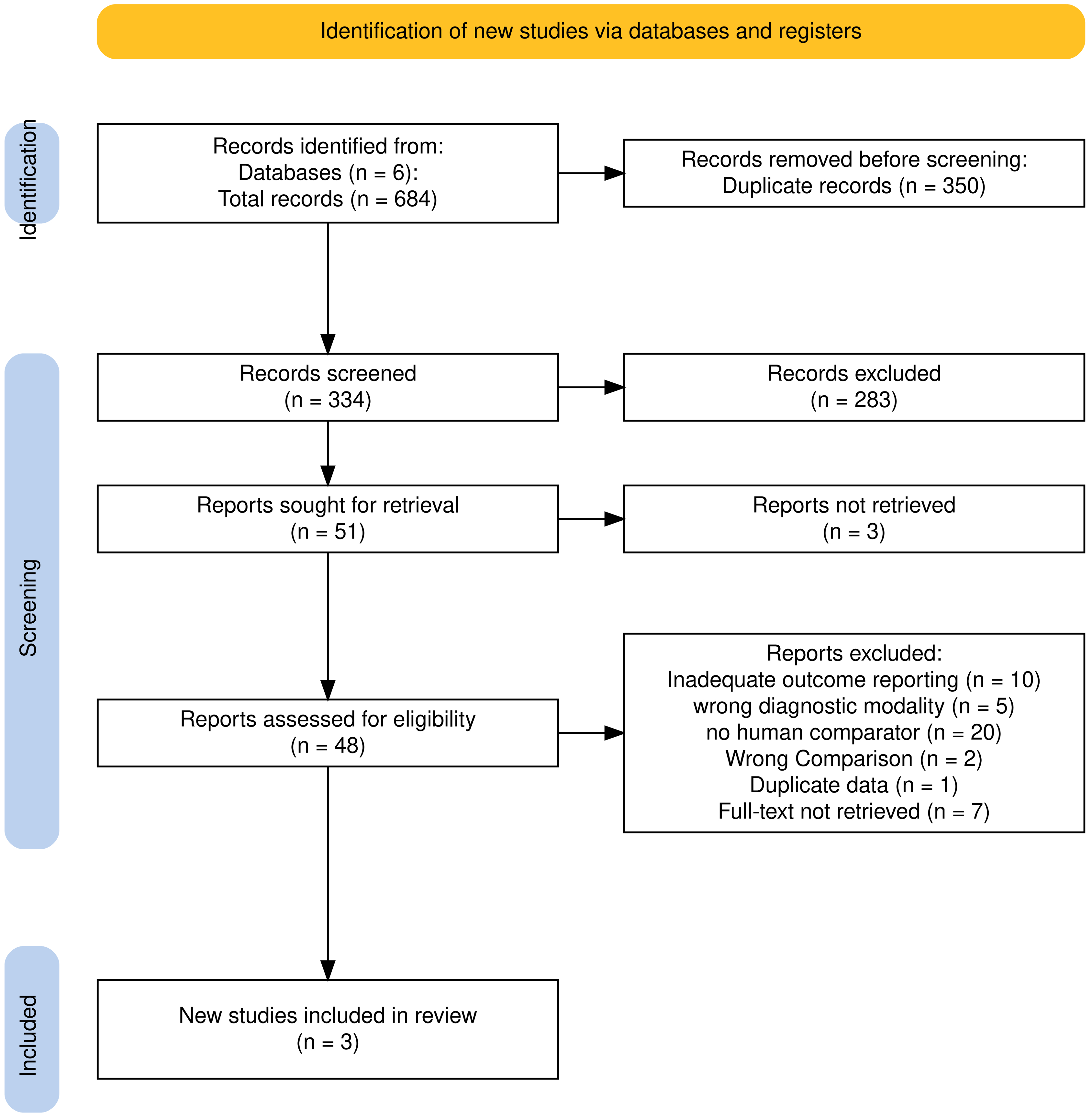
Methods: A comprehensive literature search of PubMed, Embase, Cochrane CENTRAL, Web of Science, and Ovid Medline was conducted from inception through June 2025 for studies reporting diagnostic accuracy of AI algorithms for fetal CHD using any imaging modality. Three reviewers independently screened studies, extracted data, and assessed risk of bias using QUADAS-2, resolving discrepancies by consensus. Random-effects meta-analyses were performed in R, adhering to PRISMA-DTA guidelines, to generate pooled accuracy estimates for AI algorithms.
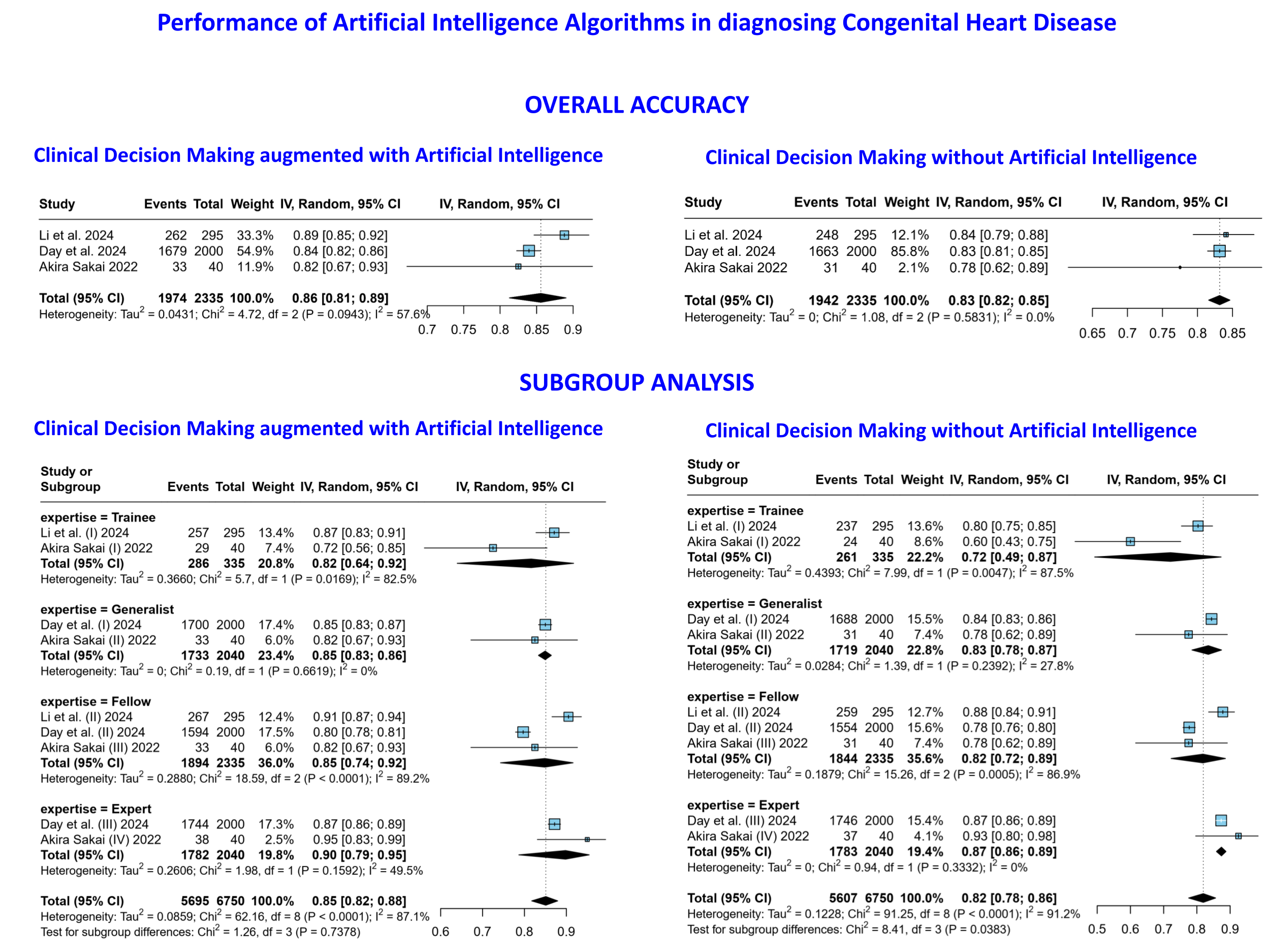
Results: Across eligible studies, AI-augmented clinical decision-making achieved a pooled diagnostic accuracy of 0.86 (95% CI, 0.81–0.89), significantly exceeding the accuracy of non-AI approaches (0.83 [0.82–0.85]; p = 0.0043). Subgroup analyses stratified by clinician expertise (trainee, generalist, fellow, expert) consistently demonstrated incremental accuracy gains with AI augmentation, with the greatest relative improvement among trainees (AI: 0.82 [0.64–0.93] vs. non-AI: 0.72 [0.49–0.87]; p = 0.0047). Heterogeneity was moderate to high (I2 up to 91.2%), but the directionality of effect was robust.
Conclusions: AI and deep learning algorithms substantially enhance the diagnostic accuracy of fetal CHD detection, particularly benefiting less experienced clinicians. These findings highlight the transformative potential of AI to address critical diagnostic gaps, reduce operator dependency, and improve prenatal outcomes in CHD.
Vaghela, Rushi
(
Smt. NHL Municipal Medical College
, Ahmedabad, , India )
Sethuraj, Jansi
(
UTHealth Houston
, HOUSTON , Texas , United States )
Elangovan, Ramya
(
AIM DOCTOR
, Houston , Texas , United States )
Patel, Krish
(
C. U. Shah Medical College
, Surendranagar , India )
Dontulwar, Taral
(
AIM DOCTOR
, Thiruvallur, India , India )
Elangovan, Kavin
(
AIM DOCTOR
, Houston , Texas , United States )
Dantu, Gayathri
(
Government Medical College MBNR
, Hyderabad , India )
Krishnan, Elangovan
(
AIM DOCTOR
, Thiruvallur, India , India )
Author Disclosures:
RUSHI VAGHELA:DO NOT have relevant financial relationships
| Jansi Sethuraj:No Answer
| Ramya Elangovan:DO NOT have relevant financial relationships
| Krish Patel:DO NOT have relevant financial relationships
| TARAL DONTULWAR:DO NOT have relevant financial relationships
| Kavin Elangovan:No Answer
| Gayathri Dantu:DO NOT have relevant financial relationships
| Elangovan Krishnan:DO NOT have relevant financial relationships