Beyond the Cuff: Diagnosing Baroreceptor Failure After Head and Neck Radiation
Abstract Body (Do not enter title and authors here): Labile blood pressure in elderly patients is often multifactorial but may rarely stem from autonomic dysregulation due to structural baroreceptor damage. One under-recognized etiology is radiation-induced carotid sinus dysfunction, especially in patients with a history of head and neck irradiation. We present a case of labile hypertension and syncope in a patient with prior radiation therapy
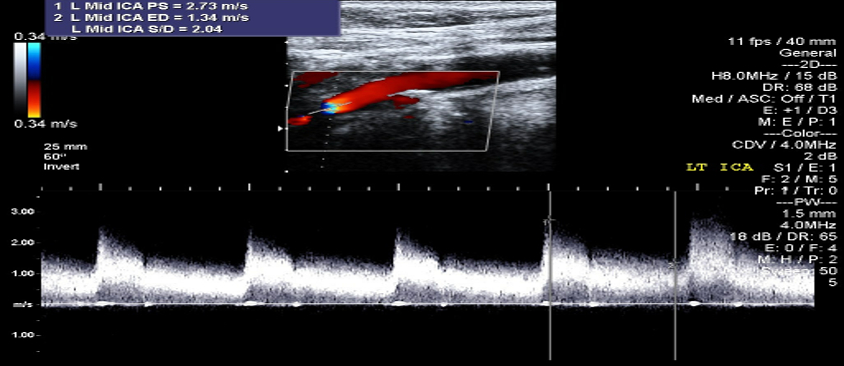
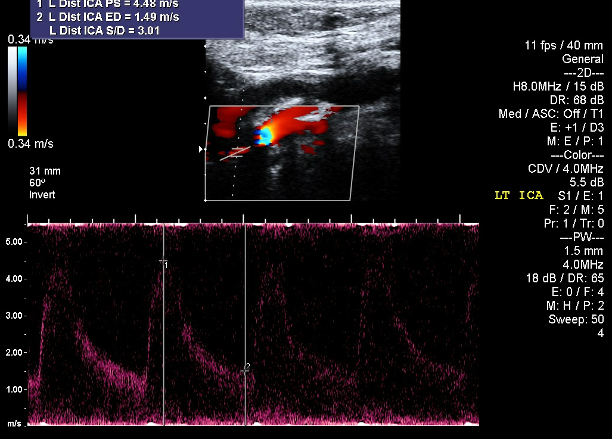
An 80-year-old woman with well-controlled hypertension presented with new-onset labile systolic pressures ranging from 90 to 200 mmHg. At age 63, she received radiation for SCC of the tongue. Eight years later, she developed episodic headaches and paresthesias during hypertensive spikes. Cardiology workup revealed persistent BP variability (see Figure 1), inappropriate heart rate responses, and sensitivity to antihypertensives—leading to hypotensive episodes. Carotid angiography showed 85% stenosis of the right ICA, successfully stented. A decade later, she had significant left-sided carotid disease (Figures 2a and 2b). Despite interventions, she continued to have erratic BP fluctuations and recurrent syncopal episodes. Radiation-induced baroreflex failure was suspected based on her clinical course and history.
Baroreceptor failure from prior radiation is due to disrupted afferent signaling. Radiation-induced carotid damage with plaque instability is frequently observed as well. There are no standardized diagnostic criteria; however, preserved efferent response alongside impaired afferent modulation suggests the diagnosis. Though microneurography can demonstrate absent reflexive responses to stimuli, it’s mostly research-based. Clinically, tests like Valsalva and cold pressor can be used, but arrhythmias and medication effects can limit accuracy. Due to testing limitations, diagnosis often relies on clinical history, serial vitals, and symptom correlation. Management is patient-specific, emphasizing education, BP self-monitoring, and cautious use of long-acting agents. Avoiding volume-depleting drugs, addressing hypotension supportively, and lifestyle changes are key.
This case underscores the importance of considering radiation-induced carotid sinus dysfunction in patients with labile blood pressure, syncope, and a history of head and neck radiation. Multidisciplinary approaches, including neurologic and autonomic evaluation, may be necessary to guide treatment and improve the quality of life in these complex patients.
Khan, Aarish Husain
(
Pennsylvania Hospital
, Media , Pennsylvania , United States )
Parekh, Vinit
(
Pennsylvania Hospital
, Media , Pennsylvania , United States )
Safdar, Nawaz
(
Pennsylvania Hospital
, Media , Pennsylvania , United States )
Khan, Sabir
(
Pennsylvania Hospital
, Media , Pennsylvania , United States )
Norris, Robert B
(
Pennsylvania Hospital
, Media , Pennsylvania , United States )
Kohut, Andrew
(
Pennsylvania Hospital
, Media , Pennsylvania , United States )
Author Disclosures:
Aarish Husain Khan:DO NOT have relevant financial relationships
| Vinit Parekh:DO NOT have relevant financial relationships
| Nawaz Safdar:DO NOT have relevant financial relationships
| Sabir Khan:DO NOT have relevant financial relationships
| Robert B Norris:No Answer
| Andrew Kohut:No Answer
Martins De Miranda Victor Hugo, De Angelis Katia, Santos Camila, Petrica Neves Pietra, Nascimento Antonio, Dutra Marina, Bernardes Nathalia, Souza Leandro, Campos Guitierre Robson, Irigoyen Mc