Comparative Trends and Characteristics in the Use of Catheter-Directed Therapies for Acute Pulmonary Embolism
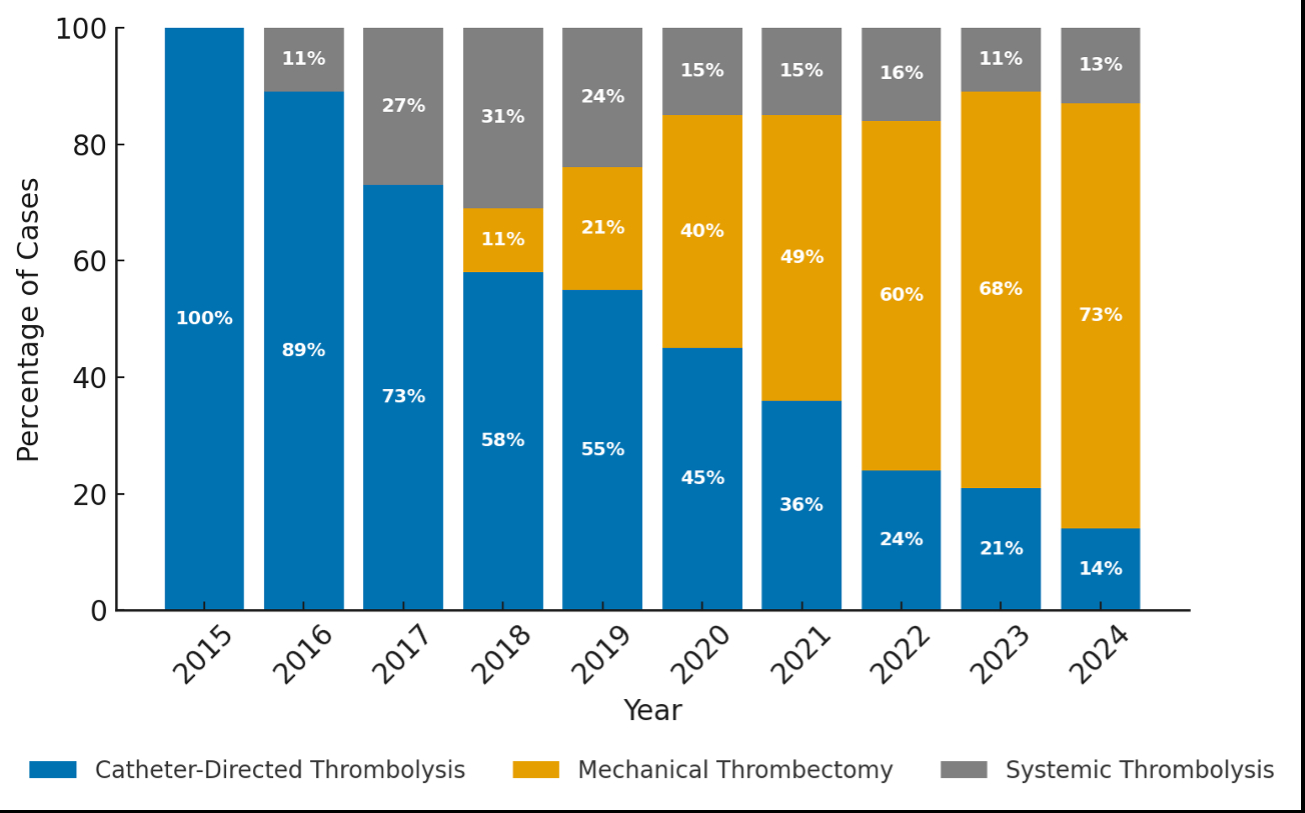
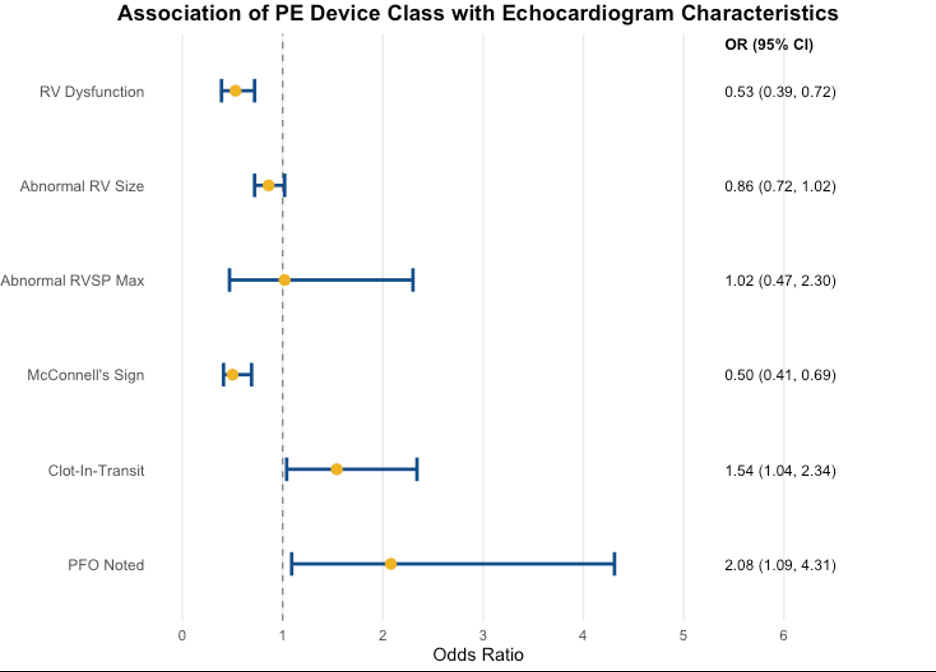
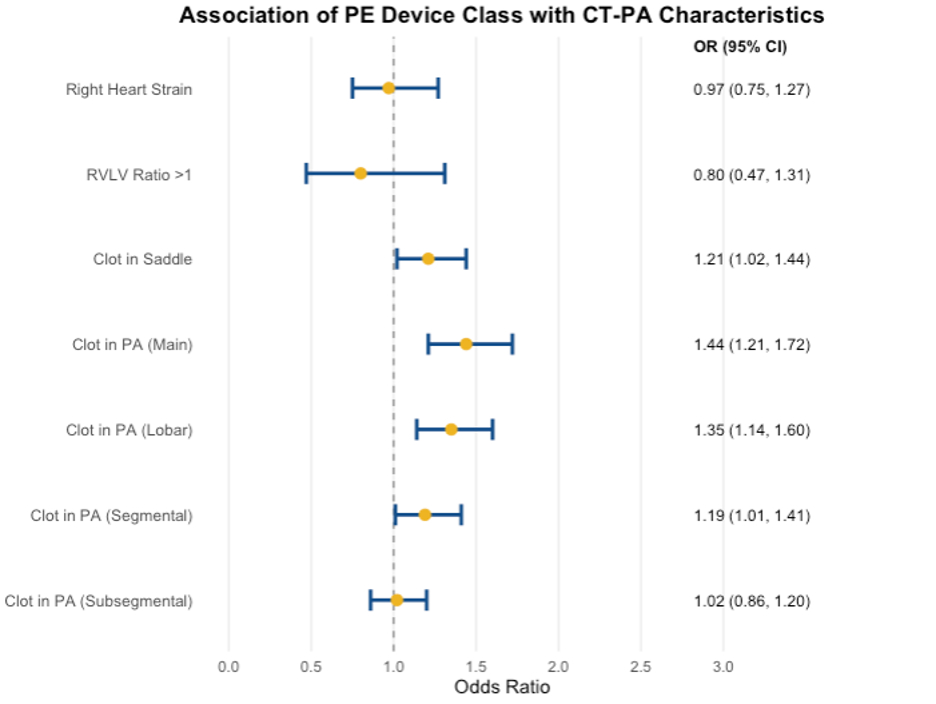
Abstract Body (Do not enter title and authors here): Introduction/Background: Catheter-based therapies for the treatment of acute pulmonary embolus (PE), including catheter-directed thrombolysis (CDT), which delivers fibrinolytics to the pulmonary artery (PA), and mechanical thrombectomy (MT), which physically removes clots, have evolved rapidly. However, multicenter data on usage and patient-level clinical/imaging characteristics remain limited. Research Questions/Hypothesis: This study examines temporal trends in the use of systemic thrombolysis, CDT, and MT for intermediate- to high-risk acute PE from 2015 to 2024. It also investigates the association between clinical and imaging factors and device selection. Methods/Approach: This retrospective study utilized the Pulmonary Embolism Response Team Consortium Registry, including 2,958 patients who underwent systemic thrombolysis, CDT, or MT between October 2015 and June 2024, stratified by the European Society of Cardiology 2019 risk categories. Statistical analyses included descriptive statistics, trend analysis, and multivariable logistic regression to identify associations between clinical/imaging features and device class selection. Results/Data: Among 2,958 patients who received advanced therapies, 75.9% had intermediate-risk PE and 24.1% high-risk PE. Following approval of the first MT device in 2018, MT use increased to 73% of all advanced therapy use within the registry (Figure 1). Patients under 70 years were more likely to receive CDT (OR 0.66; 95% CI: 0.55–0.78), while older patients were more likely to receive MT (OR 1.52; 95% CI: 1.27–1.82). CDT use was more likely in those with respiratory symptoms (OR 0.61; 95% CI: 0.47–0.79), hypoxia (OR 0.84; 95% CI: 0.72–1.00), and ICU admissions (OR 0.03; 95% CI: 0.02–0.04). MT was more commonly used in patients with elevated troponin (OR 3.47; 95% CI: 2.84–4.22), vasopressor use (OR 2.26; 95% CI: 1.51–3.38), and extracorporeal membrane oxygenation (OR 2.89; 95% CI: 1.62–5.51). Echocardiographic evidence of RV dysfunction and McConnell’s sign favored CDT use (Figure 2). MT was linked to CT evidence of clot-in-transit, patent foramen ovale, and proximal clot burden (Figure 3). Conclusion: Over the past decade, MT has become the predominant form of advanced intervention for intermediate/high-risk acute PE. MT is preferentially utilized in older, sicker patients with proximal clots, while CDT is favored in younger patients with respiratory symptoms and echocardiographic RV dysfunction.
Kim, Joseph
(
Beth Israel Deaconess Medical Cente
, Boston , Massachusetts , United States )
Horbal, Steven
(
University of Michigan
, Ann Arbor , Michigan , United States )
Mewaldt, Christian
(
Beth Israel Deaconess Medical Cente
, Boston , Massachusetts , United States )
Ramachandran, Abhinay
(
Beth Israel Deaconess Medical Cente
, Boston , Massachusetts , United States )
Yeh, Robert
(
Beth Israel Deaconess Med Ctr
, Boston , Massachusetts , United States )
Secemsky, Eric
(
BIDMC
, Boston , Massachusetts , United States )
Carroll, Brett
(
Beth Israel Deaconess Medical Cente
, Boston , Massachusetts , United States )
Author Disclosures:
Joseph Kim:DO NOT have relevant financial relationships
| Steven Horbal:DO NOT have relevant financial relationships
| Christian Mewaldt:DO NOT have relevant financial relationships
| Abhinay Ramachandran:No Answer
| Robert Yeh:DO have relevant financial relationships
;
Consultant:Abbott Vascular:Active (exists now)
; Research Funding (PI or named investigator):Abbott:Active (exists now)
; Research Funding (PI or named investigator):JenaValve:Active (exists now)
; Research Funding (PI or named investigator):Medtronic:Active (exists now)
; Research Funding (PI or named investigator):Boston Scientific:Active (exists now)
; Research Funding (PI or named investigator):Edwards:Active (exists now)
; Consultant:Edwards:Active (exists now)
; Consultant:Magenta Medical:Active (exists now)
; Consultant:Shockwave:Active (exists now)
; Consultant:Elixir Medical:Active (exists now)
; Consultant:Medtronic:Active (exists now)
; Consultant:CathWorks:Active (exists now)
; Consultant:Boston Scientific:Active (exists now)
| Eric Secemsky:DO have relevant financial relationships
;
Consultant:Abbott, Asahi, BD, Boston Scientific, Conavi, Cook, Cordis, Endovascular Engineering, Evident Vascular, Gore, InfraRedx , Medtronic, Philips, RapidAI, Rampart, R3, Shockwave , Siemens, Son i Vie, Teleflex, Terumo, Thrombolex, VentureMed , Zoll:Active (exists now)
| Brett Carroll:DO have relevant financial relationships
;
Consultant:Koya Medical:Active (exists now)