A Case Report: Outpatient Diagnosis of Venous Stent Migration - Avoiding Catastrophic Outcomes
Abstract Body (Do not enter title and authors here): Intro Peripheral venous stenting is an important treatment for iliocaval venous obstruction, but stent migration is a rare, serious complication with an incidence of 0.9–4.3% and mortality rates up to 60%. Migration to the heart or lungs can cause life-threatening events. Presentations are often vague—dyspnea, dizziness, chest discomfort—leading to delays in care. No standard surveillance guidelines exist. Early recognition is crucial to reducing morbidity and mortality.
Aim To emphasize early detection of venous stent migration through clinical vigilance and prompt imaging, and to highlight the importance of continued monitoring for thromboembolic complications post-retrieval.
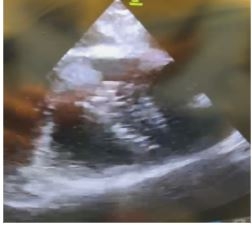
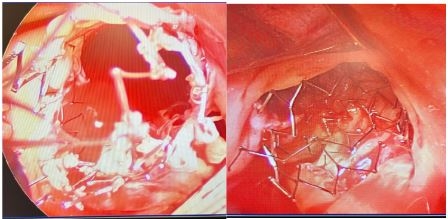
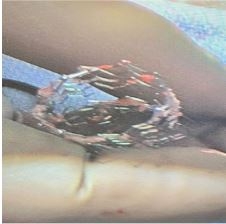
Description A 52-year-old woman with hypertension, diabetes, hypothyroidism, and prior left iliac vein stenting for chronic venous insufficiency presented to primary care with postural dizziness, exertional dyspnea, and mild headache. Physical exam and vital signs were unremarkable. Given her history, a transthoracic echocardiogram was obtained, revealing a dislodged stent extending from the right atrium into the right ventricle. She was referred urgently to the hospital, where intravenous heparin was initiated. Percutaneous retrieval via transfemoral access was unsuccessful due to stent entrapment in cardiac structures. Open-heart surgical retrieval was performed following confirmation of normal coronary anatomy. Initial recovery was uneventful; however, several weeks later, she developed a segmental pulmonary embolism, treated successfully with apixaban. She returned to baseline without further complications. Early detection enabled timely intervention and likely prevented fatal outcomes.
Discussion Venous stent migration can cause embolism, valvular damage, arrhythmias, and tamponade. Diagnosis is challenging due to vague symptoms and lack of surveillance protocols. This case highlights the role of outpatient providers in early detection and referral. Multidisciplinary coordination among primary care, cardiology, vascular surgery, and radiology is essential. Vigilance must continue post-retrieval, as the patient’s pulmonary embolism illustrates the ongoing thromboembolic risk. Continued monitoring, anticoagulation, and follow-up imaging are critical to mitigating late complications.
Conclusion Venous stent migration, though rare, can have severe consequences. Early outpatient recognition, prompt imaging, and long-term surveillance are essential to improve patient outcomes.
Basnyat, Anouksha
(
Center for Hypertension and IM
, Odessa , Texas , United States )
Pamganamamula, Madhu
(
Center for Hypertension and IM
, Odessa , Texas , United States )
Naidu, Raja
(
Complete Care Cardiology
, Odessa , Texas , United States )
Pamganamamula, Teja
(
Center for Hypertension and IM
, Odessa , Texas , United States )
Manchiraju, Srinidhi
(
Center for Hypertension and IM
, Odessa , Texas , United States )
Gaddam, Srilakshmi
(
Center for Hypertension and IM
, Odessa , Texas , United States )
Panganamamula, Lalitha
(
Center for Hypertension and IM
, Odessa , Texas , United States )
Author Disclosures:
Anouksha Basnyat:DO NOT have relevant financial relationships
| Madhu Pamganamamula:No Answer
| Raja Naidu:No Answer
| Teja Pamganamamula:DO NOT have relevant financial relationships
| Srinidhi Manchiraju:No Answer
| Srilakshmi Gaddam:No Answer
| Lalitha Panganamamula:DO NOT have relevant financial relationships
Najera-rojas Andrea, Arias-mendoza Alexandra, Araiza Diego, Robles-ledesma Mariana, De Los Rios Manuel, Lugo Gavidia Leslie Marisol, Leiva Jose Luis, De Los Ríos Arce Luis Fernando, Gopar-nieto Rodrigo, Sierra Lara Martinez Jorge Daniel, González Pacheco Héctor
4367570_File000000.JPG
4367570_File000002.JPG
4367570_File000001.JPG
You have to be authorized to contact abstract author. Please, Login