Double X, Double Trouble: Unveiling the Clotting Risk in Klinefelter Syndrome
Abstract Body (Do not enter title and authors here): Background: Klinefelter syndrome (KS), the most common sex chromosome aneuploidy in males (47,XXY), is generally associated with hypogonadism, gynecomastia, and infertility. Nevertheless, its association with thrombotic risk remains insufficiently recognized, despite accumulating evidence indicating a predisposition to venous thromboembolism (VTE) comparable to that observed in classical, inherited thrombophilias.
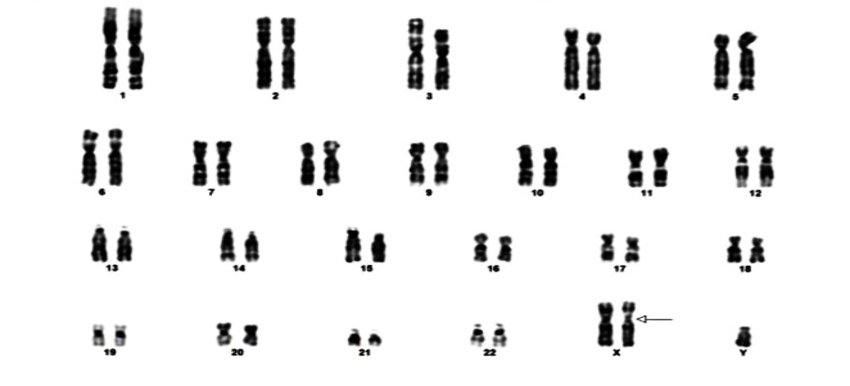
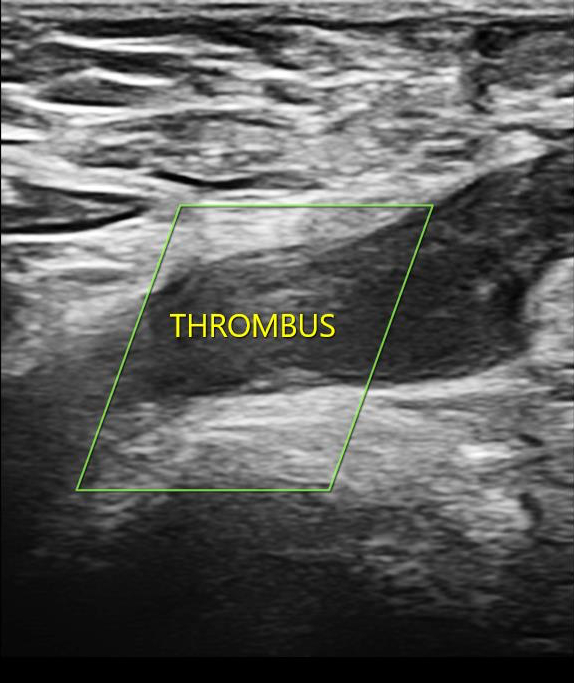
Description of Case: We present the case of a 33-year-old South Asian male who exhibited unilateral lower limb swelling and pain persisting for one month. Doppler ultrasonography revealed chronic deep vein thrombosis (DVT) affecting the left common femoral and deep femoral veins. The patient lacked identifiable risk factors for thrombosis, such as recent surgery, trauma, malignancy, or immobilization. Physical examination revealed signs of hypogonadism and gynecomastia. Hormonal assays indicated elevated gonadotropin levels with low serum testosterone levels, while karyotype analysis confirmed a 47,XXY genotype, consistent with KS. Further evaluations, including screening for acquired thrombophilias (antiphospholipid antibodies) and genetic mutations (Factor V Leiden, Prothrombin G20210A, and MTHFR C677T), yielded negative results. The patient was successfully managed with heparin, transitioned to long-term anticoagulation with warfarin, and demonstrated clinical improvement upon follow-up.
Discussion: This case highlights the significant yet often overlooked association between KS and thrombotic events. The pathophysiological mechanisms remain unclear but are hypothesized to be multifactorial, involving increased expression of X-linked coagulation factors (e.g., Factor VIII), endothelial dysfunction, and a higher prevalence of comorbidities. Notably, in our case, the absence of conventional or inherited prothrombotic factors underscores KS as a potential primary contributor to the hypercoagulable state.
Conclusion: Clinicians are advised to maintain a heightened level of suspicion for KS in male patients who present with unexplained thrombotic events, particularly when these events are accompanied by symptoms indicative of hypogonadism. The early identification and management of thrombotic risk in individuals with KS are crucial to mitigating morbidity. Further research is necessary to elucidate the mechanisms that link KS with thrombophilia, as this may inform screening strategies and therapeutic interventions.
Putta Nagarajan, Hrithik Dakssesh
(
Madurai Medical College
, Madurai , India )
Hithayathulla, Mohammed Afsharhussain
(
Madurai Medical College
, Madurai , India )
Balaji, Swetha
(
NYMC at St. Mary's General Hospital
, Passaic , New Jersey , United States )
Gowanda, Ria
(
Macon & Joan Brock Virginia Health Sciences - Old Dominion University
, Virginia Beach , Virginia , United States )
Kamaraj, Balakrishnan
(
Madurai Medical College
, Madurai , India )
Author Disclosures:
Hrithik Dakssesh Putta Nagarajan:DO NOT have relevant financial relationships
| Mohammed Afsharhussain Hithayathulla:No Answer
| Swetha Balaji:DO NOT have relevant financial relationships
| Ria Gowanda:DO NOT have relevant financial relationships
| Balakrishnan Kamaraj:DO NOT have relevant financial relationships