
Logo

American Heart Association

  17
  0


Final ID: Mo2064

Impact of Exercise on Post-COVID-19 Recovery: A Comparative Study Using Modified 6-Minute Walk Test and Harvard Step Test

Abstract Body (Do not enter title and authors here): Background: Persistent cardiorespiratory impairment after COVID-19 has raised concerns about long-term recovery. This study examines the impact of regular exercise on functional improvement using two physiological assessments.

Hypothesis: Regular physical activity accelerates recovery of cardiorespiratory parameters in individuals recovering from COVID-19.

Objective: To compare recovery in resting oxygen saturation (SpO2), exertional desaturation (ΔSpO2), and cardiopulmonary efficiency between individuals who exercise regularly and those leading sedentary lifestyles, using non-invasive measurement tools.

Methods: A cross-sectional study was conducted with 91 COVID-19 survivors, aged 20-68 years. Participants were grouped into those who exercised (n=28) and those who were sedentary (n=35). Modified 6-minute walk tests (6MWT) were performed at 1, 2, and 3 months post-discharge. Harvard Step Tests (HST) were conducted at 1 and 2 months post-discharge. Primary endpoints included resting SpO2, ΔSpO2, SpO2 recovery index, total distance walked, and cardiopulmonary efficiency index. Analysis used Friedman, Mann-Whitney U, and Kruskal-Wallis tests. A Generalized Estimating Equations model compared trends.

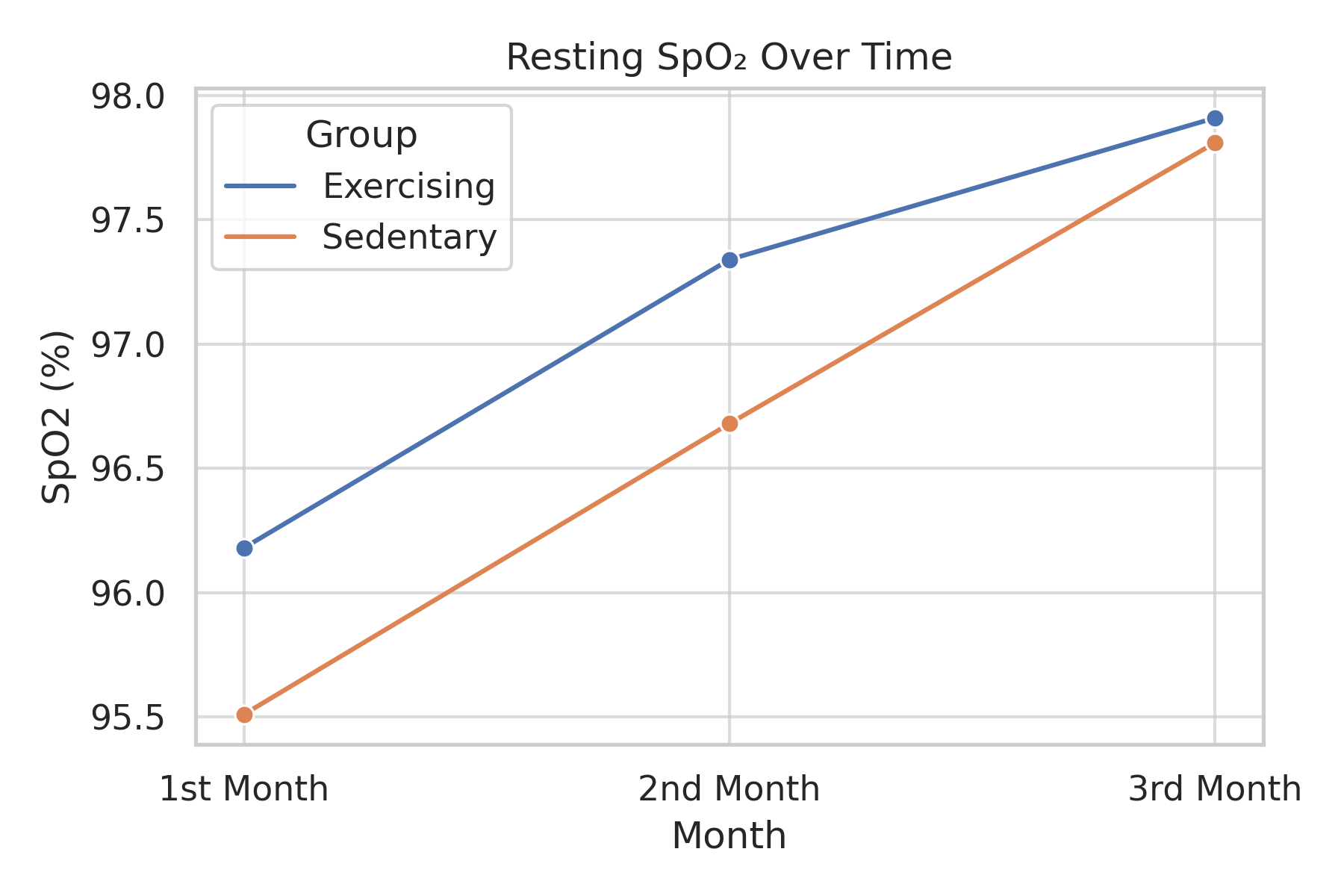
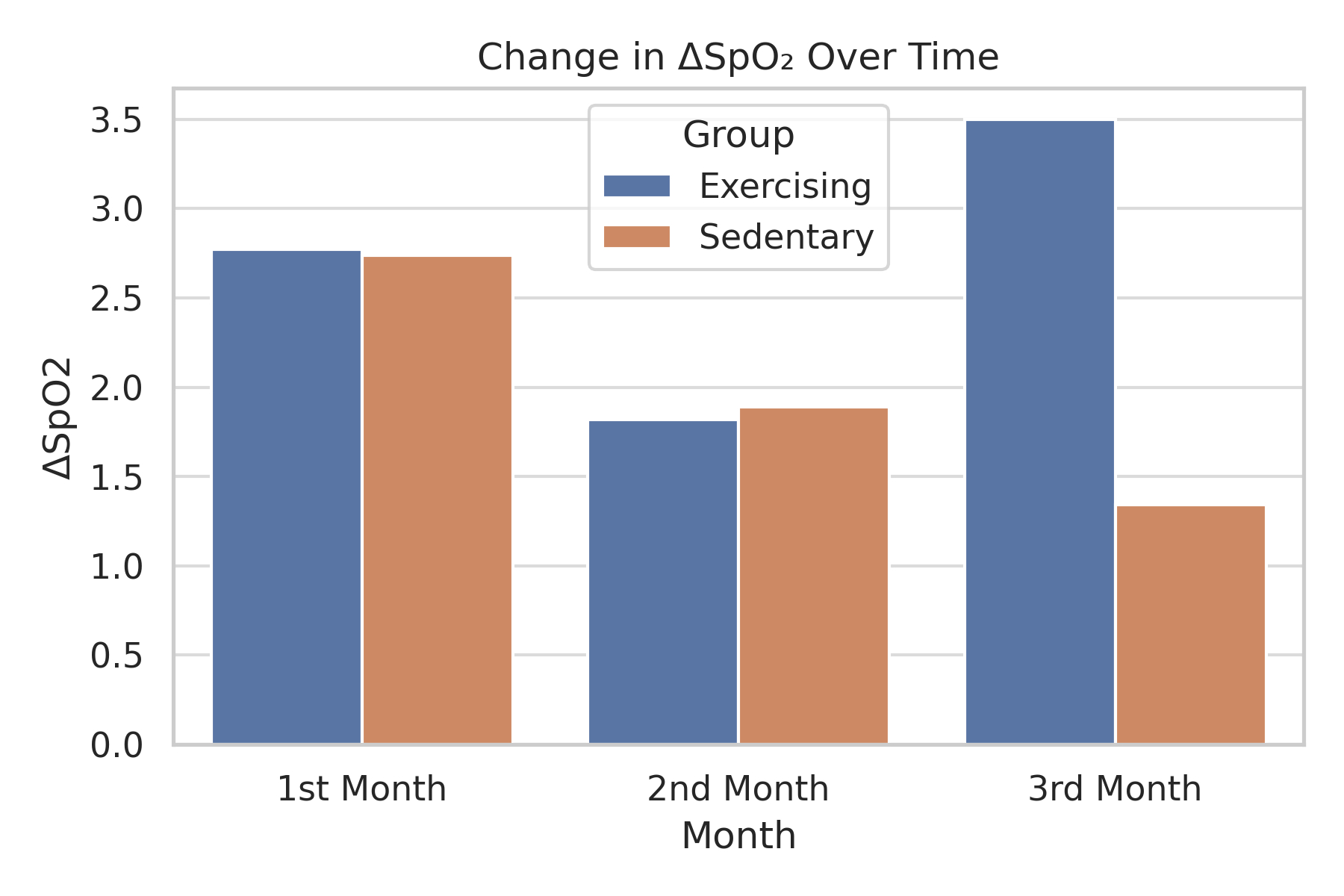
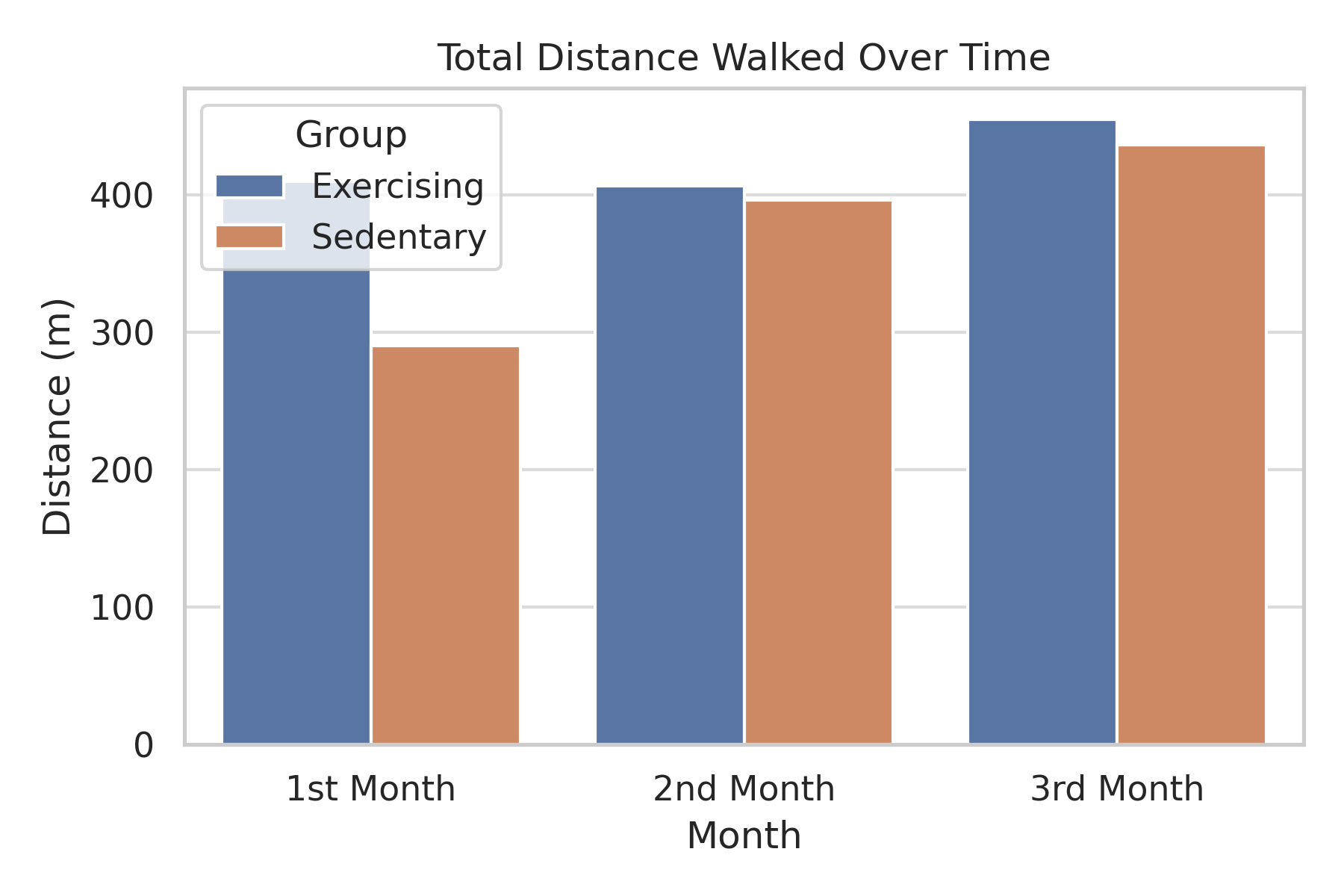
Results: Baseline SpO2 levels were significantly higher in individuals who engaged in physical exercise (mean 96.18%) compared to those who were sedentary (mean 95.51%, p<0.001). After three months, SpO2 levels improved to 97.91% and 97.81% in the exercising and sedentary groups, respectively. The change in SpO2 (ΔSpO2) was more pronounced in sedentary participants (−1.40) than in those who exercised (+0.73), although this difference was not statistically significant (p=0.582). The total distance walked increased from 409.8 meters to 454.8 meters in the exercising group and from 289.8 meters to 436.4 meters in the sedentary group, with the sedentary group showing a significantly greater improvement due to a lower baseline (p=0.004). At two months, the CP efficiency index was significantly higher in the exercising group (mean 69.4) compared to the sedentary group (mean 64.3, p<0.001).

Conclusion: Regular physical exercise significantly enhances cardiorespiratory recovery following COVID-19. Both the 6MWT and the HST are straightforward and effective tools for monitoring this recovery process. The findings advocate for the integration of structured physical activity into post-COVID rehabilitation pathways.
  • Athaluri, Sai Anirudh  ( Rangaraya Medical College , Kakinada , Andra Pradesh , India )
  • Devi, Syamala  ( GVPIH&HT , Visakhapatnam , India )
  • Kamaraj, Balakrishnan  ( Madurai Medical College , Madurai , India )
  • Putta Nagarajan, Hrithik Dakssesh  ( Madurai Medical College , Madurai , India )
  • Nattala, Ajay Goud  ( osmania medical college , Hyderabad , India )
  • Gopu, Sahithi  ( Osmania Medical College , Peddapalli , India )
  • Vemulaghat, Krishna Teja  ( Osmania Medical College , Hyderabad , India )
  • Balaji, Swetha  ( NYMC at St. Mary's General Hospital , Passaic , New Jersey , United States )
  • Author Disclosures:
    Sai Anirudh Athaluri: No Answer | Syamala Devi: No Answer | Balakrishnan Kamaraj: DO NOT have relevant financial relationships | Hrithik Dakssesh Putta Nagarajan: DO NOT have relevant financial relationships | Ajay goud nattala: DO NOT have relevant financial relationships | Sahithi Gopu: DO NOT have relevant financial relationships | Krishna teja Vemulaghat: DO NOT have relevant financial relationships | Swetha Balaji: DO NOT have relevant financial relationships
Meeting Info:

Scientific Sessions 2025

2025

New Orleans, Louisiana

Session Info:

Frontiers in Cardiac Care: Innovations, Inflammation, and Rare Disease Challenges

Monday, 11/10/2025 , 01:00PM - 02:00PM

Abstract Poster Board Session

More abstracts on this topic:
Angiotensin Converting Enzyme Gene Polymorphisms (ACE-I/D) Do Not Predict Exercise-Induced Cardiac Remodeling or Performance in Adolescent Male Athletes

Becker Kristian, Hardie William, Gubanich Paul, Hill Garick, Logan Kelsey, Martin Lisa, Powell Adam

Abnormal Oxygen Pulse Trajectory Differentiates Anatomic Complexity and Functional Classification in Adults with Congenital Heart Disease

Campbell Matthew, Lefebvre Margaret, Li Pengyang, Padgett Hannah, Tchoukina Inna, Canada Justin, Shah Sangeeta, Rouse Sierra, Reyes Oscar, Shin Yongdeok, Bakken Brad, Coe Alexa, Hallam Jessica, Kapa Meghana

More abstracts from these authors:
Double X, Double Trouble: Unveiling the Clotting Risk in Klinefelter Syndrome

Putta Nagarajan Hrithik Dakssesh, Hithayathulla Mohammed Afsharhussain, Balaji Swetha, Gowanda Ria, Kamaraj Balakrishnan

When Genes Collide: Hypertrophic Cardiomyopathy and Neurofibromatosis Type 1

Putta Nagarajan Hrithik Dakssesh, Gowanda Ria, Kamaraj Balakrishnan, Balaji Swetha

You have to be authorized to contact abstract author. Please, Login
Not Available