Left Atrial Appendage Closure in Cancer Patients with Atrial Fibrillation: A National Inpatient Sample Study (2016–2020)
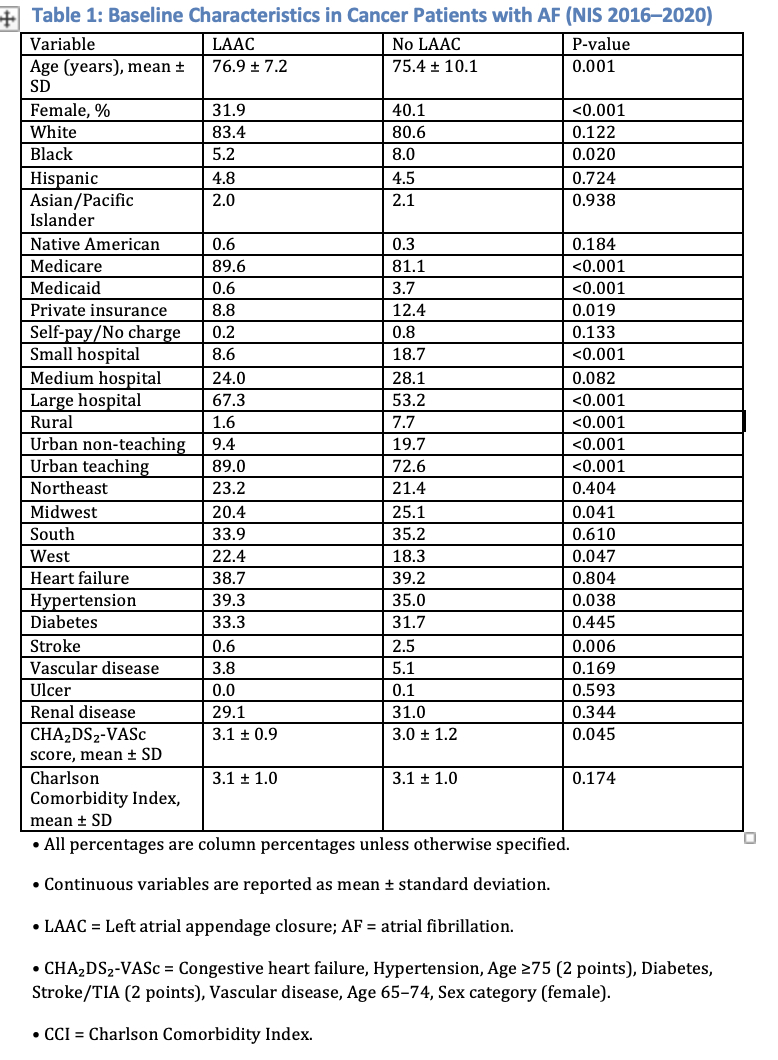
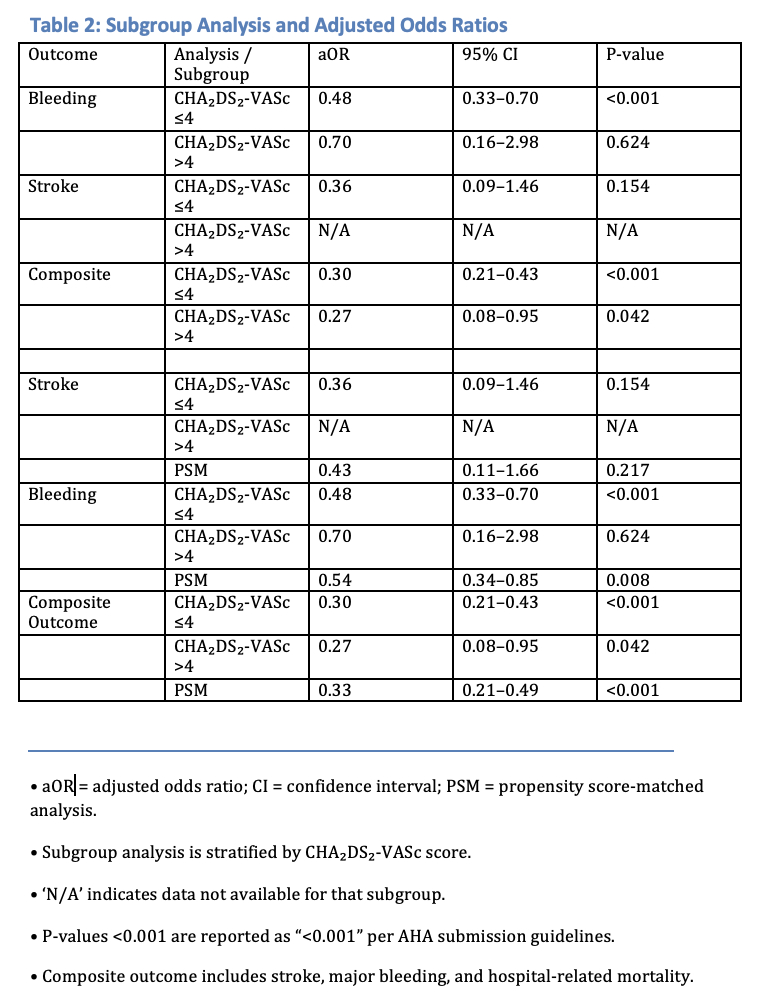
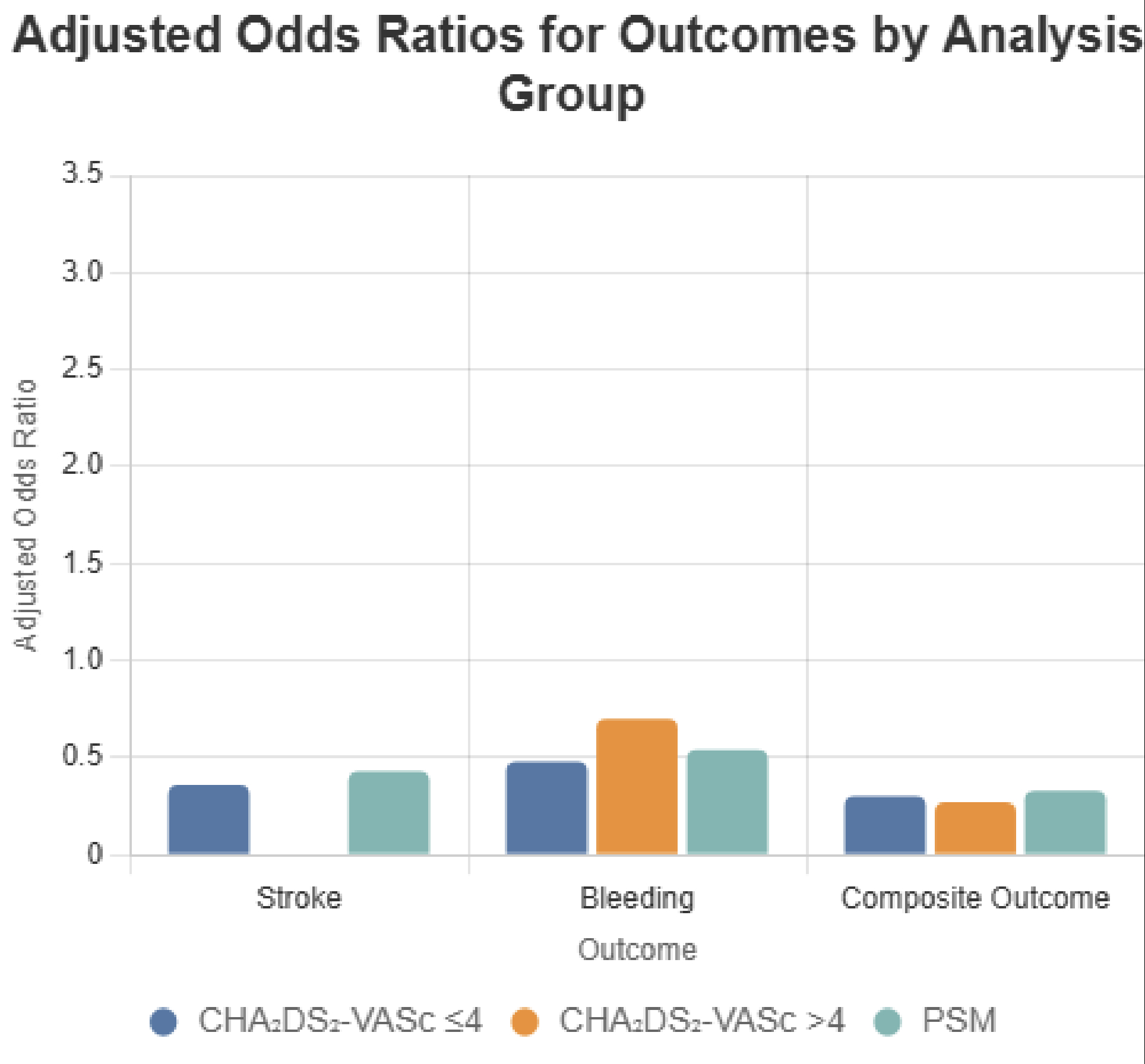
Abstract Body (Do not enter title and authors here): Background: Stroke prevention in cancer patients with atrial fibrillation (AF) is challenging due to competing thrombotic and bleeding risks, which complicate anticoagulation strategies. Aim: We sought to evaluate the safety and efficacy of left atrial appendage closure (LAAC) for reducing ischemic stroke without increasing bleeding risk in cancer patients with AF. Methods: Using the National Inpatient Sample (2016–2020), we identified adult hospitalizations with coexisting cancer and AF (unweighted N=457,836; weighted N=2,289,179). Patients undergoing LAAC (N=2,495) were compared to those without LAAC (N=2,286,684). Primary outcomes included ischemic stroke, major bleeding, and a composite outcome (in-hospital mortality, bleeding, or stroke). Secondary outcomes included cardiogenic shock, mechanical ventilation, and cardiac tamponade. Survey-weighted logistic regression adjusted for demographics, insurance, hospital characteristics, CHA2DS2VASc score, and Charlson Comorbidity Index (CCI) was performed. Subgroup analyses by CHA2DS2VASc score (≤4 vs >4) and propensity score-matched (PSM) regression were conducted. Results: LAAC recipients were older (76.9±7.2 vs. 75.4±10.1 years; p=0.001) and had slightly higher CHA2DS2VASc scores (3.1±0.9 vs. 3.0±1.2; p=0.045). In the CHA2DS2-VASc ≤4 subgroup, LAAC was associated with lower stroke (adjusted OR 0.36; 95% CI, 0.09–1.46), bleeding (aOR 0.48; 95% CI, 0.33–0.70; p<0.001), and composite events (aOR 0.30; 95% CI, 0.21–0.43; p<0.001). In the CHA2DS2VASc >4 subgroup, LAAC reduced composite events (aOR 0.27; 95% CI, 0.08–0.95; p=0.042). Survey-weighted analysis showed significant reductions in bleeding (aOR 0.50; 95% CI, 0.35–0.71) and composite events (aOR 0.29; 95% CI, 0.20–0.40; p<0.001), with a trend toward stroke reduction (aOR 0.20; 95% CI, 0.05–0.83; p=0.026). PSM confirmed these findings, with LAAC reducing stroke (aOR 0.43), bleeding (aOR 0.54), and composite outcome (aOR 0.33; p<0.001 for all). LAAC was also associated with significantly shorter length of stay (−5.3 days) and higher hospital charges. Conclusions: In this nationally representative cohort, LAAC was associated with significantly reduced stroke, bleeding, and composite adverse events in cancer patients with AF, particularly in those with both low and high CHA2DS2VASc scores. These findings suggest that LAAC may serve as a viable alternative to long-term anticoagulation in this high-risk population.
Vatsavayi, Priyanka
(
East Tennessee State University
, Johnson city , Tennessee , United States )
Tera, Chenna Reddy
(
East Tennessee State University
, Johnson city , Tennessee , United States )
Jagadish, Ashwin
(
East Tennessee State University
, Johnson city , Tennessee , United States )
Ramu, Vijay
(
East Tennessee State University
, Johnson city , Tennessee , United States )
Author Disclosures:
Priyanka Vatsavayi:DO NOT have relevant financial relationships
| Chenna reddy Tera:DO NOT have relevant financial relationships
| Ashwin Jagadish:DO NOT have relevant financial relationships
| vijay ramu:No Answer