
Logo

American Heart Association

  15
  0


Final ID: MP1407

Chronotherapy in Hypertension: A Meta-analysis on Comparative Effectiveness of Evening Versus Morning Dosing on Systolic Blood Pressure Control

Abstract Body (Do not enter title and authors here): BACKGROUND
Blood pressure follows a circadian pattern, typically dipping at night and rising in the early morning. The timing of antihypertensive medication administration—known as chronotherapy—may influence blood pressure control and cardiovascular outcomes.

OBJECTIVES
To compare the effects of evening versus morning dosing of antihypertensives on systolic blood pressure control.

METHODS
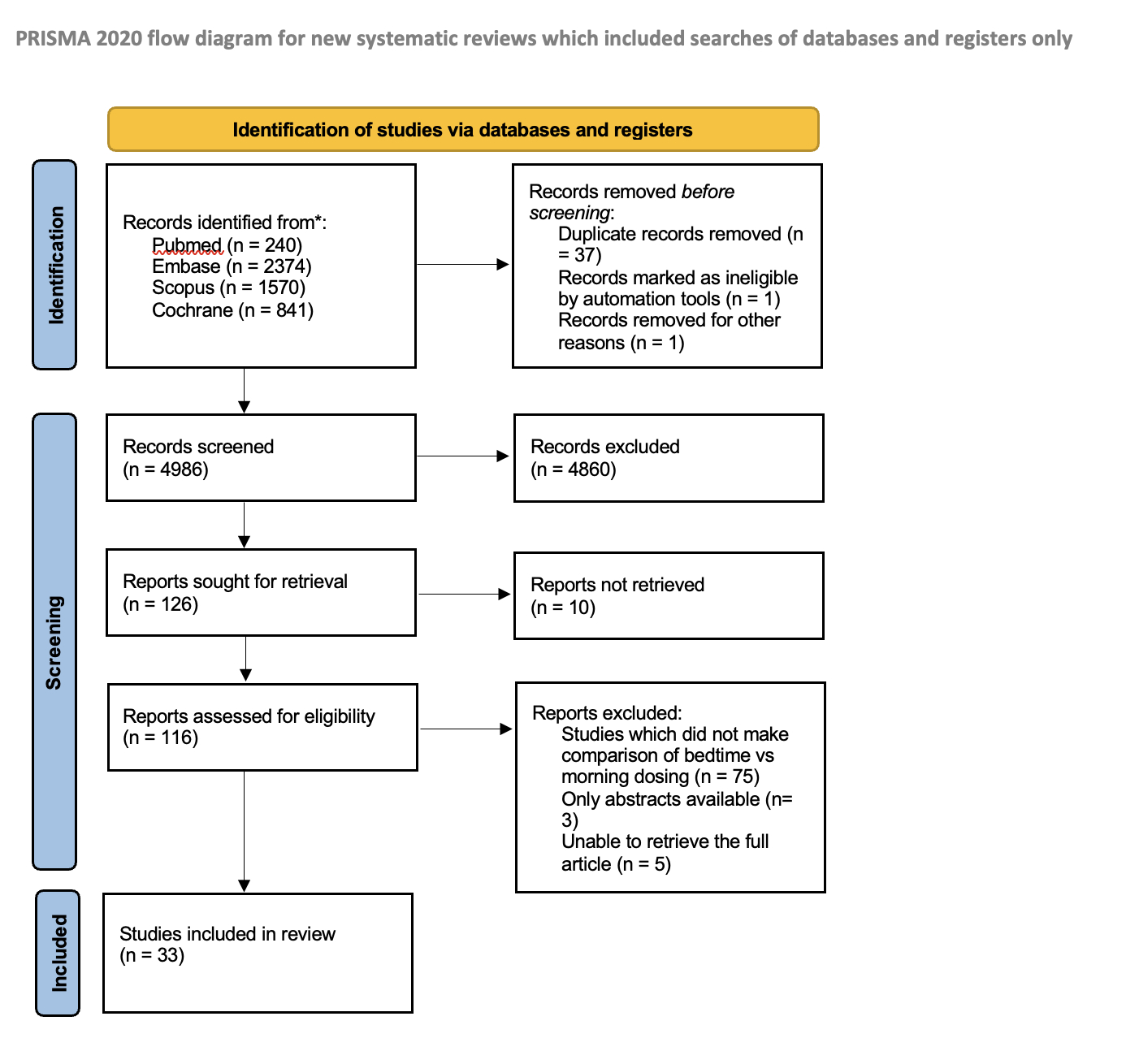
A comprehensive literature search was conducted across PubMed, Cochrane, Embase and Scopus between 2010 and May 2025. Randomised controlled trials (RCTs) comparing the evening versus morning dosing were included in the meta-analysis.

RESULTS

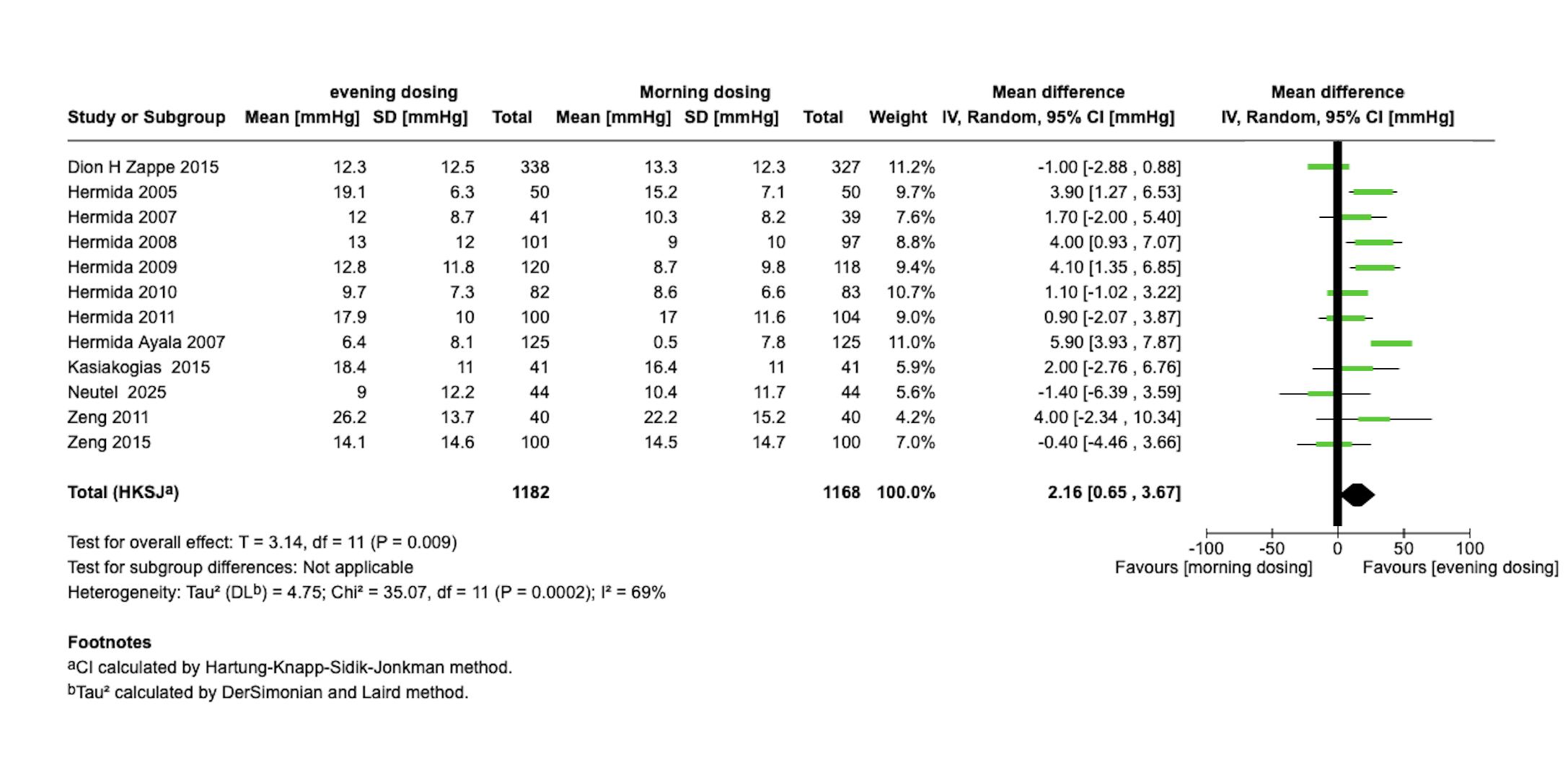
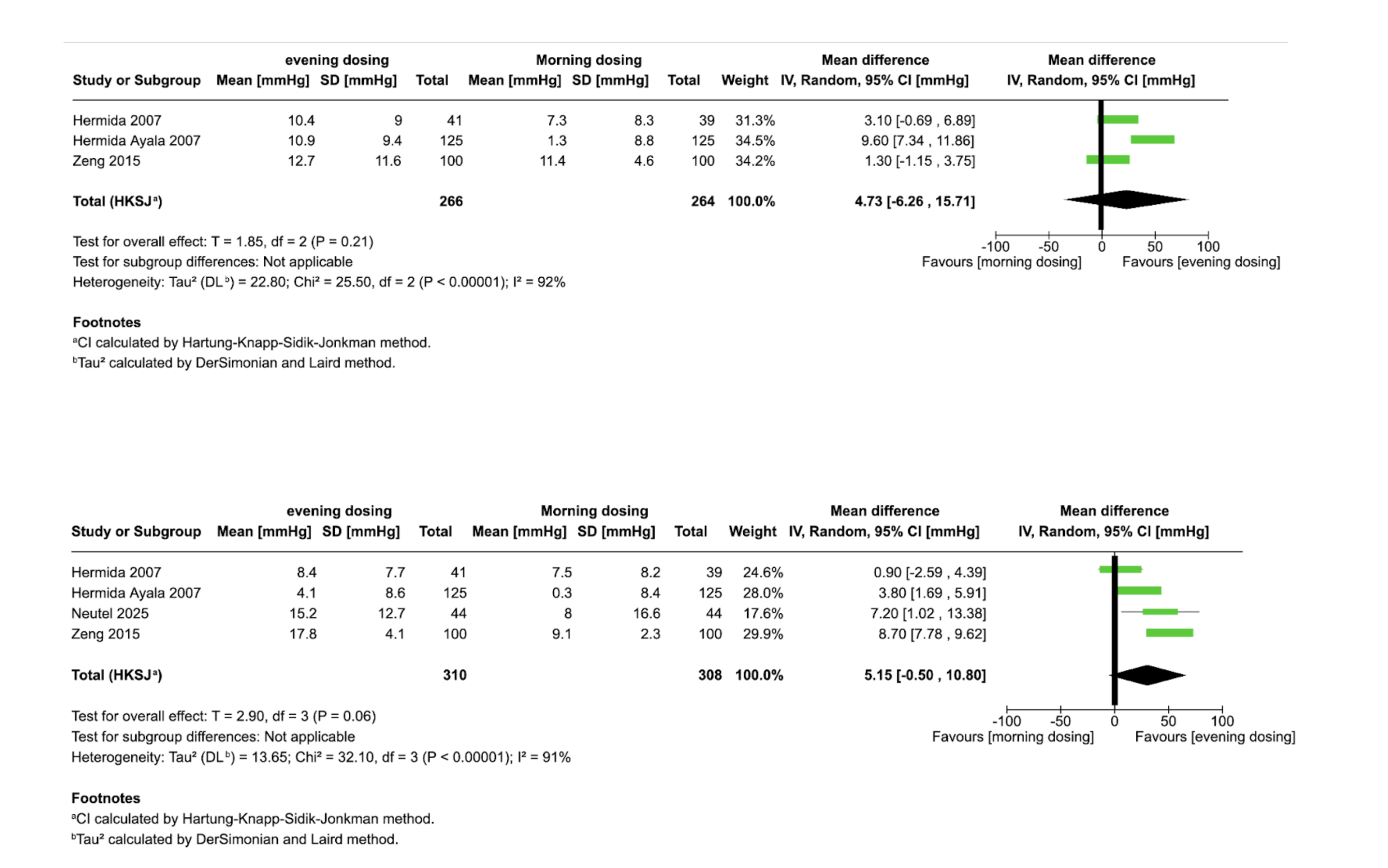
Thirty-three studies were included in the systematic review, with 12 RCTs (n = 2,350; 1,182 evening dosing, 1,168 morning dosing) being eligible for the meta-analysis. Antihypertensive classes studied included angiotensin-converting enzyme inhibitors (ACEIs), angiotensin II receptor blockers (ARBs), calcium channel blockers (CCBs) and beta-blockers. Evening dosing was associated with a statistically significant greater reduction in 24-hour systolic blood pressure (SBP) compared to morning dosing (mean difference: 2.16 mmHg; 95% CI: 0.65 to 3.67; p = 0.009). Subgroup analyses showed that evening dosage led to a statistically non-significant drop in night-time SBP (mean difference: 4.73 mmHg; 95% CI: -6.26 to 15.71; p = 0.21) and morning SBP (mean difference: 5.15 mmHg; 95% CI: -0.50 to 10.80; p = 0.06), favouring evening dosing over the morning one. Safety outcomes were not consistently reported. In some studies, no differences in adverse events or any cardiovascular events were notable. However, some of the trials, such as Hermida et al. (2011), found significantly fewer cardiovascular events with evening dosing (HR 0.33; p < 0.001), while Hermida et al. (2008) noted a reduction in edema incidence. Pigazzani et al. observed fewer hospitalisations for non-fatal myocardial infarction with evening dosing but no significant differences in stroke rates.

CONCLUSION
Despite the heterogeneity, the studies support the clinical relevance of chronotherapy in optimising 24-hour blood pressure control. The results show the potential of evening-time dosing strategies to improve both efficacy and safety in hypertension management. Current evidence is favouring the consideration of evening dosing as a viable and potentially better dosing strategy, yet further larger trials are needed to validate these findings and explore the population-specific effects.
  • Bogati, Sunil  ( NYMC - St. Mary's and St. Clare's , Denville , New Jersey , United States )
  • Acharya, Aakash  ( Centinela Hospital Medical Center , Los Angeles , California , United States )
  • Kafle, Naresh  ( Western Reserve Health Education , Youngstown , Ohio , United States )
  • Sundhura Nagineni, Manasa  ( NYMC - St. Mary's and St. Clare's , Denville , New Jersey , United States )
  • Gyawali, Pratik  ( Western Reserve Health Education , Youngstown , Ohio , United States )
  • Gupta, Eisha  ( NYMC - St. Mary's and St. Clare's , Denville , New Jersey , United States )
  • Prakash, Atul  ( St Marys General Hospital, Passaic , Cedar Grove , New Jersey , United States )
  • Author Disclosures:
    Sunil Bogati: DO NOT have relevant financial relationships | Aakash Acharya: DO NOT have relevant financial relationships | Naresh Kafle: DO NOT have relevant financial relationships | Manasa Sundhura Nagineni: No Answer | Pratik Gyawali: DO NOT have relevant financial relationships | eisha gupta: No Answer | Atul Prakash: DO NOT have relevant financial relationships
Meeting Info:

Scientific Sessions 2025

2025

New Orleans, Louisiana

Session Info:

Novel Approaches to Hypertension Treatment

Sunday, 11/09/2025 , 03:15PM - 04:15PM

Moderated Digital Poster Session

More abstracts on this topic:
Beta-Blocker Therapy After Acute Myocardial Infarction in Patients with Mildly Reduced or Preserved Ejection Fraction: An Updated Meta-Analysis

Hauser Emily, Dhruva Yesh, Gupta Rushil, Lawrence Cayden, Mootz Nicholas, Lin Chien-jung

Early Findings on the Impact of Renin-Angiotensin-Aldosterone System Inhibitors on Bicuspid Aortic Valve Disease Progression: A Single Center Cohort Study

Brem Ofir, Samuels Elchanan, Bental Tamir, Richter Ilan, Kornowski Ran, Hirsch Rafael, Witberg Guy, Schamroth Pravda Nili

More abstracts from these authors:
You have to be authorized to contact abstract author. Please, Login
Not Available