UNMASKING THE SILENT THUNDER : LATE POSTPARTUM ECLAMPSIA PROGRESSING INTO POSTERIOR REVERSIBLE ENCEPHALOPATHY SYNDROME (PRES)
Abstract Body:
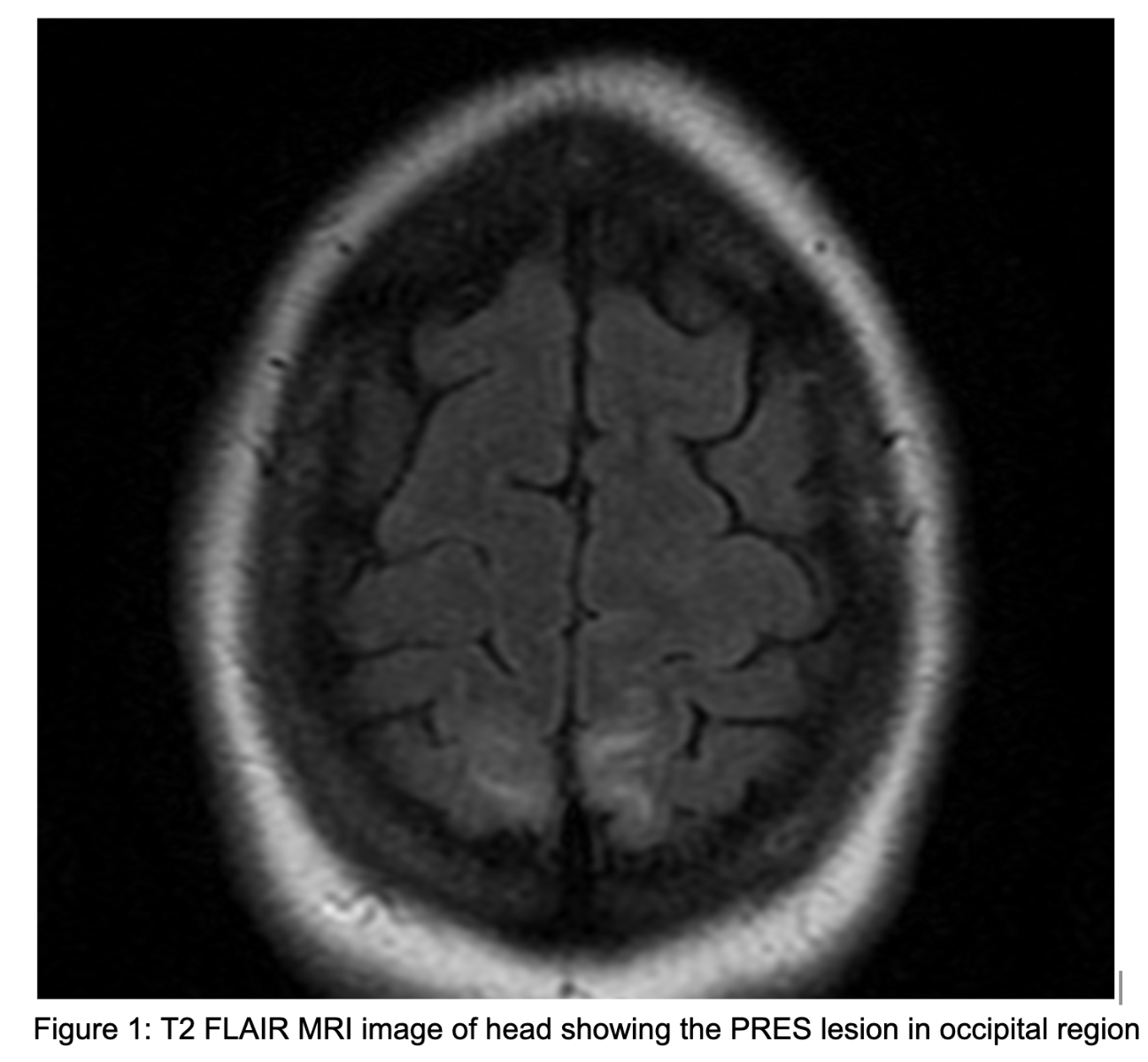
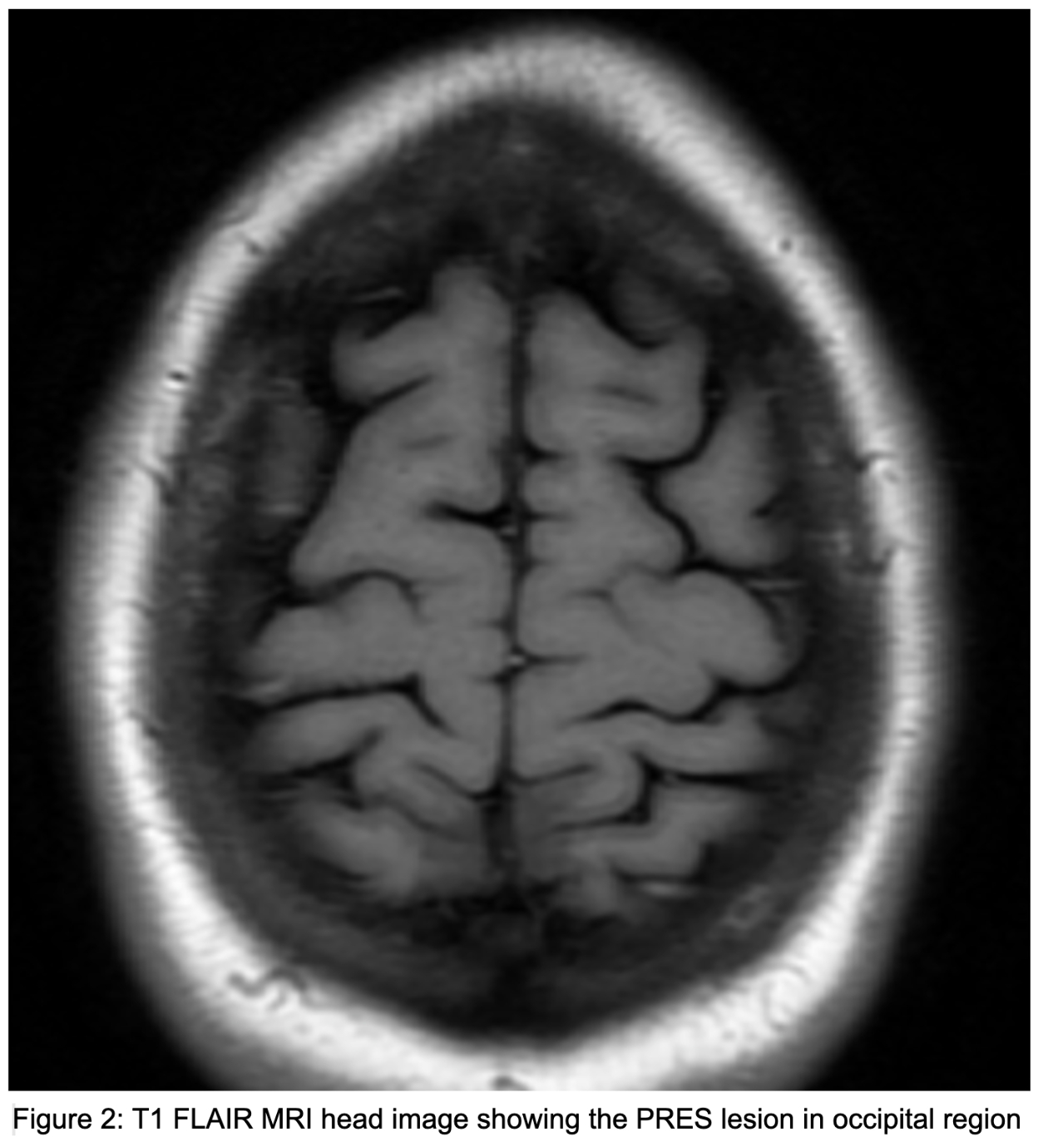
INTRODUCTION – Posterior reversible encephalopathy syndrome(PRES) is a rare but serious clinical-neuroradiological entity, with a series of neurological symptoms and imaging showing subcortical vasogenic edema at bilateral parietal and occipital lobes, with the most common causes being pre-eclampsia and eclampsia.
CASE PRESENTATION – A 32-year-old female with gravida 8, parity 3, abortions 4 and ectopic pregnancy 1, status post a recent normal vaginal delivery 10 days back, but with no significant past medical history, was brought to the ED after a witnessed seizure at home. She had been having a generalised headache for the past few days but could not remember details of the seizure. She complained of associated neck and back pain but denied nausea, vomiting, fever, chills, shortness of breath, chest pain, dizziness, and excessive vaginal bleeding. She had an uncomplicated vaginal delivery recently, and it was her 8th pregnancy, with the previous two being normal deliveries. The patient had seizure episodes at the hospital and mildly elevated blood pressure on admission. She was evaluated by gynaecology and was started on magnesium drip for possible eclampsia. Magnesium level was followed and maintained at 5-8 mg/dl. EEG done showed seizure potentials, but no active seizures. She got amlodipine and labetalol for elevated blood pressure. MRI brain showed subcortical white matter disease in the parieto-occipital region, with PRES. She was started on Keppra 500 mg twice daily. Her symptoms got better over a few days.
DISCUSSION – With the exact aetiology of PRES being not completely clear, one hypothesis is various risk factors causing vasospasm followed by hypoperfusion resulting in brain vasogenic edema leading to PRES. Late postpartum eclampsia with PRES is not that common. Particularly in PRES, visual impairment is common, with some patients showing decreased or asymmetric limb muscle strength, while tendon reflexes being active. The neurological symptoms, signs and radiographic changes usually disappear completely in 1-2 weeks, but if diagnosis gets delayed, then irreversible damage of neurones can occur, leading to permanent damage and also making it even life-threatening. As symptoms of pre-eclampsia does not get reported, very few get diagnosed with it at the first place, increasing the risk of onset of PRES. This particular case illustrates post vaginal delivery in females, it's important to be vigilant for maintaining normal blood pressure.
Bogati, Sunil
(
NYMC - St. Mary's and St. Clare's
, Denville , New Jersey , United States )
Guragain, Ashish
(
NYMC - St. Mary's and St. Clare's
, Denville , New Jersey , United States )
Poudel, Urusha
(
Lumbini Medical College
, Palpa , Lumbini Province , Nepal )
Prakash, Atul
(
St Marys General Hospital, Passaic
, Cedar Grove , New Jersey , United States )
Author Disclosures:
Sunil Bogati:DO NOT have relevant financial relationships
| Ashish Guragain:No Answer
| Urusha Poudel:No Answer
| Atul Prakash:No Answer