Forecasting Ischemic Heart Disease Burden in Southeast Asia: A Temporal Trend Analysis from 1990 to 2019 and Projections to 2050: A Bayesian Age-Period-Cohort Modelling from GBD 2021 Study
Abstract Body (Do not enter title and authors here): Background: Ischemic heart disease (IHD) remains the leading cause of mortality worldwide, with a rising toll in low- and middle- income countries. Southeast Asia, which is undergoing rapid demographic and economic transitions, faces a growing IHD burden. However, future projections remain underexplored. This study aimed to analyze temporal trends and forecast the IHD burden in Southeast Asia through 2050 using Age-Period-Cohort (APC) modeling based on the Global Burden of Disease (GBD) Study.
Methods: We extracted IHD mortality and disability-adjusted life years (DALYs) data for 11 Southeast Asian countries from the GBD 2019 database (1990–2019). Multivariate regression was applied to assess risk factors associated with IHD mortality, DALYs, and prevalence. Age-period-cohort models were employed to evaluate temporal trends from 1990 to 2021, while the Bayesian age-period-cohort (BAPC) model forecasted future trends to 2050. Estimated Annual Percentage Change (EAPC) was calculated to quantify temporal trends.
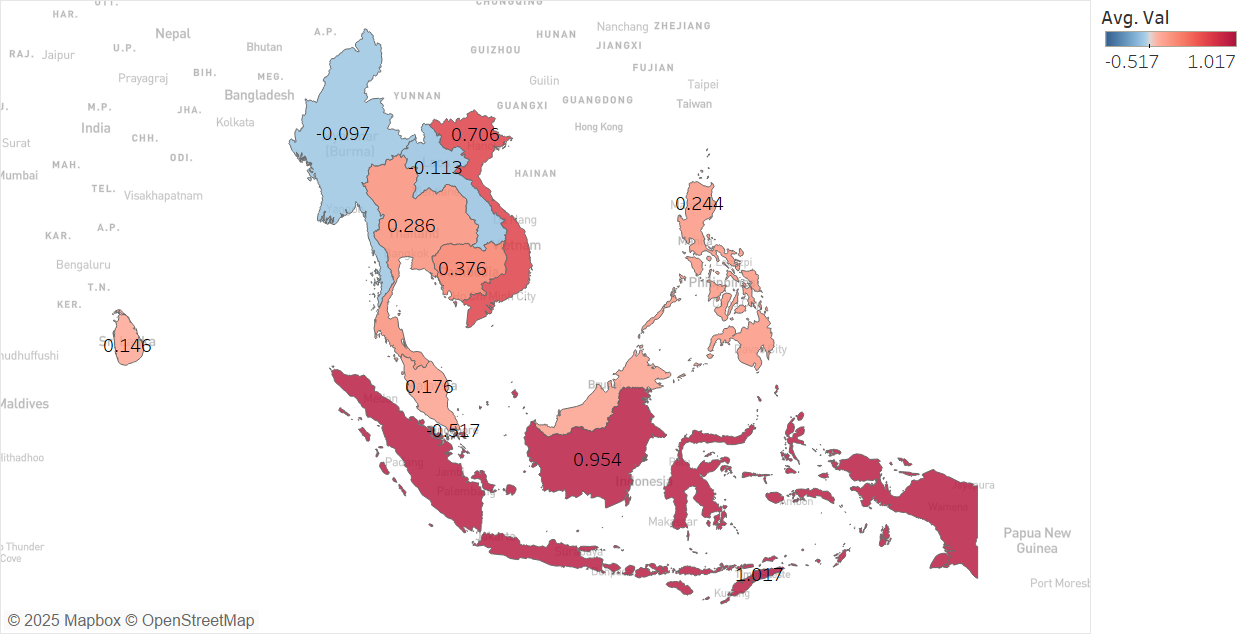
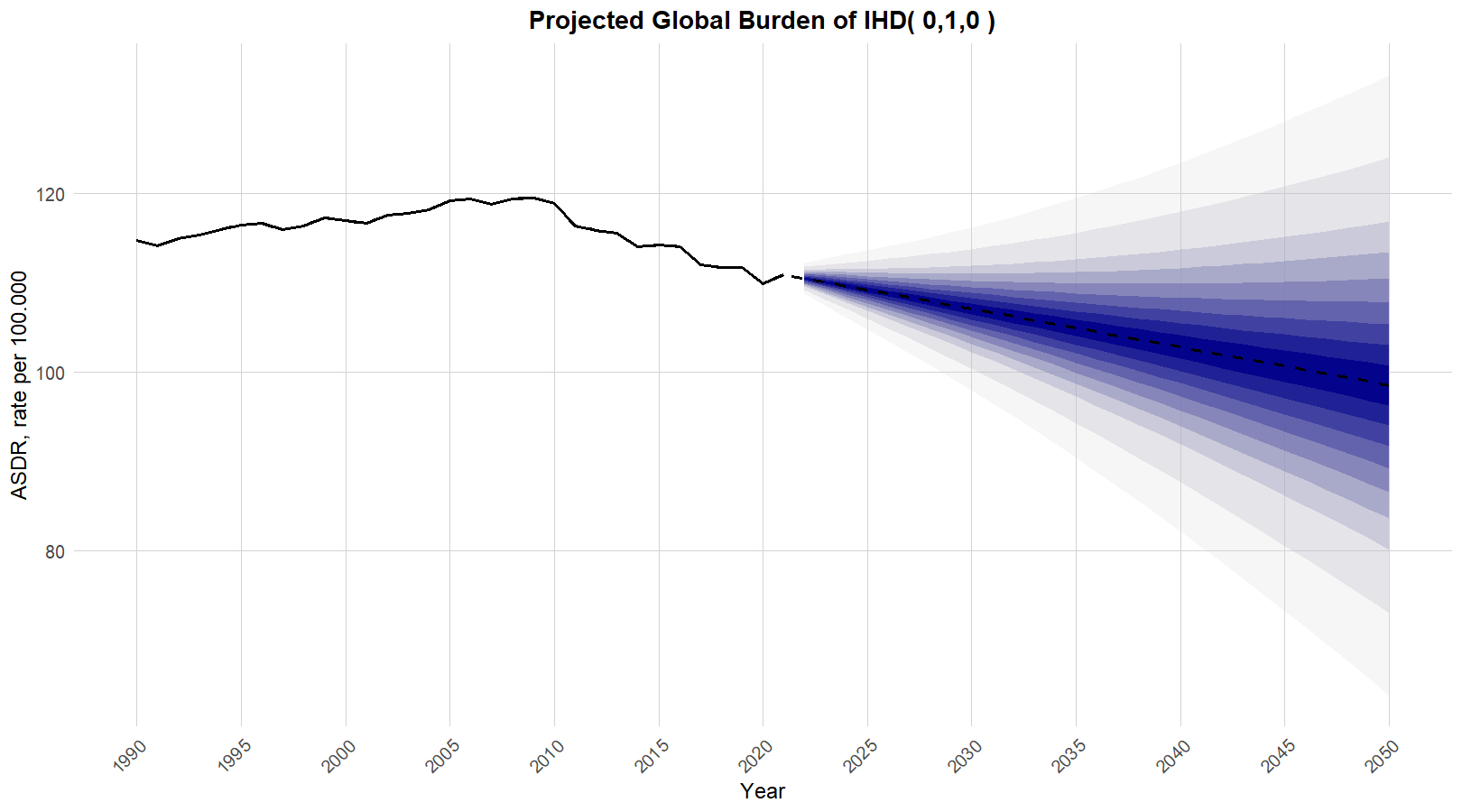
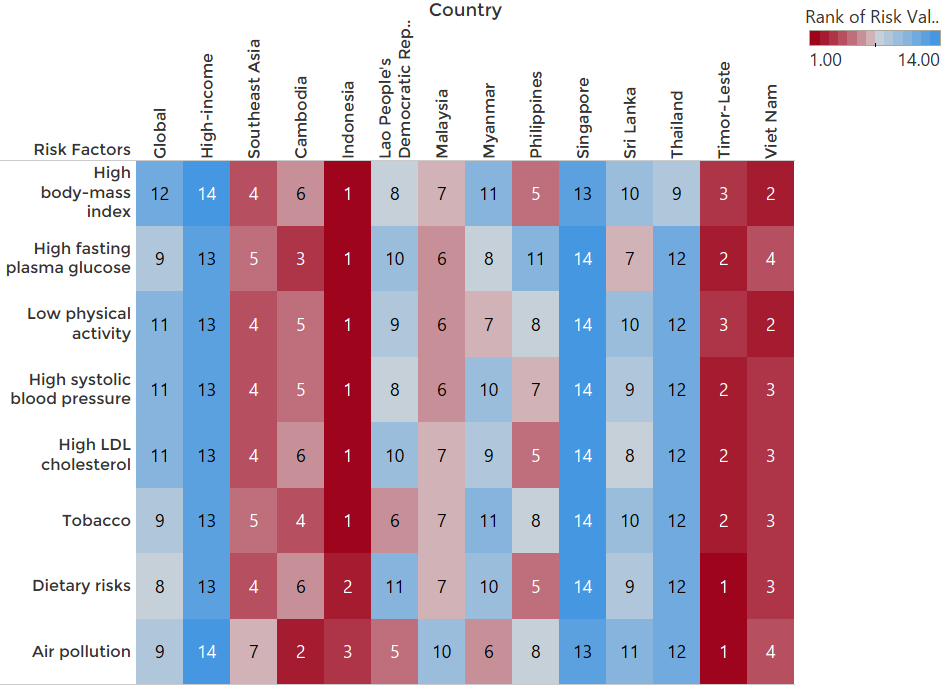
Result: Between 1990 and 2019, the number of IHD-related deaths rose by 136%, cementing it as the highest cardiovascular burden in the region. Despite age-standardized death rates (ASDR) fell by 9% in the region, Indonesia and Timor-Leste had a staggering rise of ASDR (29,39% and 26,89%, respectively), contrasting sharply with the 68% ASDR reduction for high-income countries in the same period. Major contributing risk factors included elevated LDL (β = 2.38), followed by FPG (β = 1.53), SBP (β = 1.42), and tobacco consumption (all P <0.0001), with male-attributable tobacco-related deaths disproportionally high compared females. BAPC forecasts indicate a modest decline in ASDR by 2050, but a rise in prevalence (ASPR), with a regional EAPC of +4%. Indonesia, as the most populous country in the region, emerged as a critical hotspot, with projected EAPC for prevalence +13%, and DALYs of +26%.
Conclusion: Despite slight decline forecasted in ASDR to 2050, the absolute burden of IHD in SEA is projected to grow through its rising prevalence and DALYs. As modifiable cardiometabolic risks drove the IHD burden, targeted prevention, rehabilitation, and secondary prevention are urgently needed to formulate region- and nation-specific health policies.
Nugrahani, Annisa
(
Universitas Airlangga
, Malang , Indonesia )
Widyantoro, Bambang
(
UNIVERSITAS INDONESIA
, Jakarta Barat , Indonesia )
Author Disclosures:
Annisa Nugrahani:DO NOT have relevant financial relationships
| Bambang Widyantoro:No Answer