
Logo

American Heart Association

  9
  0


Final ID: WE413

Predictive Performance of High-Sensitive C-Reactive Protein for Congestive Heart Failure: Post-Pandemic Analysis from NHANES 2021-2023

Abstract Body: Introduction: High sensitivity C-reactive protein (hsCRP) has been widely used as a biomarker for cardiovascular risk stratification, including congestive heart failure (CHF). However, its predictive value in the context of post-pandemic, as characterized by heightened population-level baseline inflammation, remains unexplored. Hence, we aim to assess the predictive value of hsCRP to CHF among United States (US) populations in 2021-2023.
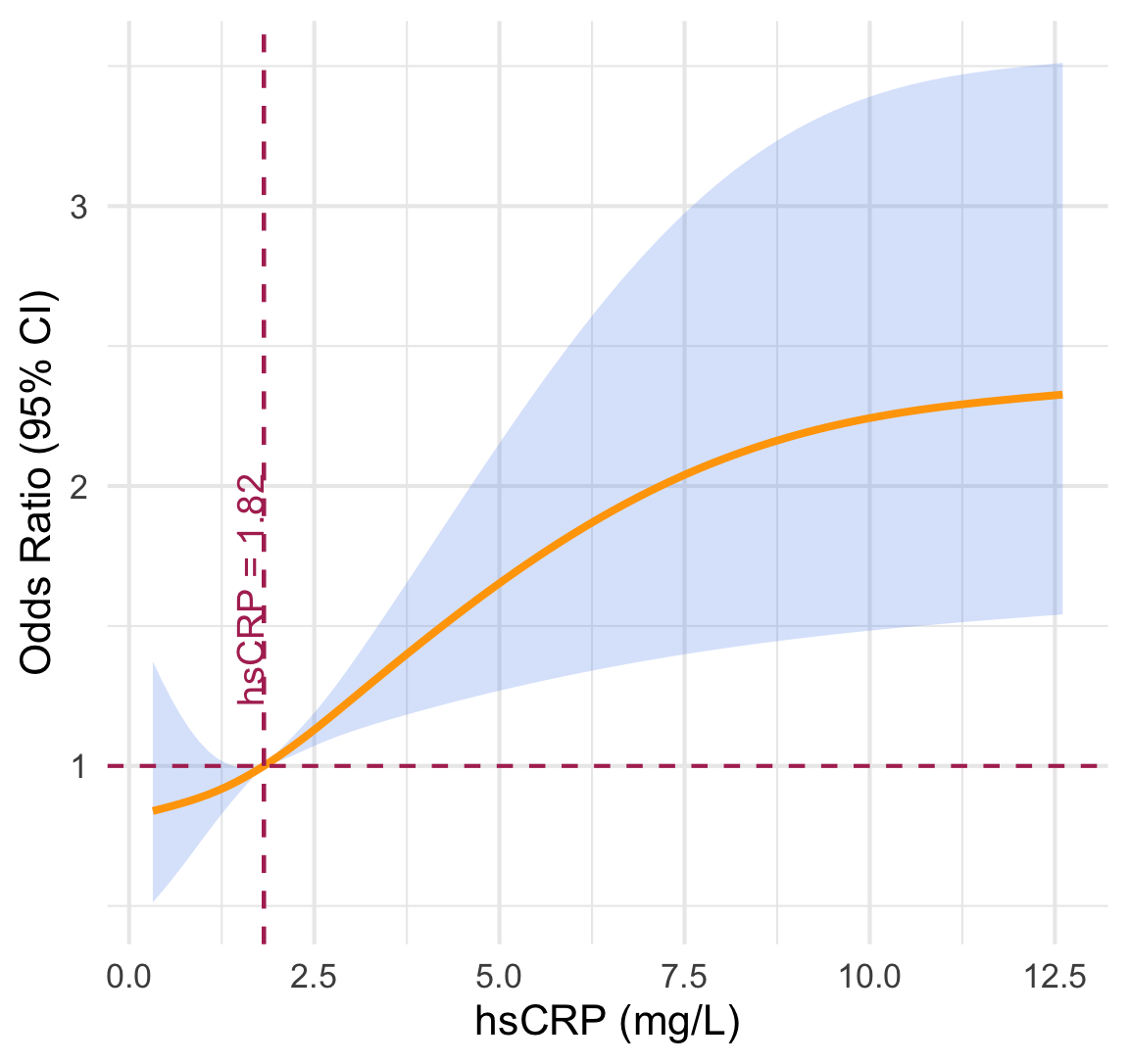
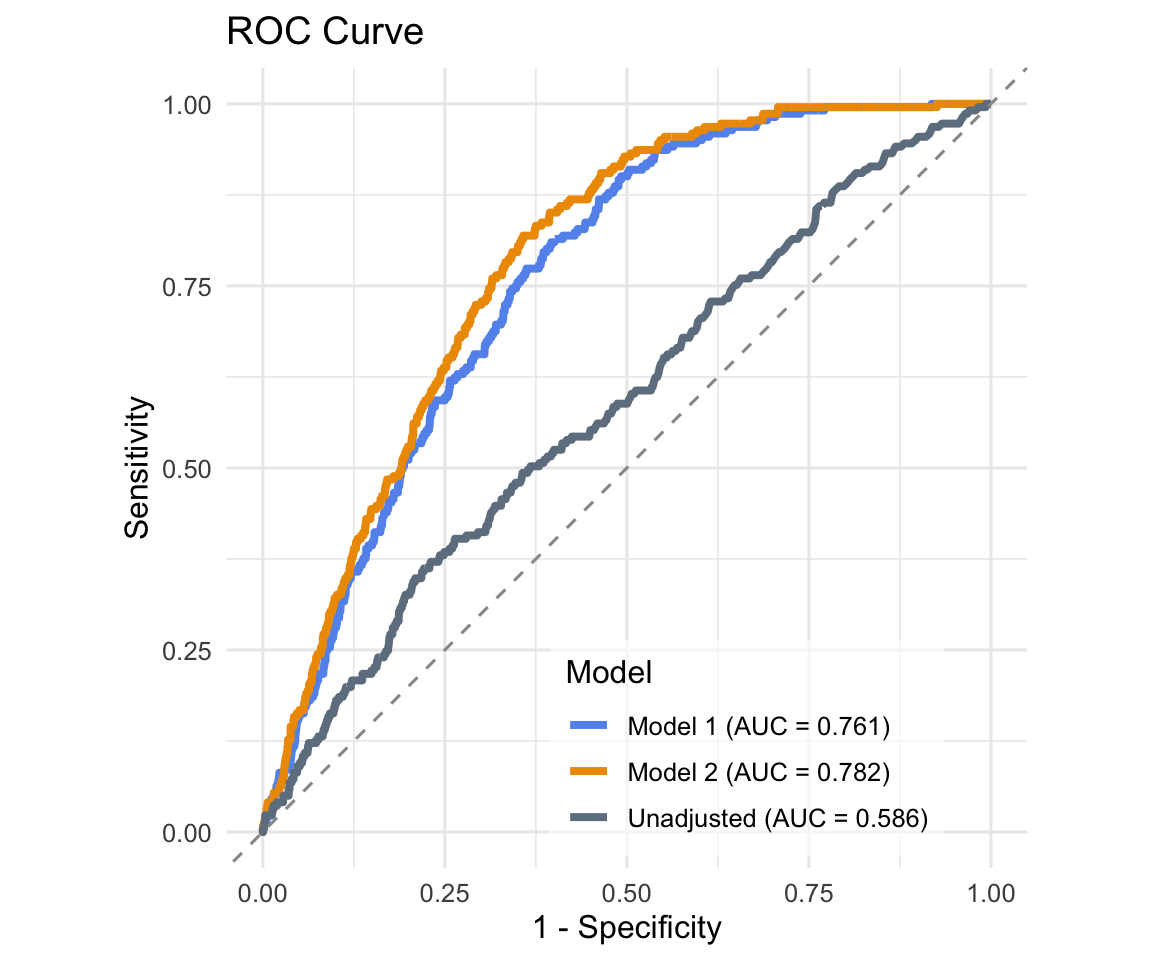
Methods: A total of 5571 adults from the National Health and Nutrition Examination Survey (NHANES) 2021-2023 were assessed. Multivariable logistic regression was performed to evaluate the association between hsCRP and CHF, adjusting for age, sex, race, and education. Non-linear association was explored using restricted cubic spline. Model performance was evaluated using area under the receiver operating characteristic (ROC) curve (AUC).
Results: High hsCRP level (>3 mg/L) was independently associated with significantly higher odds of CHF (adjusted odds ratio (OR) = 2.03, 95% CI: 1.45-2.91, p-value < 0.01). The predictive model demonstrated strong discriminatory performance with an AUC of 0.782 after adjusting for covariates. Adjustment for age and sex alone yielded an AUC of 0.761. Restricted cubic spline analysis revealed a non-linear relationship between hsCRP and CHF odds, with an inflection in risk observed at hsCRP levels exceeding 1.82 mg/L.
Discussion: Despite elevated baseline inflammation following the pandemic, hsCRP remains a clinically valuable biomarker for CHF prediction in the US population. hsCRP promotes CHF event by playing a critical role in atherogenesis, complement activation, and monocyte infiltration to the vascular wall.
Conclusion: The hs-CRP level is significantly positively correlated with CHF among American adults. Preventive strategies to maintain the hsCRP levels should be employed to reduce CHF burden in the US. Findings highlight the potential clinical benefit of incorporating routine monitoring and targeted-hsCRP lowering strategies to improve clinical decision-making.
  • Nugrahani, Annisa  ( Universitas Airlangga , Malang , Indonesia )
  • Farah, Raysha  ( Harvard Medical School , Jamaica Plain , Massachusetts , United States )
  • Author Disclosures:
Meeting Info:

EPI-Lifestyle Scientific Sessions 2026

2026

Boston, Massachusetts

Session Info:

Poster Session 2

Wednesday, 03/18/2026 , 05:00PM - 07:00PM

Poster Session

More abstracts on this topic:
Admission Cell-free DNA Predicts Cardiogenic Shock Progression and In-Hospital Mortality

Park Ashley, Kong Hyesik, Andargie Temesgen, Jang Moon, Solomon Michael, Brusca Samuel, Barnett Christopher, Obrien Connor, Agbor-enoh Sean

A Case of Steroid-Refractory Immune-checkpoint-inhibitor Induced Myocarditis Responsive to Mycophenolate and Anti-thymocyte globulin

Dabdoub Jorge, Wilson Michael, Gottbrecht Matthew, Salazar Ryan, Shih Jeffrey

You have to be authorized to contact abstract author. Please, Login
Not Available