Seasonal Variation in New Onset Atrial Fibrillation with Phenotypic Variations in Outcomes, and Projected Trends from a Time Series Analysis
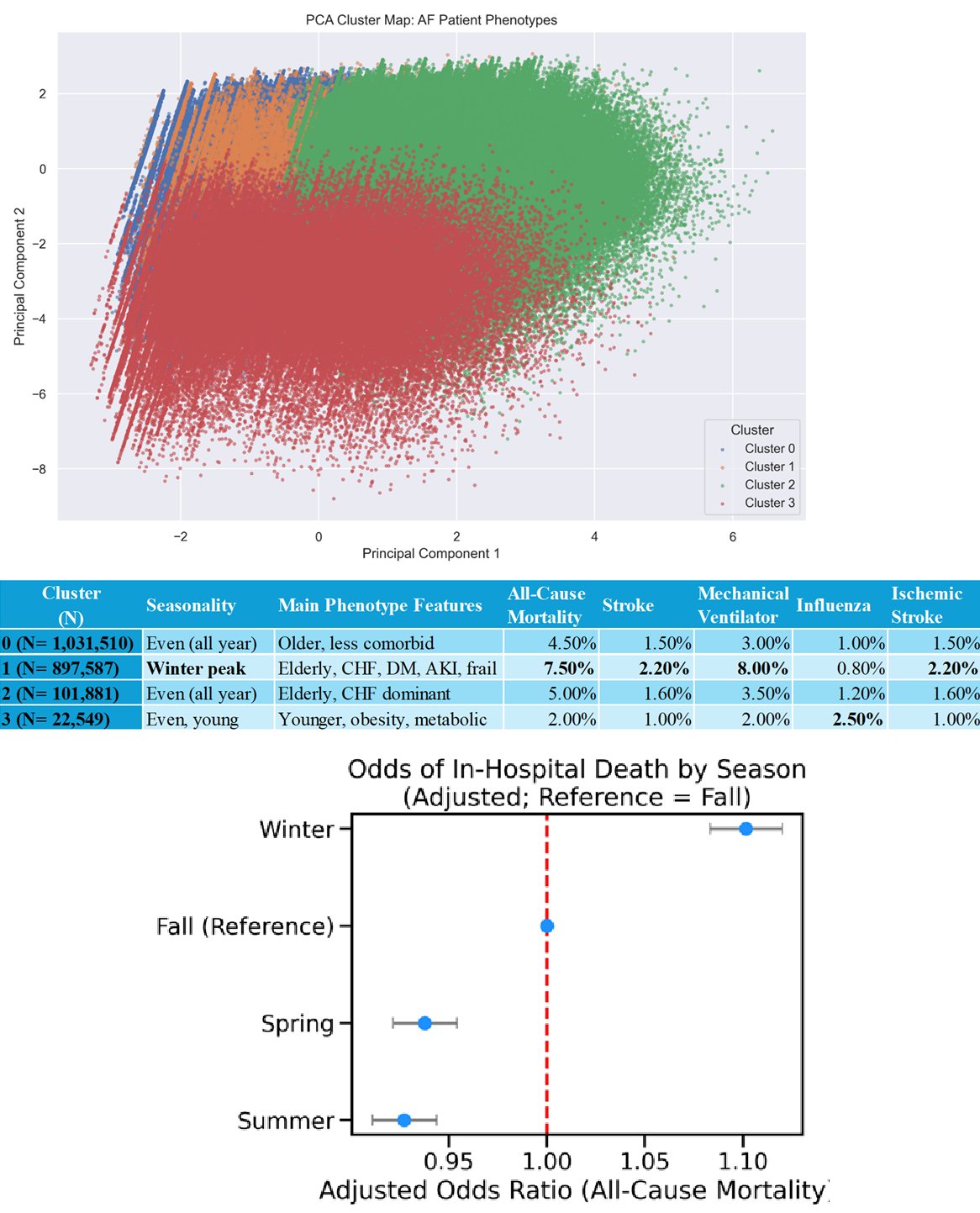
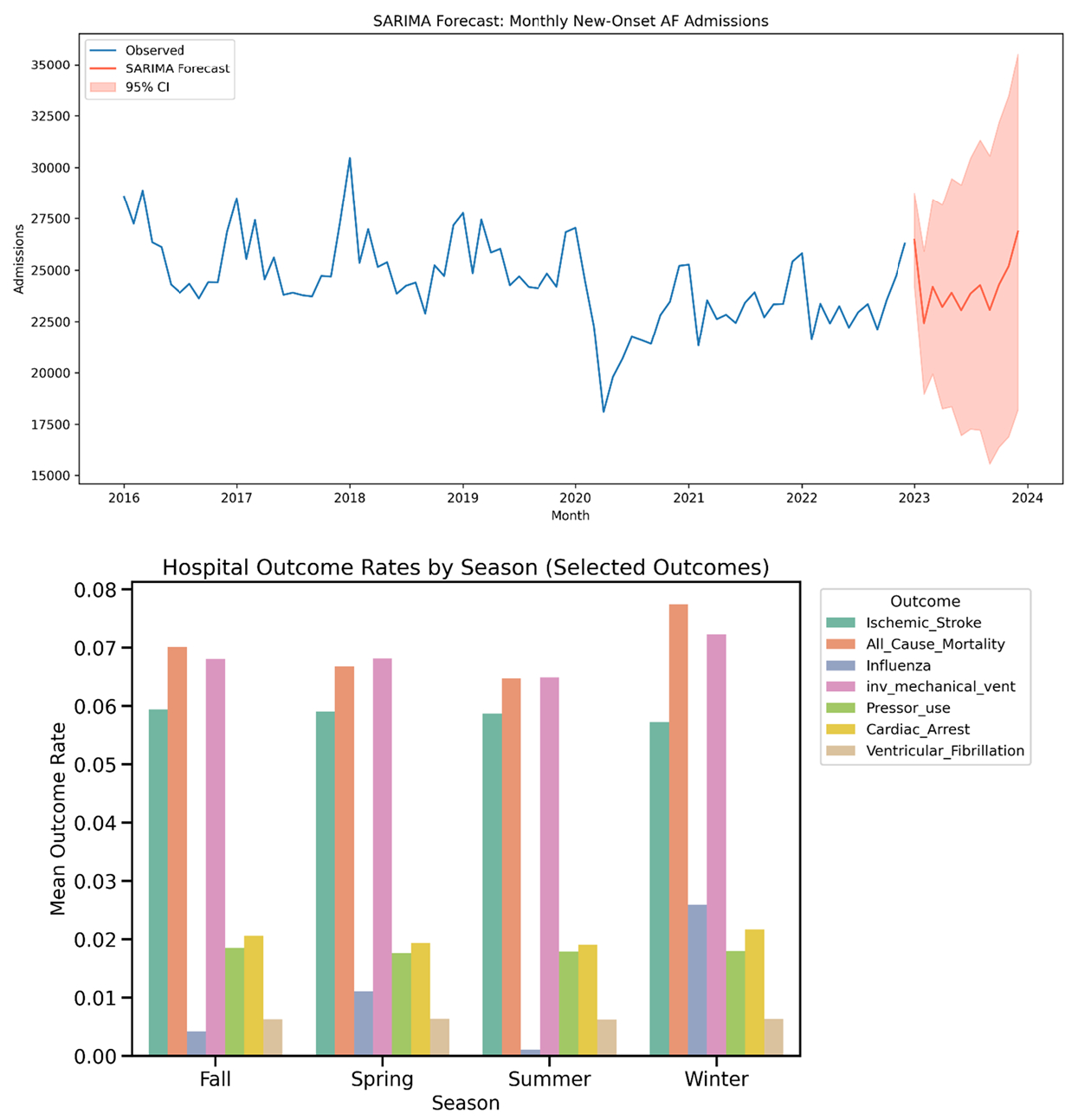
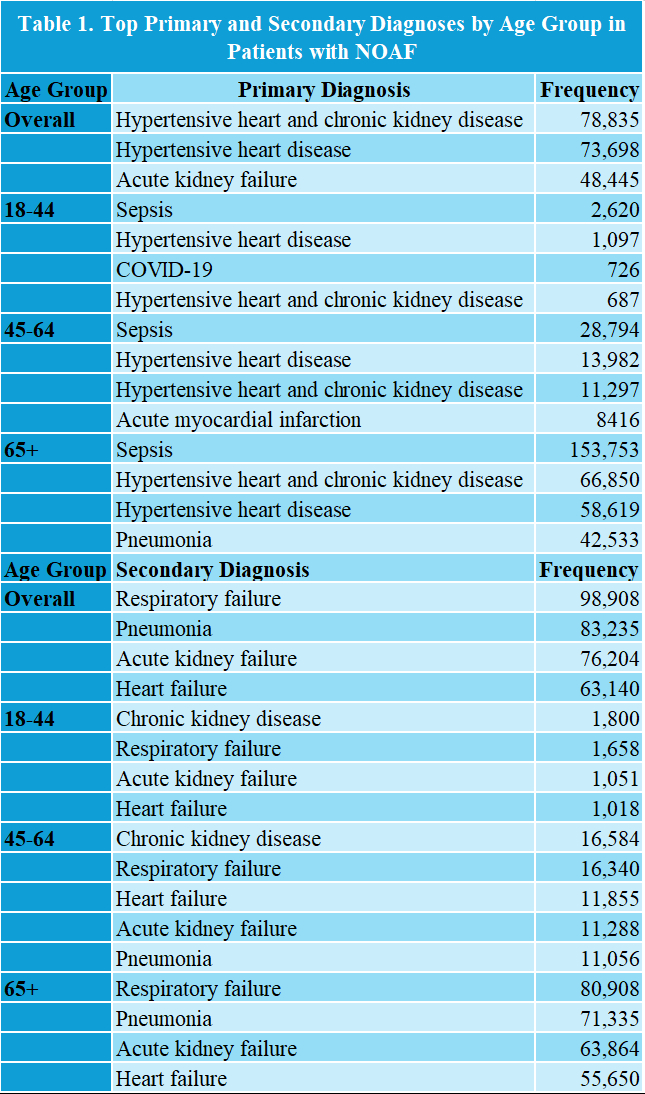
Abstract Body (Do not enter title and authors here): Background: Seasonal variations has been described for new onset atrial fibrillation (NOAF) affecting outcomes. Our study aimed to trend seasonal variation in AF admissions using a nationally representative database, compare in hospital mortality, and identify common comorbid diagnoses linked with NOAF. Methods: We analyzed the 2016–2022 National Inpatient Sample to identify all non elective hospitalizations for NOAF in adults. Seasons were defined as Winter, Spring, Summer, and Fall. We applied a Seasonal Autoregressive Integrated Moving Average (SARIMA) time-series model to monthly NOAF admissions. Multivariable logistic regression, adjusting for demographic and comorbid factors were estimated for mortality by season, using fall as reference. Top three primary and secondary comorbid diagnoses were identified. We also applied unsupervised Kmeans clustering to reveal distinct seasonal phenotypes on comorbid conditions. P<0.05 was considered statistically significant. Results: Of total 2,055,000 NOAF admissions, seasonal trend was noted (Winter 555,000; Spring 514,000; Fall 499,000; Summer 492,000), with winter associated with higher odds of in hospital mortality (aOR 1.10; 95% CI 1.08–1.12), whereas spring (aOR 0.97; 95% CI 0.96–0.98; P < 0.001) and summer (aOR 0.93; 95% CI 0.92–0.94; all P < 0.001) had lower odds of death. Unsupervised clustering revealed four distinct phenotypes. Cluster 1 had advanced age, high comorbidity burden, predominance of winter admissions, and demonstrated the highest rates of mortality (7.5%), ischemic stroke (2.2%), and mechanical ventilation (8.0%). In contrast, Cluster 3, composed of younger, more obese patients, showed a higher rate of influenza (2.5%) and lowest mortality (2.0%) (Figure 1). Three most frequent comorbid diagnoses were respiratory failure (4.8%), pneumonia (4.1%), and acute kidney injury (3.7%), and were stratified by age groups (Table 1). The SARIMA model predicted that the monthly number of NOAF will continue to fluctuate with a regular seasonal pattern over the next year, and in-hospital outcomes rates are described by seasons(Figure 2). Conclusions: NOAF peaked in winter, with highest mortality compared to other seasons. Respiratory failure, pneumonia, and acute kidney failure are the most prevalent comorbid conditions. These findings support need for heightened clinical vigilance, resource allocation, and risk during winter months, in high risk population presenting with NOAF.
Mondal, Avilash
(
West Virginia University
, Morgantown , West Virginia , United States )
Green, Jared
(
Reading Hospital, Tower Health
, Pennsylvania , Pennsylvania , United States )
Diaz Fraga, Julian
(
Reading Hospital, Tower Health
, Pennsylvania , Pennsylvania , United States )
Razdan, Nandini
(
Reading Hospital, Tower Health
, Pennsylvania , Pennsylvania , United States )
Basnet, Arjun
(
Reading Hospital, Tower Health
, Pennsylvania , Pennsylvania , United States )
Chilingarashvili, Giorgi
(
Nazareth Hospital
, Philadelphia , Pennsylvania , United States )
Li, Aobo
(
Inspira Health Vineland
, Glassboro , New Jersey , United States )
Khafaja, Roy
(
Reading Hospital, Tower Health
, Pennsylvania , Pennsylvania , United States )
Singh, Aniruddha
(
Tower Health
, Wayne , Pennsylvania , United States )
Author Disclosures:
Avilash Mondal:DO NOT have relevant financial relationships
| Aniruddha Singh:No Answer
| Jared Green:No Answer
| Julian Diaz Fraga:No Answer
| Nandini Razdan:No Answer
| Arjun Basnet:DO NOT have relevant financial relationships
| Giorgi Chilingarashvili:DO NOT have relevant financial relationships
| Aobo Li:DO NOT have relevant financial relationships
| Roy Khafaja:No Answer
| Kanishka Goswami:DO NOT have relevant financial relationships