
Hypertension Outcomes Following Cardiac Rehabilitation in a Safety-Net Population
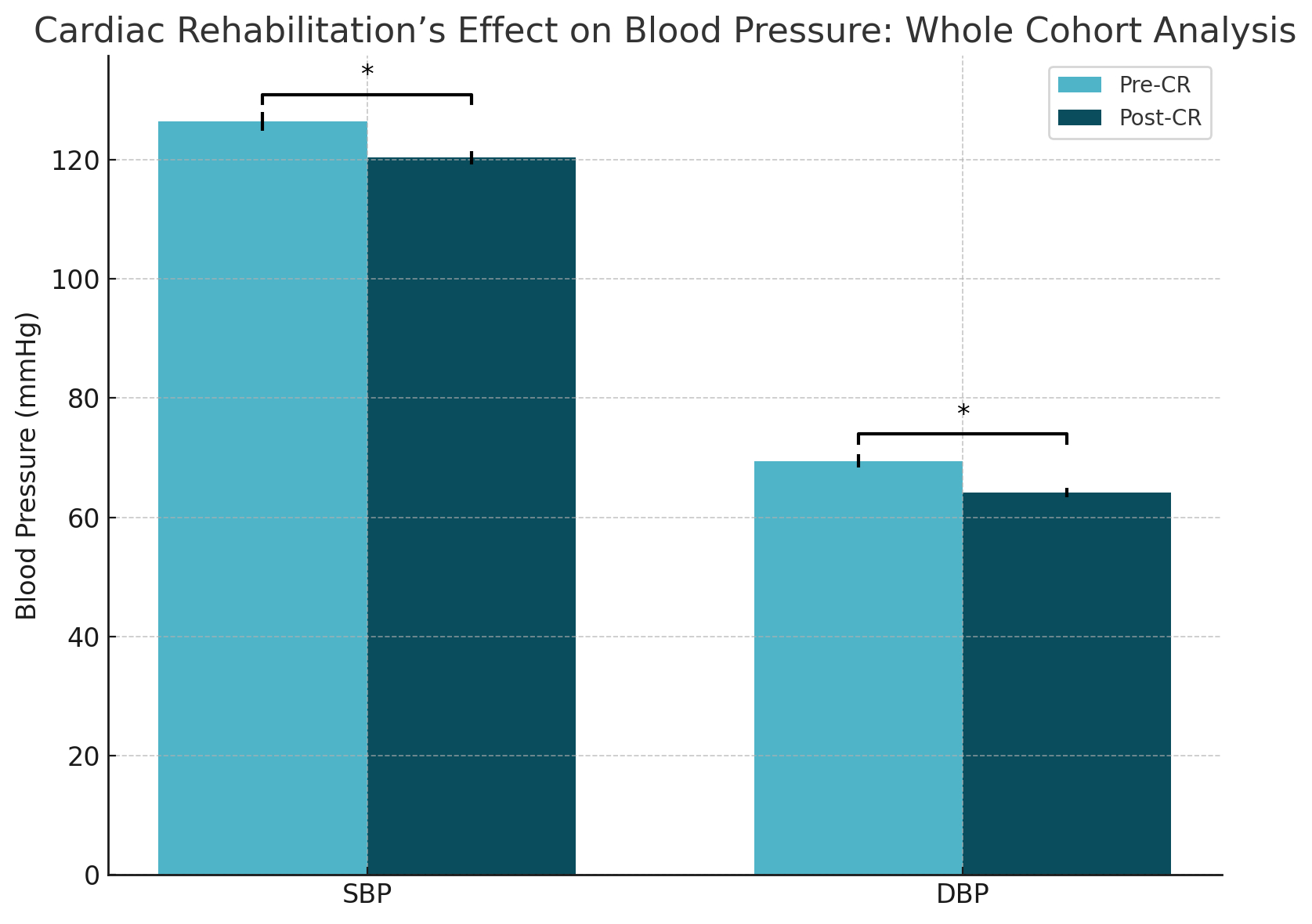
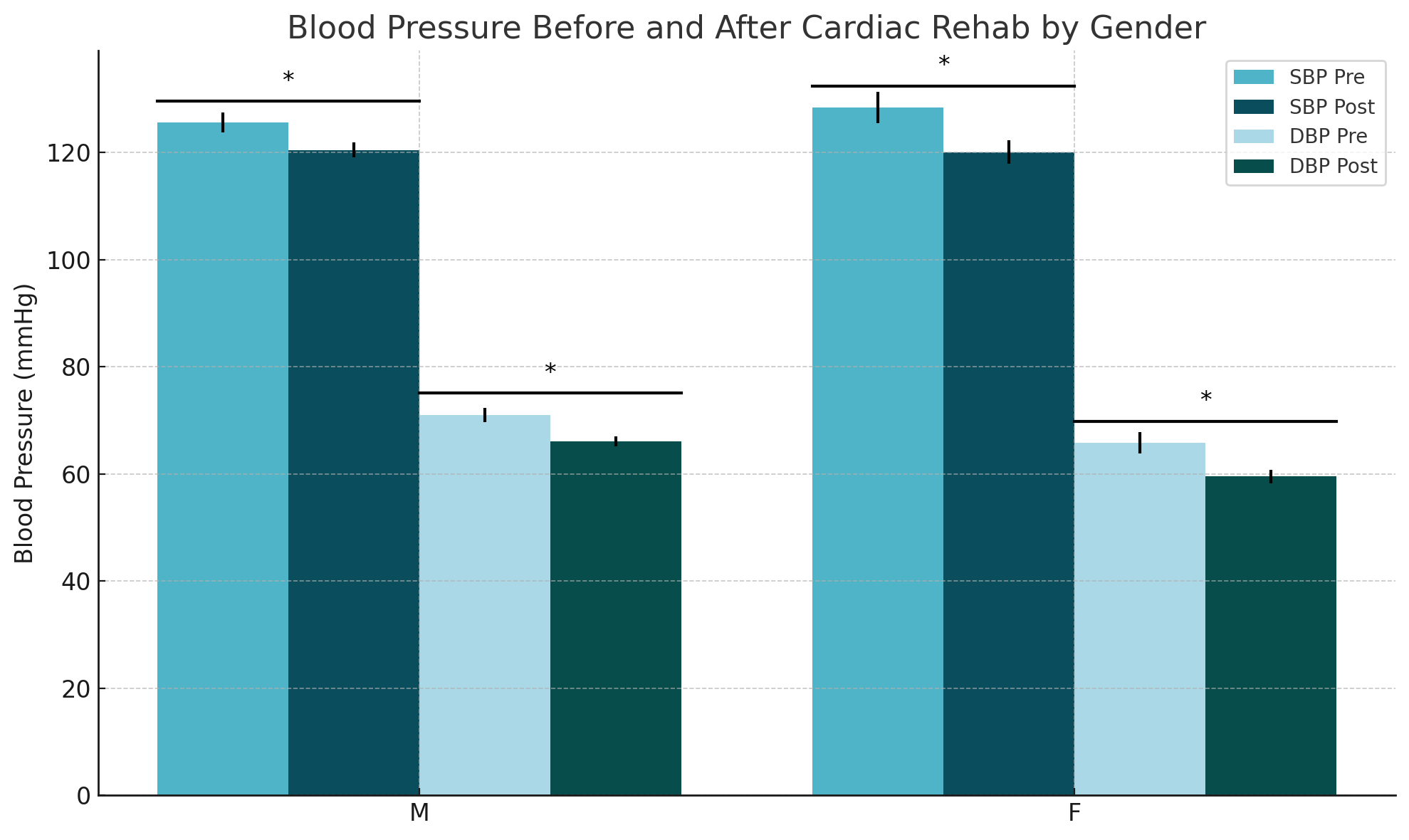
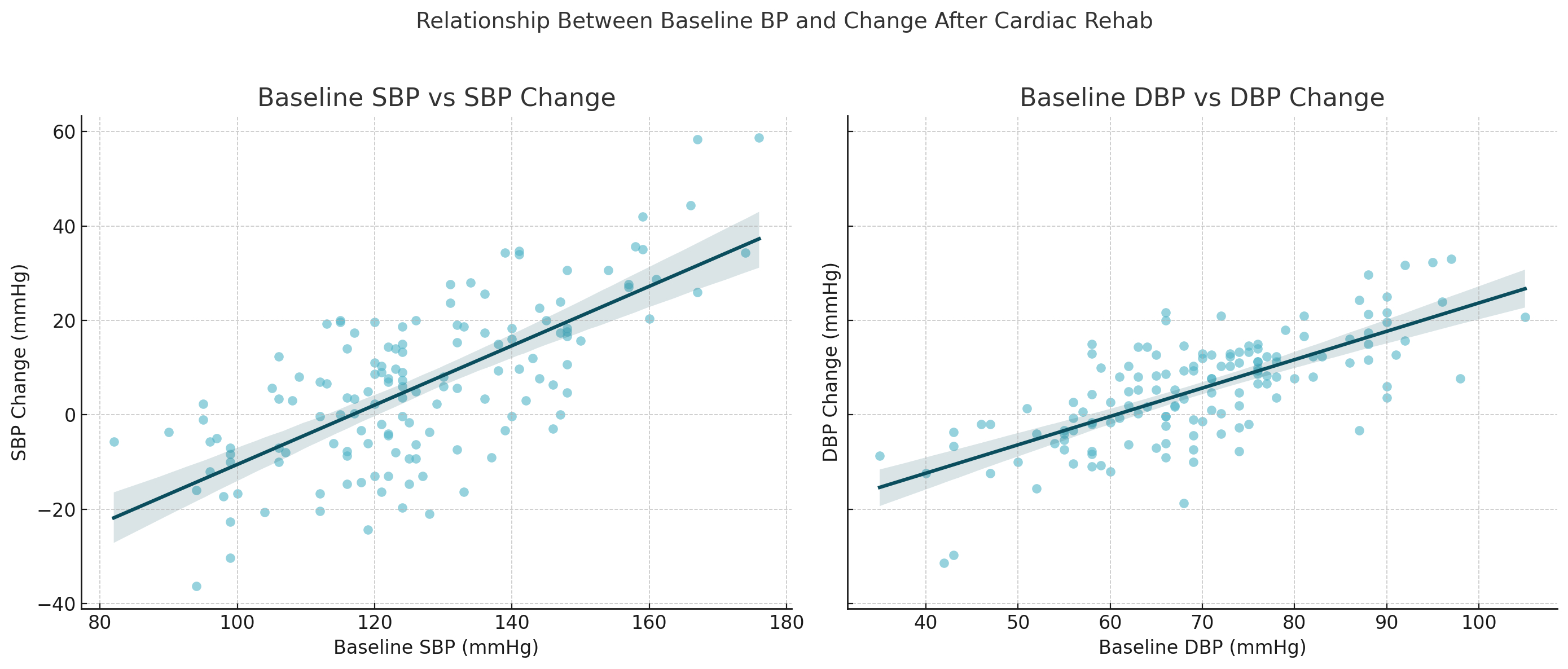
Abstract Body (Do not enter title and authors here): Background: Cardiac rehabilitation (CR) is a proven intervention to reduce cardiovascular morbidity and mortality; however, its effect on blood pressure (BP) has not been studied in safety-net populations. This study evaluated BP outcomes following CR in an ethnically diverse, socioeconomically underprivileged population served by the Los Angeles County Department of Health Services. Methods: We conducted a retrospective chart review of patients enrolled in the LA County CR program from 2022 to 2024. Inclusion required completion of ≥20 sessions. Patients who did not complete the program were excluded. Pre-CR BP was recorded at intake; post-CR BP was averaged from the last three resting values recorded during physical therapy. The CR program included supervised exercise, dietary counseling, smoking cessation, and health education. Primary outcomes were changes in systolic (SBP) and diastolic (DBP) BP. Subgroup analyses included age, gender, ethnicity, and hypertension status. Responders were defined as those achieving ≥5 mmHg reduction in SBP or DBP. Paired and independent t-tests and Pearson correlation were used for analysis. Results: Among 141 patients, mean SBP decreased by 6.14 ± 16.96 mmHg (p < 0.001) and DBP by 5.35 ± 11.25 mmHg (p < 0.001). Hypertensive patients (n = 66) had significantly greater reductions in SBP (−16.17 mmHg) and DBP (−10.44 mmHg) than normotensive patients (SBP: +2.68 mmHg; DBP: −0.86 mmHg; p < 0.001). Higher baseline BP strongly predicted greater reductions (SBP: r = −0.70; DBP: r = −0.71). No significant differences were observed by ethnicity or gender in overall BP change. Conclusions: In this first analysis of CR within a public safety-net system, participation in a comprehensive program was associated with significant reductions in both systolic and diastolic blood pressure. Rather than isolating individual components such as medication titration, nutritional counseling, or supervised exercise, this analysis captures the cumulative benefit of the full multidisciplinary CR intervention. These findings support the value of CR in reducing cardiovascular risk among underserved populations and highlight the importance of expanding access to this vital program within public health systems.
Burke, Morgan
( LA General and USC
, Pasadena
, California
, United States
)
Gan, Arnold
( Keck School of Medicine of USC
, Diamond bar
, California
, United States
)
Jinno, Stephanie
( University of Southern California
, Los Angeles
, California
, United States
)
Ge, Brandon
( USC LA General IM Residency Program
, Los Angeles
, California
, United States
)
Haq, Ubayd
( LA General and USC
, Pasadena
, California
, United States
)
Abarca, Phillip
( LA General and USC
, Pasadena
, California
, United States
)
Balasubramanian, Satish
( Rancho Los Amigos National Rehabilitation Center
, Los Angeles
, California
, United States
)
Chen, Grace
( Rancho Los Amigos National Rehabilitation Center
, Los Angeles
, California
, United States
)
Gordon, Samuel
( Los Angeles General Medical Center
, Los Angeles
, California
, United States
)
Author Disclosures:
Morgan Burke:DO NOT have relevant financial relationships
| Arnold Gan:DO NOT have relevant financial relationships
| Stephanie Jinno:DO NOT have relevant financial relationships
| Brandon Ge:DO NOT have relevant financial relationships
| Ubayd Haq:No Answer
| Phillip Abarca:DO have relevant financial relationships
;
Consultant:Pfizer inc:Past (completed)
| Satish Balasubramanian:No Answer
| Grace Chen:No Answer
| Samuel Gordon:DO NOT have relevant financial relationships