Temporal Trends and Machine Learning Prediction for Chronic Kidney Disease Due to Hypertension in Young Adults from 1990 to 2021: An Analysis of the Global Burden of Disease Study 2021
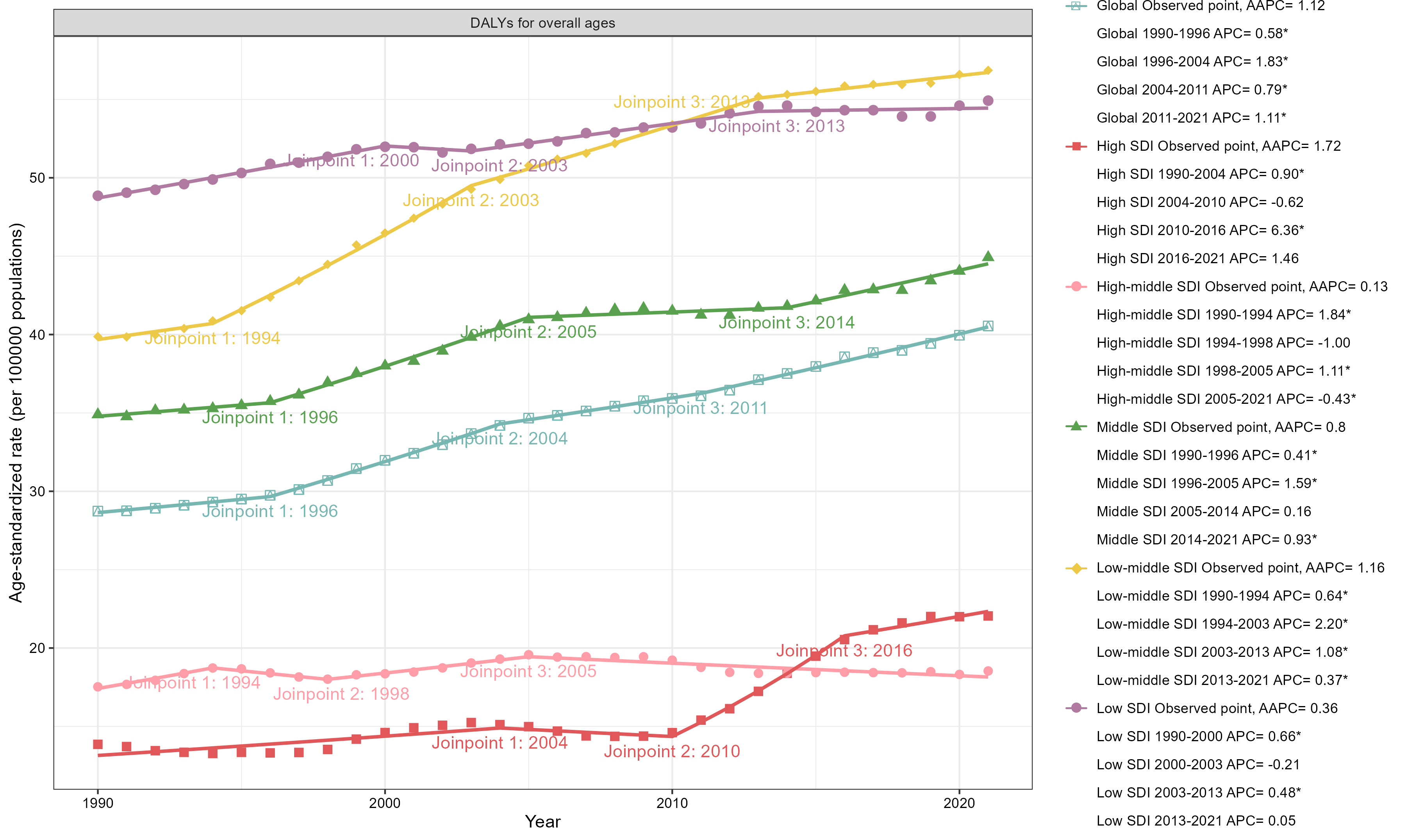
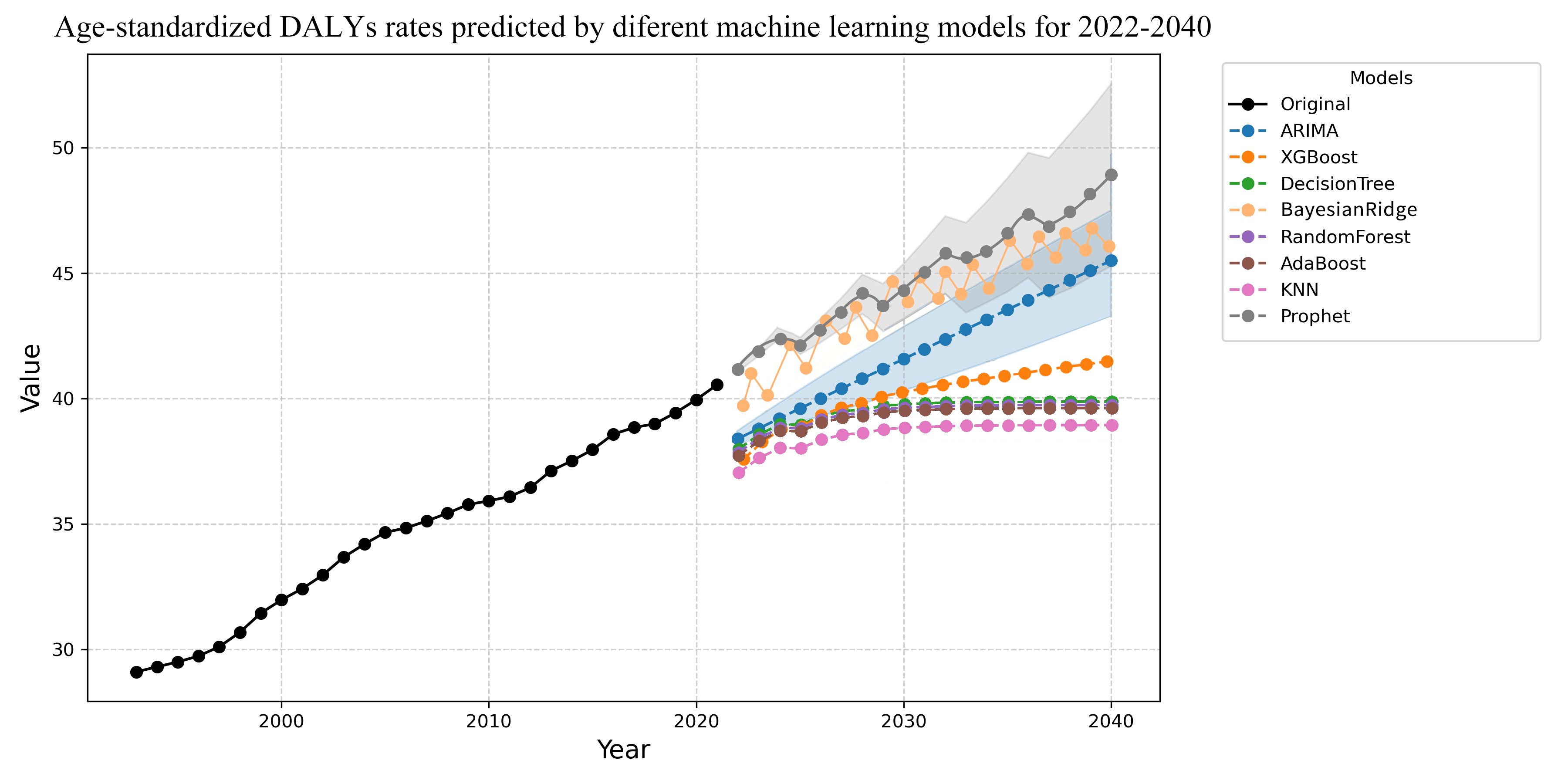
Abstract Body (Do not enter title and authors here): Background Young adults aged 25 to 49 years, who are at the peak of their professional and familial responsibilities, face significant health and societal productivity challenges when affected by chronic kidney disease (CKD) due to hypertension. Methods This study utilized data from the Global Burden of Disease (GBD) database spanning 1990 to 2021 to evaluate the burden of CKD due to hypertension among young adults aged 25-49 years at global, regional, and national levels. The analysis focused on trends in mortality and disability-adjusted life years (DALYs). Mortality and DALYs trends were examined using Joinpoint regression analysis, while eight time-series machine learning algorithms forecasted trends up to 2040. The age-period-cohort model analyzed the influence of age, period, and cohort effects. Results By 2021, global mortality from CKD due to hypertension reached 18,675.24, marking a 157.55% increase since 1990. The age-standardized mortality rate (ASMR) increased from 0.31 to 0.45 per 100,000 persons, with an average annual percentage change (AAPC) of 1.24% (P<0.05). The global DALYs also surged to 1,122,316.38, a 145.84% increase from 1990. The age-standardized disability rate (ASDR) grew from 19.39 to 27.37 per 100,000 persons, with its AAPC at 1.12% (P<0.05). Young adults aged 25-29 years experienced the largest increase in CKD burden due to hypertension, while those aged 45-49 years had the highest risk. Most of the CKD burden due to hypertension was in the three lowest SDI quintiles, while high SDI regions saw the fastest increase in burden from 1990 to 2021. The age effect exhibited an increasing trend with advancing age, while an unfavorable period effect and a favorable cohort effect were observed at the global level. Globally, the Prophet model was optimal in predicting the ASMR index, while the ARIMA model performed best for the ASDR, with projections indicating an increase in both indices by 2040. Conclusions CKD due to hypertension poses a growing global health challenge among young adults. There is a strong heterogeneity in disease burden, as well as its temporal trends (1990-2021) of CKD due to hypertension across the world, highlighting the strong distributive inequities of CKD worldwide.
Wang, Huiying
(
Capital Medical University
, Beijing , China )
Miao, Yiqun
(
Capital Medical University
, Beijing , China )
Wu, Ying
(
CAPITAL MEDICAL UNIVERSITY
, Beijing , China )
Author Disclosures:
Huiying Wang:DO NOT have relevant financial relationships
| yiqun miao:DO NOT have relevant financial relationships
| Ying Wu:No Answer