Daily Dietary Nutrients Predict Progression of Cardiovascular-Kidney-Metabolic Syndrome: A Machine Learning and SHAP Interpretation Study
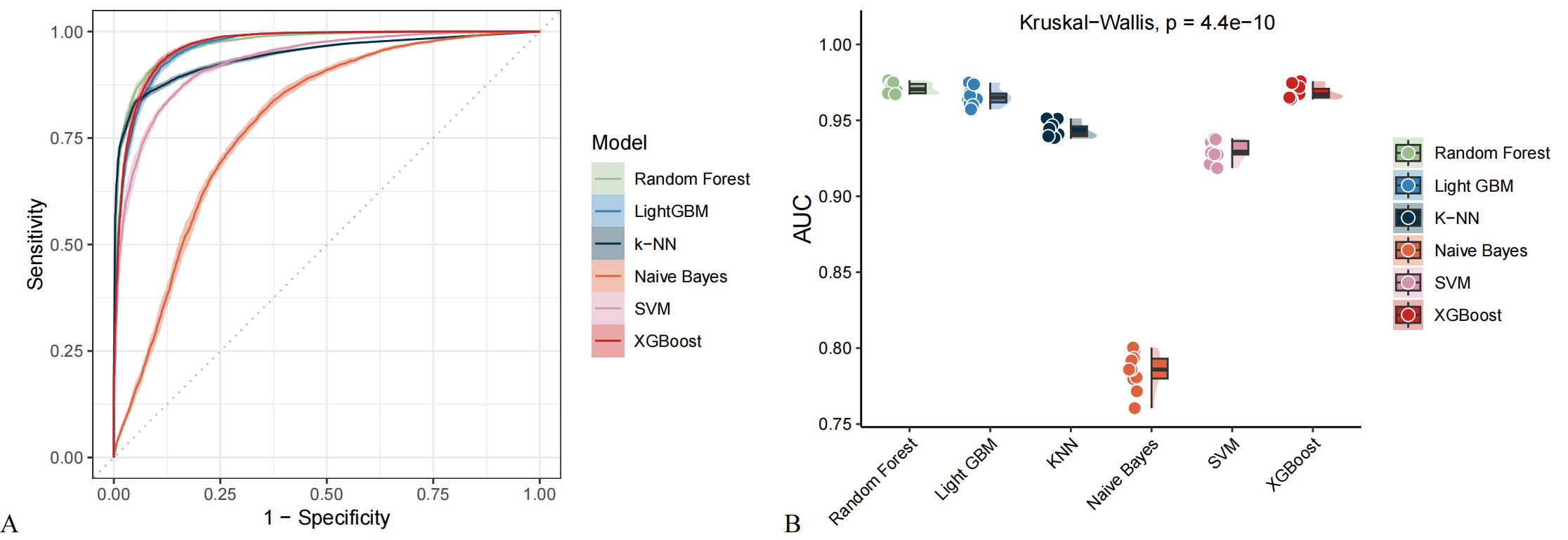
Abstract Body (Do not enter title and authors here): Background: The Cardiovascular–Kidney–Metabolic (CKM) syndrome, recently proposed by the American Heart Association, underscores the interplay among metabolic, renal, and cardiovascular conditions. Early risk identification is essential for effective prevention. Although diet is central to metabolic health, the impact of daily nutrient intake on CKM progression remains unclear. Objective: The aim of this study was to develop and validate a machine learning (ML) model for predicting the progression of CKM syndrome from early (Stages 1-3) to advanced stage (Stage 4). Methods: The National Health and Nutrition Examination Survey 2005-2018 dataset was used for the analysis. Daily dietary nutrients were selected as primary features, with demographic and lifestyle factors incorporated to improve model performance. Feature preprocessing involved VIF-based removal of multicollinearity, class balancing via Synthetic Minority Over-sampling Technique (SMOTE), and predictor selection using the Boruta algorithm. Subsequently, six ML algorithms, namely Random Forest (RF), light gradient boosting machine (LightGBM), Naive Bayes (NB), Support Vector Machine (SVM), eXtreme Gradient Boost (XGBoost), and K-Nearest Neighbors (KNN) were employed to train ML models using 10-fold cross-validation. Results: A total of 12,376 participants were enrolled in the study. The negative Weighted Quantile Sum regression index demonstrated a statistically significant inverse association between the dietary nutrient mixture and CKM syndrome progression (OR = 0.68, 95% CI: 0.62-0.74, P < 0.01). After excluding multicollinear variables and selecting important predictors, the ML model retained 29 daily dietary nutrients features and 5 baseline characteristics. The RF model demonstrated superior performance compared to alternative ML algorithms, achieving an accuracy of 91.1%, a sensitivity of 93.7%, a specificity of 87.4%, an F1 score of 92.6%, and an AUC of 0.971[95%CI(0.969-0.974)]. SHAP analysis indicated that among the dietary variables, niacin, copper, and vitamin E were identified as the most important nutritional predictors. Among demographic features, age and sex were the most influential factors. Conclusions: RF exhibited the best performance for predicting the progression of CKM syndrome from early to advanced stages. SHAP value interpretation revealed that niacin played a dominant role in prediction, with copper, vitamin E, age and sex also emerging as key contributing factors.
Miao, Yiqun
(
Capital Medical University
, Beijing , China )
Wang, Huiying
(
Capital Medical University
, Beijing , China )
Wu, Ying
(
Capital Medical University
, Beijing , China )
Author Disclosures:
yiqun miao:DO NOT have relevant financial relationships
| Huiying Wang:DO NOT have relevant financial relationships
| ying wu:No Answer