Impact of Procedural Sequence on Outcomes in Combined Atrial Fibrillation Ablation and Left Atrial Appendage Occlusion: A Meta-Analysis of Occlusion-First vs. Ablation-First Strategies
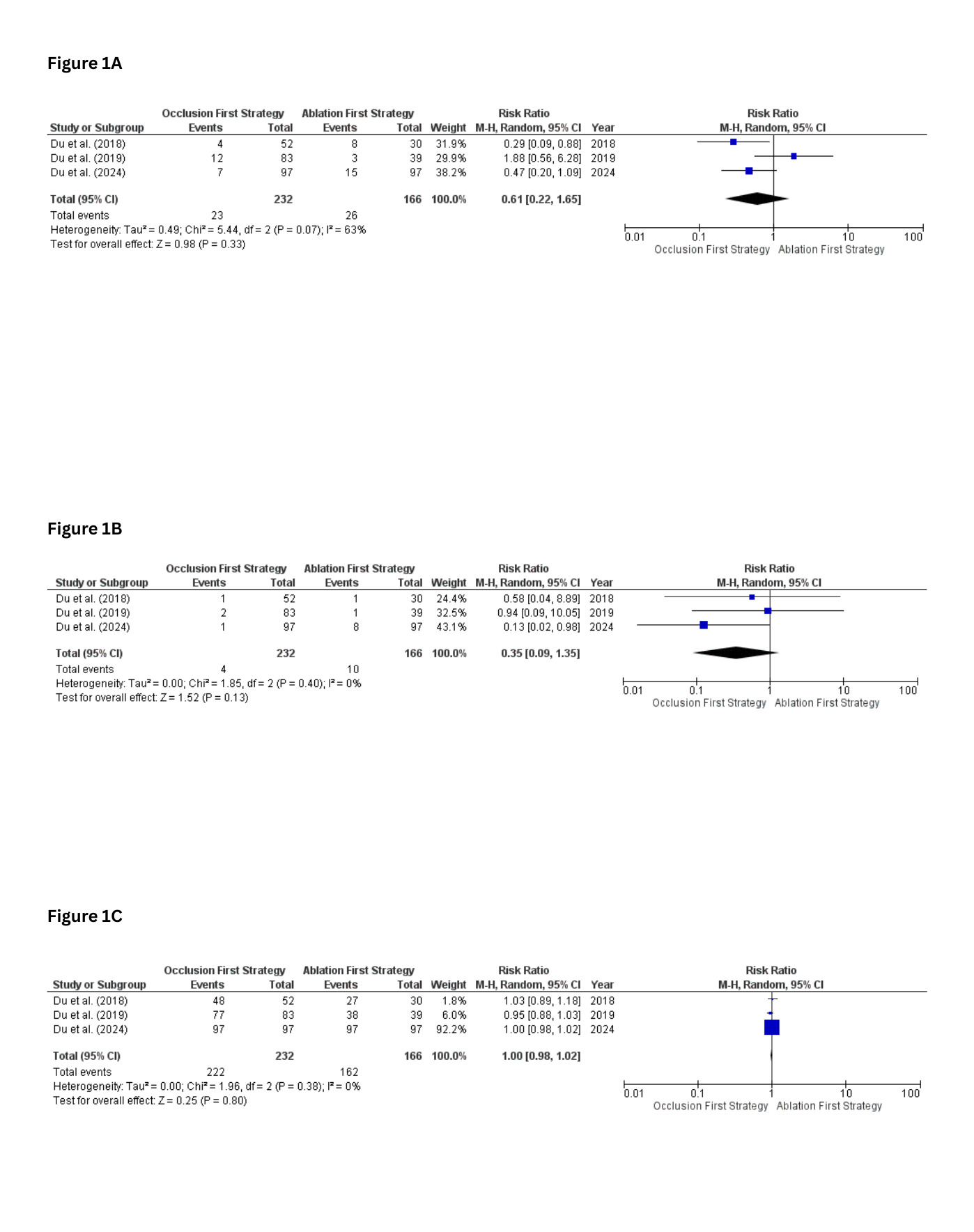
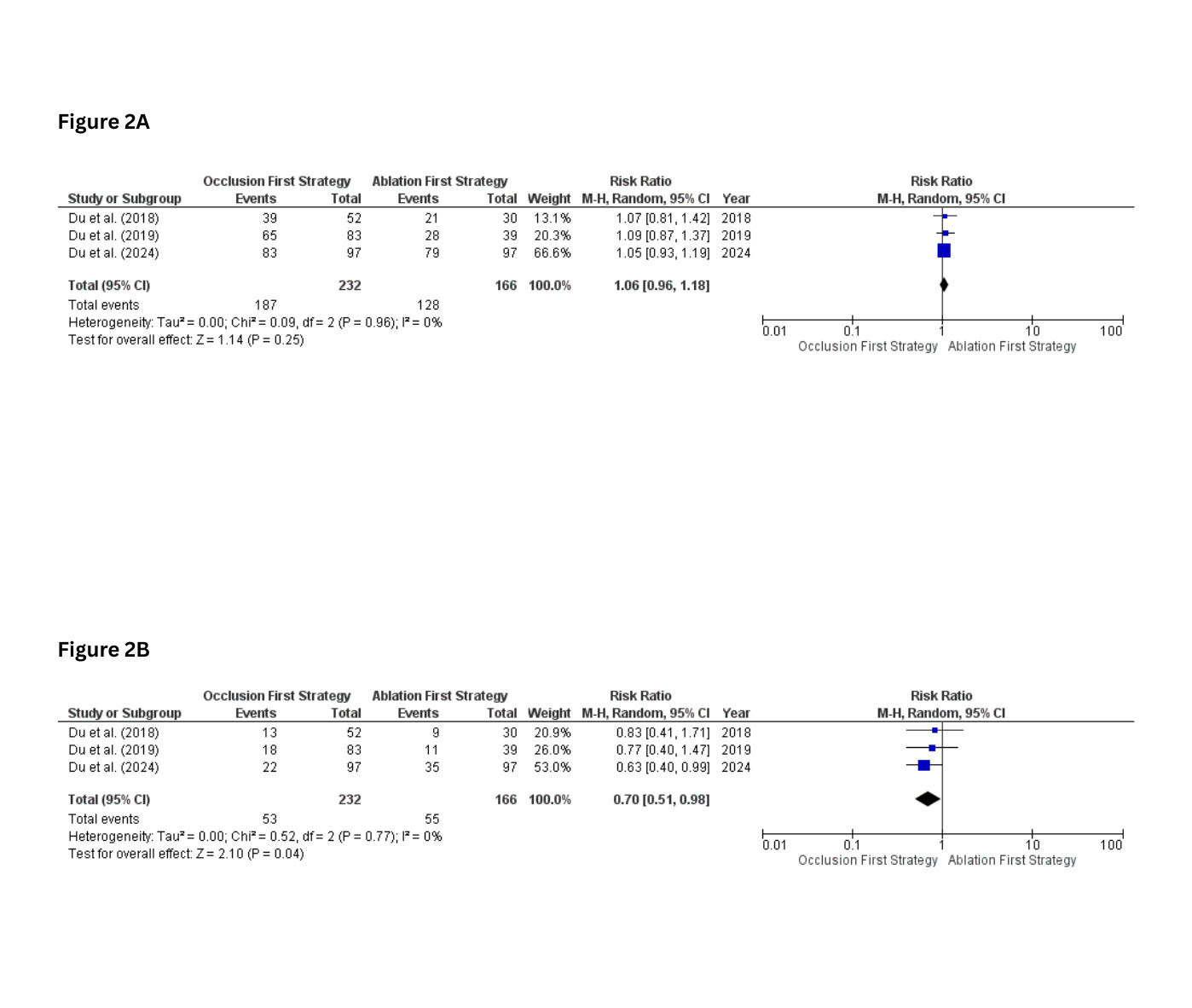
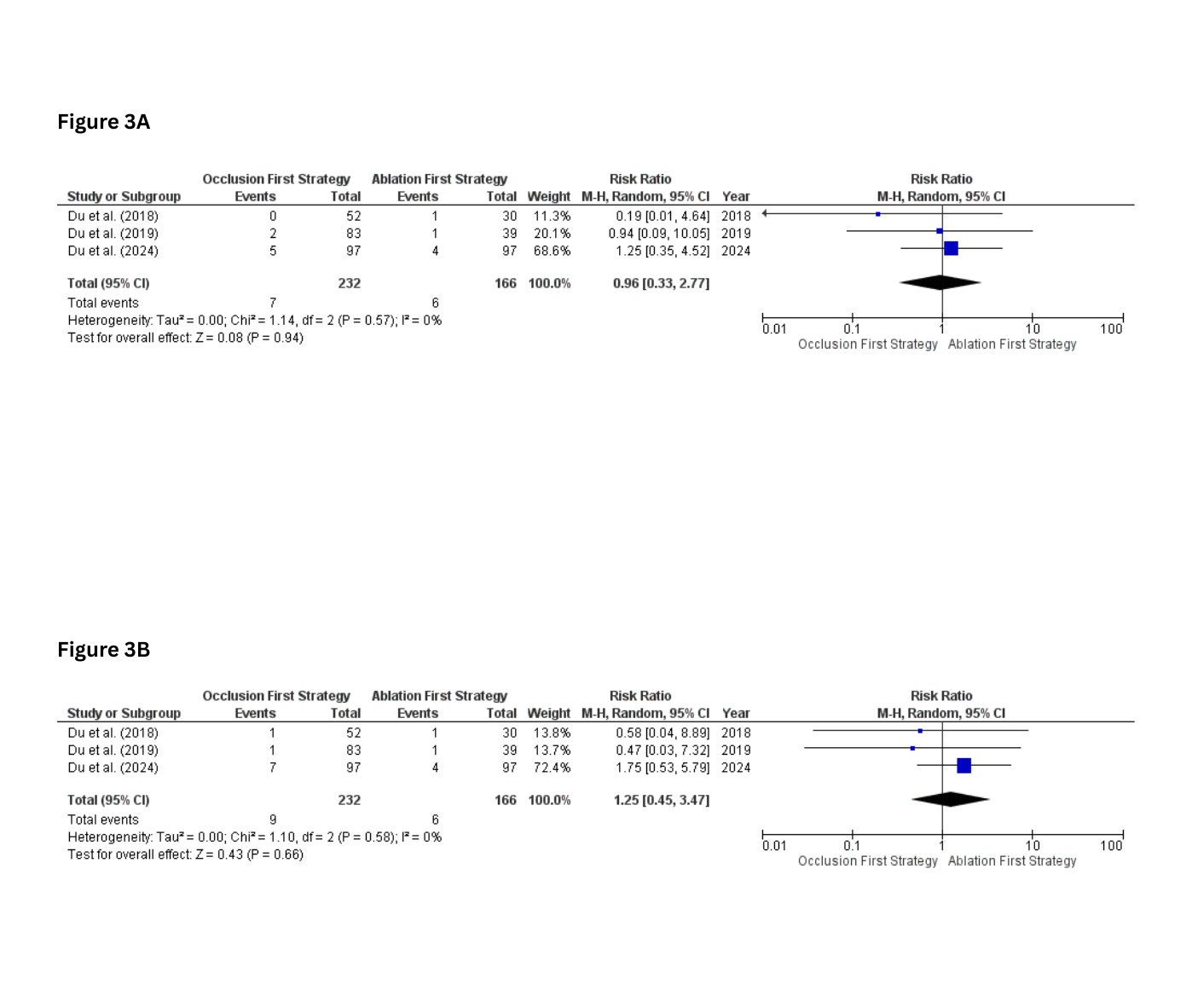
Abstract Body (Do not enter title and authors here): Background: In single-session atrial fibrillation (AF) procedures combining catheter ablation (CA) and left atrial appendage closure (LAAC), optimal sequencing, ablation-first (AF) or occlusion-first (OF), remains uncertain. Ablation-induced edema may impair device sealing, whereas prior occlusion may restrict catheter access. We conducted a meta-analysis to evaluate the impact of procedural sequence on clinical and procedural outcomes. Methods: A systematic search of PubMed, EMBASE, Cochrane, and Scopus up to May 2025 identified studies directly comparing OF and AF strategies in combined CA+LAAC. Primary outcomes were peridevice leak (PDL), device-related thrombus (DRT), and LAAC success. Secondary outcomes included AF recurrence, AF freedom at 12 months, pericardial effusion, major bleeding, and stroke/TIA. Risk ratios (RR) were pooled using a random-effects model; heterogeneity was assessed using I2. Results: 3 comparative studies (n=398; 232 OF, 166 AF) were included. PDL was lower with OF (RR=0.60; 95% CI: 0.22–1.65; p=0.33; I2=63%), with heterogeneity resolved after excluding the Du et al. 2018 study. DRT favored OF (RR=0.35; 95% CI: 0.09–1.35; p=0.13; I2=0%), though statistical significance was not reached. LAAC procedural success was comparable between groups (RR 1.00; 95% CI, 0.98–1.02; p=0.80; I2=0%). AF recurrence was significantly lower with OF (RR 0.71; 95% CI, 0.51–0.94; p=0.02; I2=0%), while freedom from AF at 12 months did not differ meaningfully (RR 1.06; 95% CI, 0.96–1.18; p=0.25; I2=0%). Rates of major bleeding (RR 0.96) and pericardial effusion (RR 1.25) were similar across strategies. Stroke/TIA occurred in 1.0% of OF patients compared to 3.6% in the AF group, reported descriptively due to limited events. Among all outcomes, only AF recurrence demonstrated a statistically significant benefit favoring the occlusion-first approach. Conclusions: While most outcomes did not reach statistical significance, occlusion-first sequencing was consistently associated with numerically lower rates of peridevice leak, device-related thrombus, and AF recurrence, without compromising procedural efficacy or safety. Based on limited comparative data, these findings remain exploratory but offer the first pooled evidence supporting occlusion-first as a feasible and potentially advantageous strategy in combined CA+LAAC procedures, warranting prospective validation.
Sabesan, Vaishnavi
(
TTUHSC El paso
, El paso , Texas , United States )
Prabakar, Deipthan
(
TTUHSC El paso
, El paso , Texas , United States )
Malik, Maryam Abbas
(
services institute of medical sciences
, Lahore , Pakistan )
Goranti, Jyothsna
(
TTUHSC El paso
, El paso , Texas , United States )
Del Real, Azucena
(
TTUHSC El paso
, El paso , Texas , United States )
Abolbashari, Mehran
(
Center of the Heart
, El paso , Texas , United States )
Author Disclosures:
Vaishnavi Sabesan:DO NOT have relevant financial relationships
| Deipthan Prabakar:No Answer
| Maryam Abbas Malik:No Answer
| Jyothsna Goranti:DO NOT have relevant financial relationships
| AZUCENA DEL REAL:DO NOT have relevant financial relationships
| Mehran Abolbashari:DO NOT have relevant financial relationships