
Mechanical Versus Bioprosthetic Surgical Aortic Valves Produce Divergent 3-Year Complication Profiles in Patients ≤ 21 Years
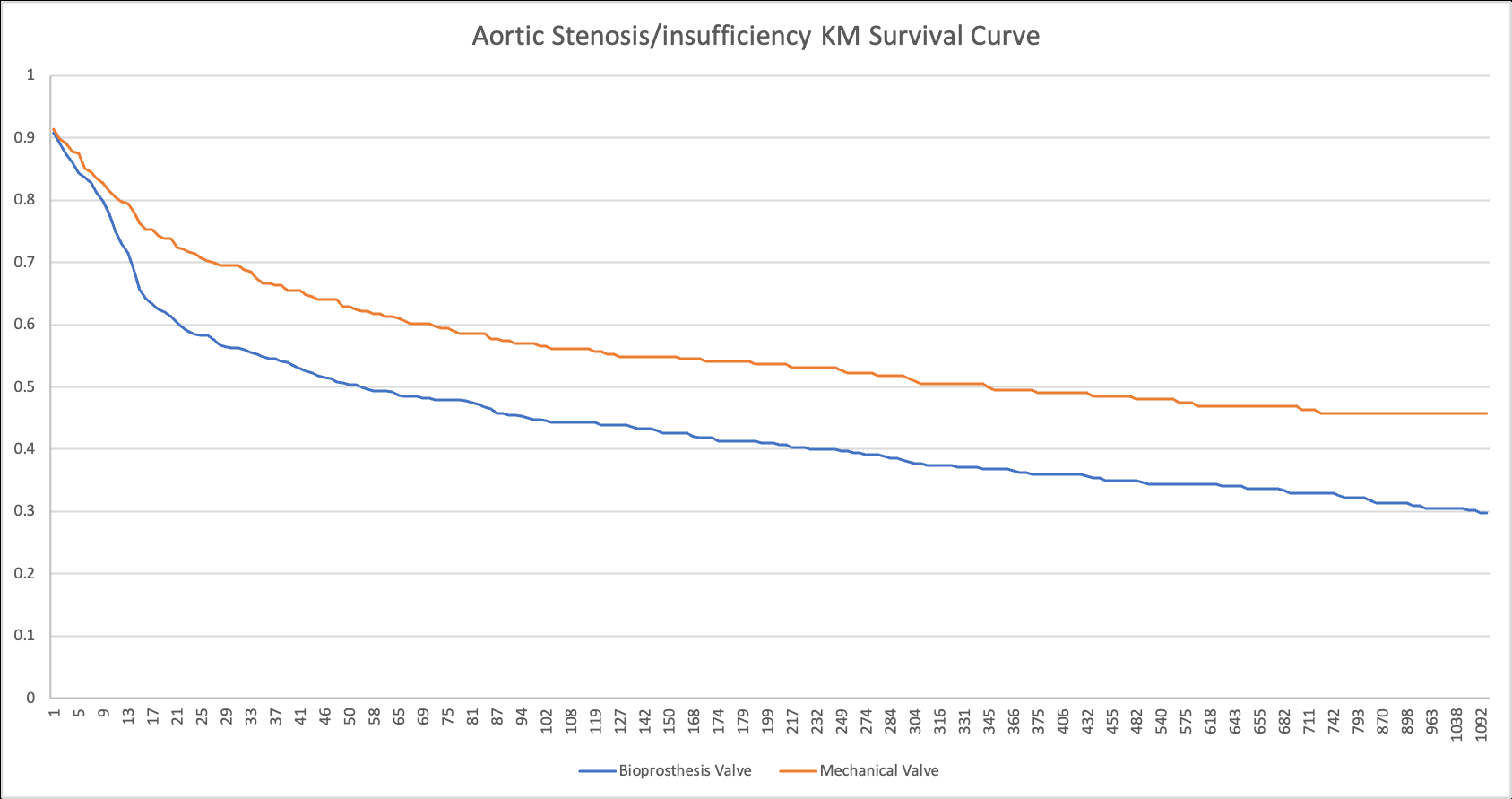
Abstract Body (Do not enter title and authors here): Background Choice of prosthesis for surgical aortic-valve replacement (SAVR) in children and young adults remains controversial because contemporary, multicenter outcome data are scarce. Research Question Do mechanical and bioprosthetic SAVR confer different early and mid-term clinical outcomes in patients aged ≤ 21 years? Methods We performed a retrospective cohort study in the TriNetX U.S. Collaborative Network (66 health-care organizations). Patients aged 0–21 years undergoing open SAVR between 2005 and 2025 were identified by ICD-10-PCS/CPT procedure codes. Cohorts were defined by valve type: bioprosthetic/other tissue (n = 533) vs mechanical (n = 305). Outcomes were assessed 1–1 095 days after index surgery without prior event exclusion unless specified. Risk difference (RD), risk ratio (RR) and hazard ratio (HR, Kaplan-Meier) were estimated. No propensity matching was applied; baseline age, sex and race distributions were similar (mean 14 vs 16 y; 69 % vs 67 % male). Results Re-operation occurred exclusively after mechanical valves (0 % vs 3.3 %; RD –3.3 % [–5.3 to –1.3], p < 0.001). Permanent pacemaker implantation was more common after tissue valves (1.9 % vs 0 %; RD +1.9 % [0.7–3.0], p = 0.016). Implant-related complications were lower with tissue valves (14.8 % vs 21.4 %; RD –6.5 % [–12.0 to –1.0], RR 0.70 [0.52–0.93], p = 0.016). In-patient rehospitalization favored tissue valves (35.7 % vs 42.8 %; RD –7.0 % [–13.9 to –0.2], RR 0.84 [0.70–0.99], p = 0.044). Late aortic-valve dysfunction was more frequent after tissue SAVR (59.4 % vs 48.4 %; RD +11.0 % [4.0–18.0], RR 1.23 [1.07–1.41]; HR 1.47 [1.21–1.79], log-rank p < 0.001). Conduction/arrhythmic sequelae were less common with tissue valves: atrioventricular block (9.4 % vs 14.1 %; RD –4.7 % [–9.4 to –0.1], p = 0.036) and ventricular premature complexes (4.5 % vs 9.9 %; RD –5.4 % [–9.1 to –1.6], RR 0.46 [0.27–0.77]; HR 0.48 [0.28–0.82], p = 0.006). No significant differences were observed in all-cause mortality, stroke/TIA, acute kidney injury, major bleeding or prosthetic-valve endocarditis (all p > 0.05). Conclusions In patients ≤ 21 years, mechanical SAVR is associated with higher re-operation and prosthesis-related complication rates, whereas tissue valves incur greater pacemaker use and earlier hemodynamic valve deterioration. These divergent risk profiles should inform individualized valve selection and shared decision-making in the pediatric and young-adult population.
Khan, Aoun Zaib
(
MetroHealth/Case Western University
, Cleveland , Ohio , United States )
Khan, Zainab Zaib
(
University of Missouri
, Columbia , Missouri , United States )
Sajid, Ahmed
(
PIMS, islamabad
, Islamabad , Pakistan )
Khan, Farva Zaib
(
Al Nafees Medical College
, Islamabad , Pakistan )
Nasir, Yamna
(
Rawalpindi Medical College
, Rawalpindi , Pakistan )
Author Disclosures:
Aoun Zaib Khan:DO NOT have relevant financial relationships
| Zainab Zaib Khan:DO NOT have relevant financial relationships
| Ahmed Sajid:DO NOT have relevant financial relationships
| Farva Zaib Khan:No Answer
| Yamna nasir:No Answer