Variability of Outpatient Cardiology Clinician Performance Metric Achievement in the Veteran Affairs Health System
Abstract Body (Do not enter title and authors here): Introduction Quality improvement interventions may seek to identify positive and negative outlier clinicians to promote practice change. We sought to assess variability in performance metric achievement by clinician and patient characteristics in the Veterans Affairs (VA) Health System.
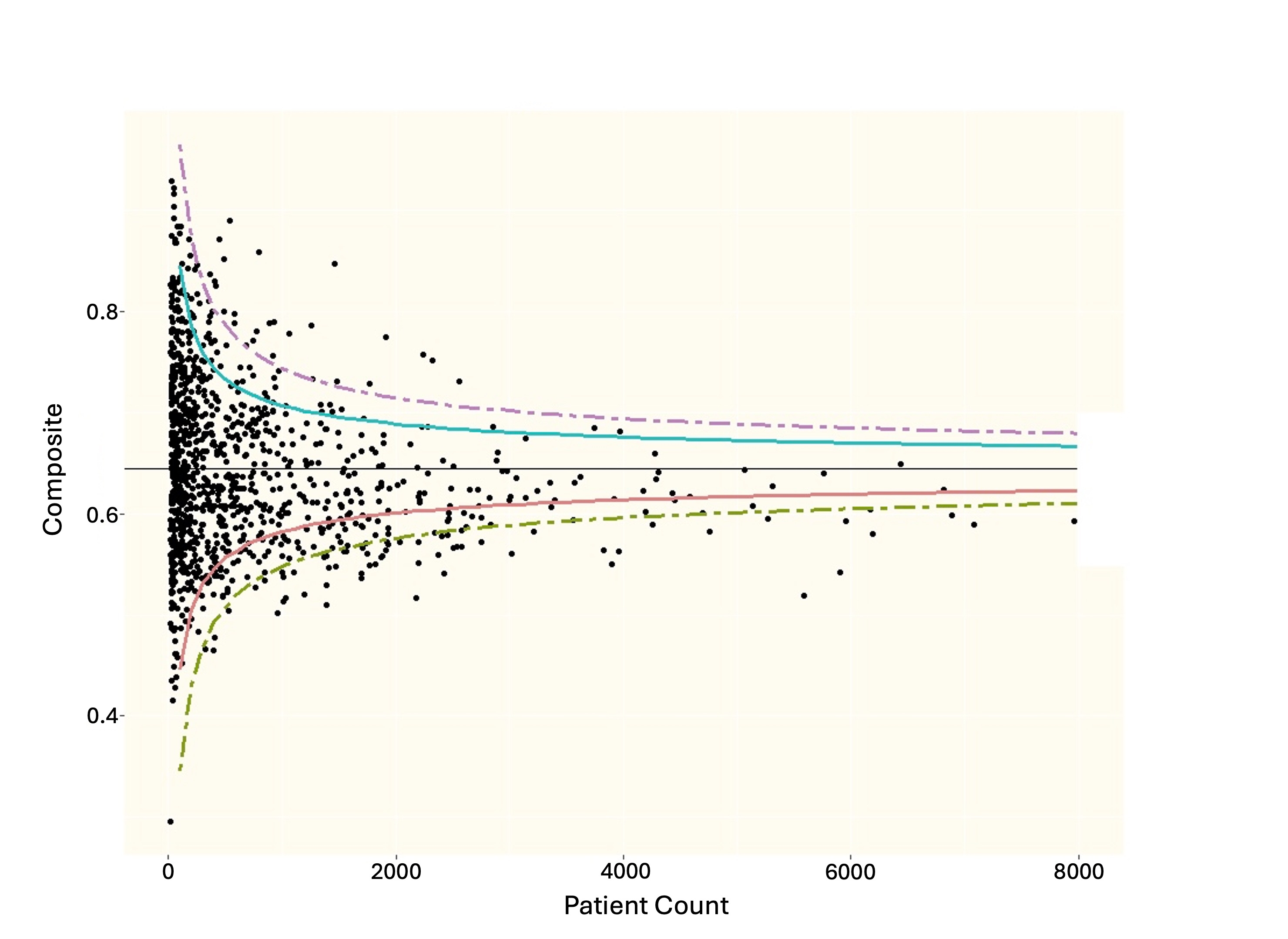
Methods We assessed performance measure achievement for cardiology clinicians with at least 50 annual outpatient encounters from 2017-2023 in the VA. We evaluated a composite performance metric of ten measures of guideline-directed medical therapies for coronary artery disease (CAD), heart failure with reduced ejection fraction (HFrEF), and atrial fibrillation or flutter with elevated stroke risk (AF). This opportunity composite was calculated as the proportion of times each applicable measure was achieved divided by the number of eligible encounters for each clinician. Data on clinician demographics, patient demographics, and patient diagnoses codes were collected. Clinician performance was considered a “low-outlier” or “high-outlier” if it was more than 2 standard deviations below or above the mean achievement, respectively, using a funnel plot that accounts for case volume.
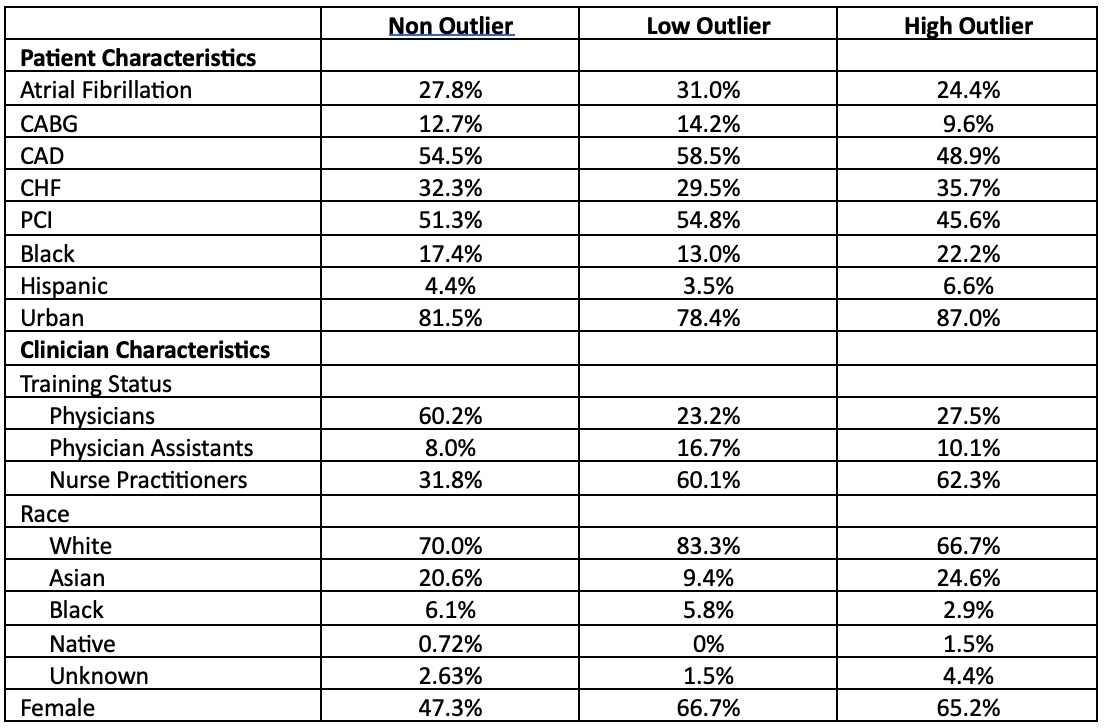
Results Of 715,608 unique encounters, there were 312,331 CAD, 224,599 HFrEF, and 178,678 AF encounters. Of 1,043 clinicians, 53.1% were physicians, 9.3% were physician assistants (PA), and 37.6% were nurse practitioners (NP); 51.0% were female. Clinicians were 71.5% White, 19.4% Asian, 5.8% Black, 0.7% Native, and 2.6% unknown race. Clinicians achieved a mean composite measure achievement of 0.65 with outlier status varying by patient volume (Figure). Low-outlier clinicians cared for patients with a greater number of cardiac diagnoses compared with non-outliers (Table). In contrast, high-outliers cared for a higher proportion of patients with HF and patients who were Black, Hispanic, and from urban areas. NPs were overrepresented in both the low- and high-outlier groups, while PAs were modestly overrepresented in the low-outlier group. Regarding clinician demographics, Asian clinicians were more likely to be high-outliers, and white clinicians were more likely to be low-outliers, with women overrepresented in both groups.
Conclusion Positive and negative outlier performance by clinicians may be partially explained by case mix. Understanding differences in performance by clinician training and demographics may lead to interventions to support all clinicians in high quality care delivery.
Chow, Christine
(
University of Washington
, Seattle , Washington , United States )
Gaba, Harshita
(
University of Washington
, Seattle , Washington , United States )
Odonnell, Colin
(
VA PUGET SOUND HEALTH CARE SYSTEM
, Seattle , Washington , United States )
Salahuddin, Taufiq
(
VA Eastern Colorado Health Care System
, Aurora , Colorado , United States )
Doll, Jacob
(
VA PUGET SOUND HEALTH CARE SYSTEM
, Seattle , Washington , United States )
Author Disclosures:
Christine Chow:DO NOT have relevant financial relationships
| Harshita Gaba:DO NOT have relevant financial relationships
| Colin ODonnell:No Answer
| Taufiq Salahuddin:No Answer
| Jacob Doll:DO NOT have relevant financial relationships