Declining Mortality from Myocardial Infarction in Young and Middle-Aged Americans and the Impact of the COVID-19 Pandemic
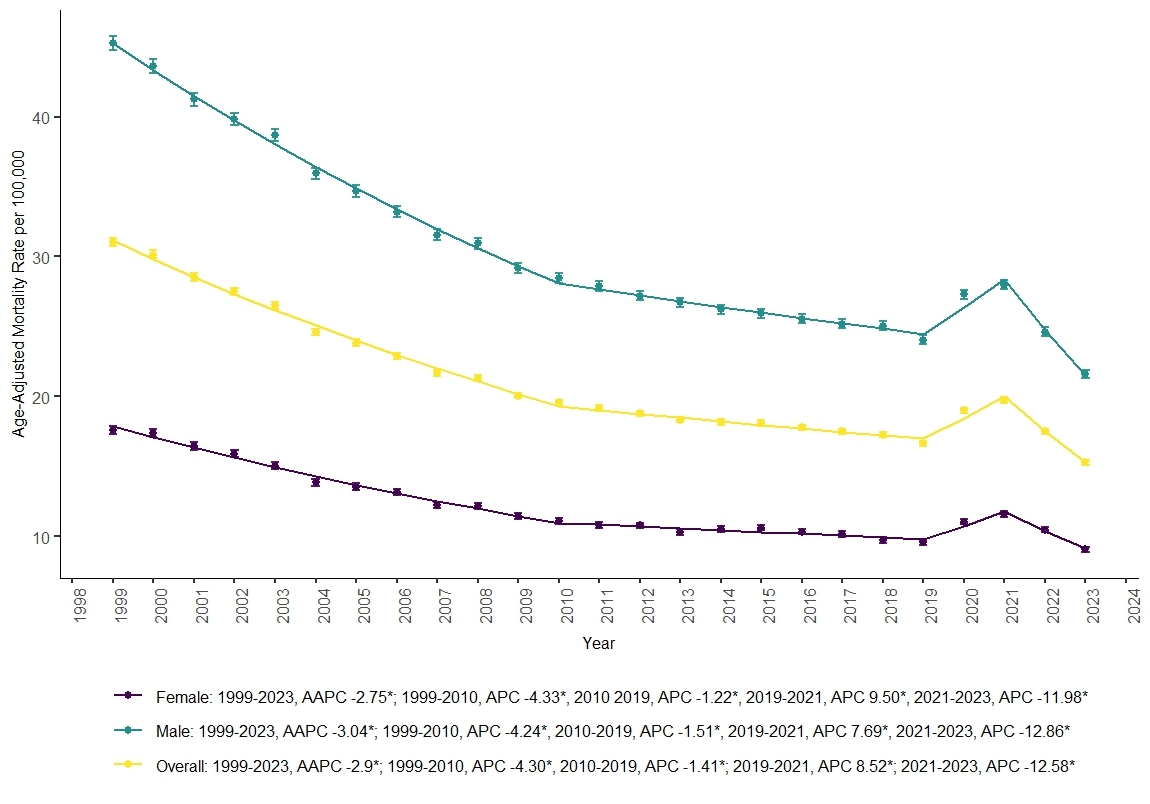
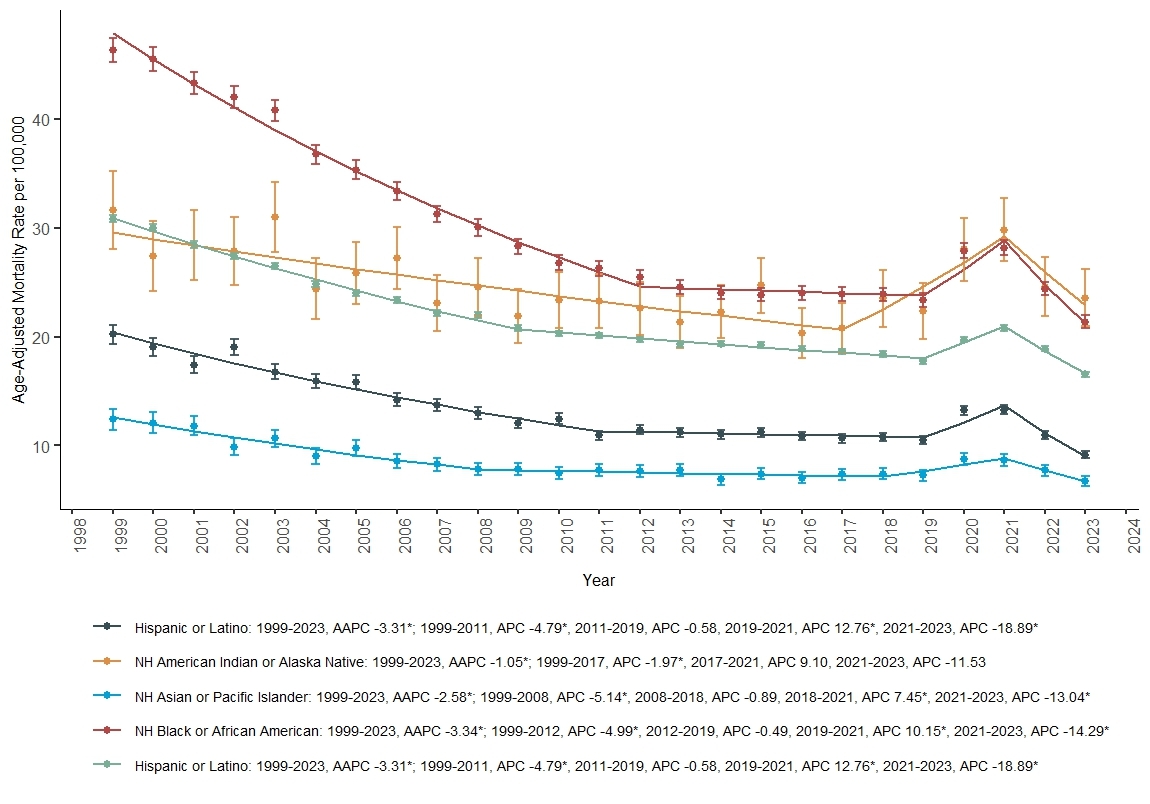
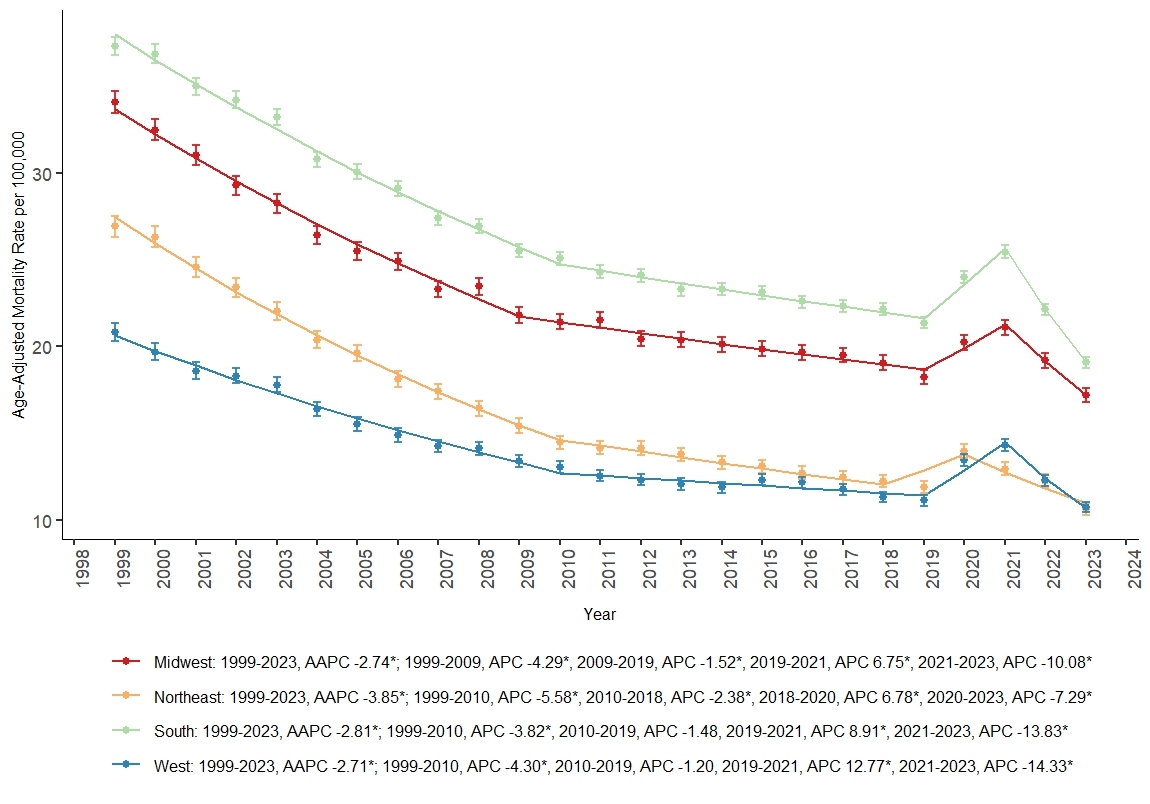
Abstract Body (Do not enter title and authors here): Background: Acute myocardial infarction (AMI) represents a significant component of cardiovascular disease (CVD) mortality among the young and middle-aged populations of the United States (US). Research Question: To analyze the long-term trends and the impact of the COVID-19 pandemic on AMI-related mortality among the young and middle-aged populations of the US. Methods: Data from the Centers for Disease Control and Prevention Wide-ranging Online Data for Epidemiologic Research (CDC WONDER) multiple causes of death database were used to analyze death certificates from 1999 to 2023 for AMI-related deaths among the young and middle-aged population (aged 25-64) of the US. Age-adjusted mortality rates (AAMRs) per 100,000 people and associated annual percent changes (APCs) and average APC (AAPCs) were analyzed using Joinpoint regression analysis. Mortality trends were stratified by sex, race/ethnicity, and census region. Results: From 1999 to 2023, there were 970,454 AMI-related deaths among U.S. adults aged 25-64 years. The annual number of AMI-related deaths decreased from 44,040 in 1999 to 31,522 in 2023. The overall AAMR per 100,000 decreased from 31.02 deaths (95% CI, 30.73 to 31.31) in 1999 to 15.29 (95% CI, 15.11 to 15.46) in 2023 (AAPC -2.92%, 95% CI -3.22 to -2.75). The AAMR per 100,000 declined at a faster rate from 31.02 in 1999 to 19.57 in 2010 (1999-2010, APC -4.26), followed by a slower rate from 19.57 in 2010 to 16.67 in 2019 (2010-2019, APC -1.41), The declining trend was disrupted by a transient increase during the COVID-19 pandemic, with a peak AAMR of 19.73 (95% CI, 19.53 to 19.93) in 2021 (2019-2021, APC 8.52). The declining trend resumed from 2021 to 2023, with AAMR decreasing to the lowest levels of 15.29 in 2023 (2021-2023, APC -12.58). Heterogeneity across demographic and regional groups has narrowed during these 25 years. However, they are still prevalent, with men (figure 1), non-Hispanic (NH) Black or African American, NH American Indian or Alaska Native (figure 2), and the residents of the Southern United States (figure 3) having higher mortality rates. Conclusion: Over the past 25 years, AMI-related mortality has declined in the young and middle-aged population of the US, although rates spiked during the COVID-19 pandemic before resuming their decline in 2022. While disparities among demographic and regional groups have narrowed, they still exist, necessitating comprehensive efforts to improve cardiovascular health outcomes.
Abdul Jabbar, Ali Bin
(
Creighton University School of Medicine
, Omaha , Nebraska , United States )
Ismayl, Mahmoud
(
Mayo Clinic
, Rochester , Minnesota , United States )
Klisares, Mason
(
Creighton University School of Medicine
, Omaha , Nebraska , United States )
Azouz, Mohamed
(
Creighton University School of Medicine
, Omaha , Nebraska , United States )
Osborne, John
(
Creighton University School of Medicine
, Omaha , Nebraska , United States )
Goldsweig, Andrew
(
Baystate Medical Center
, West Hartford , Connecticut , United States )
Aboeata, Ahmed
(
Creighton University School of Medicine
, Omaha , Nebraska , United States )
Author Disclosures:
Ali Bin Abdul Jabbar:DO NOT have relevant financial relationships
| Mahmoud Ismayl:DO NOT have relevant financial relationships
| Mason Klisares:DO NOT have relevant financial relationships
| Mohamed Azouz:No Answer
| John Osborne:DO NOT have relevant financial relationships
| Andrew Goldsweig:DO have relevant financial relationships
;
Consultant:Philips:Past (completed)
; Consultant:Occlutech:Active (exists now)
; Consultant:Conformal Medical:Active (exists now)
; Speaker:Boston Scientific:Past (completed)
; Consultant:Abbott:Past (completed)
| Ahmed Aboeata:No Answer