Logo

American Heart Association

  34
  0


Final ID: MP1609

Neonatal Animal Model of Shunted Single Ventricle Circulation

Abstract Body (Do not enter title and authors here): Introduction/Background:
Current knowledge of a Stage 1 shunted single ventricle (SSV) physiology is predominantly based on clinical data. Development of a reliable and reproducible SSV animal model can facilitate pre-clinical research on strategies to improve outcomes.
Research Questions/ Hypothesis:
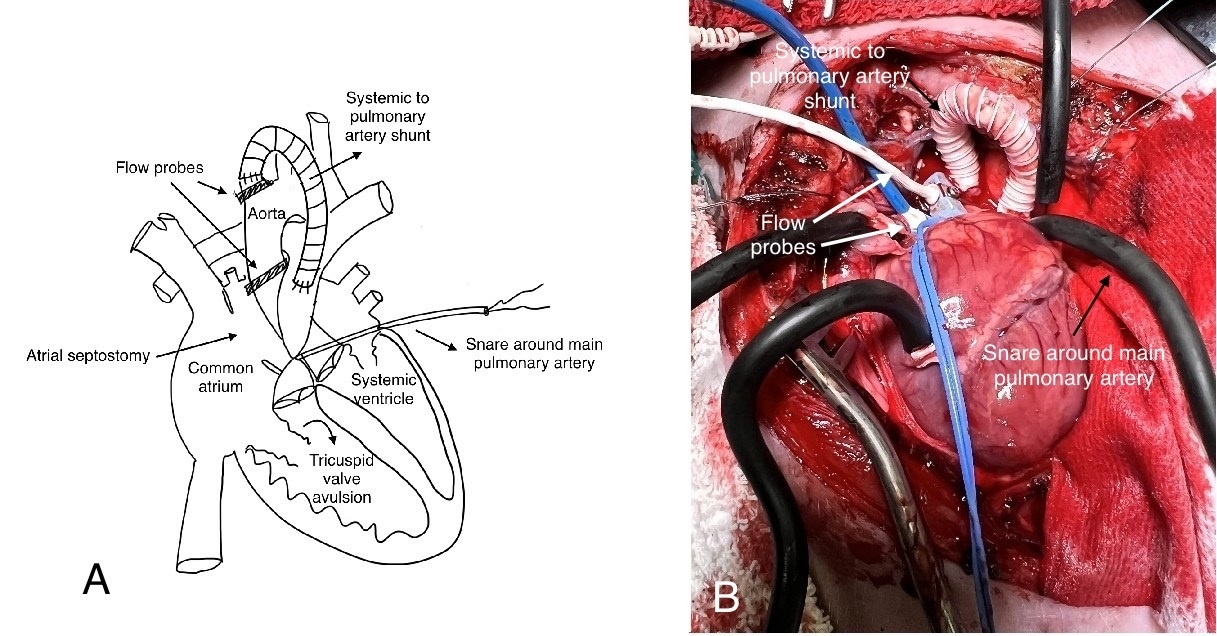
We hypothesize that a functional SSV animal model can be created by percutaneously creating a large atrial communication, placing a systemic to pulmonary artery shunt and excluding the right ventricle (RV) from the circulation.
Goals/Aims:
We aimed to create a neonatal porcine SSV model without using cardiopulmonary bypass.
Methods/Approach:
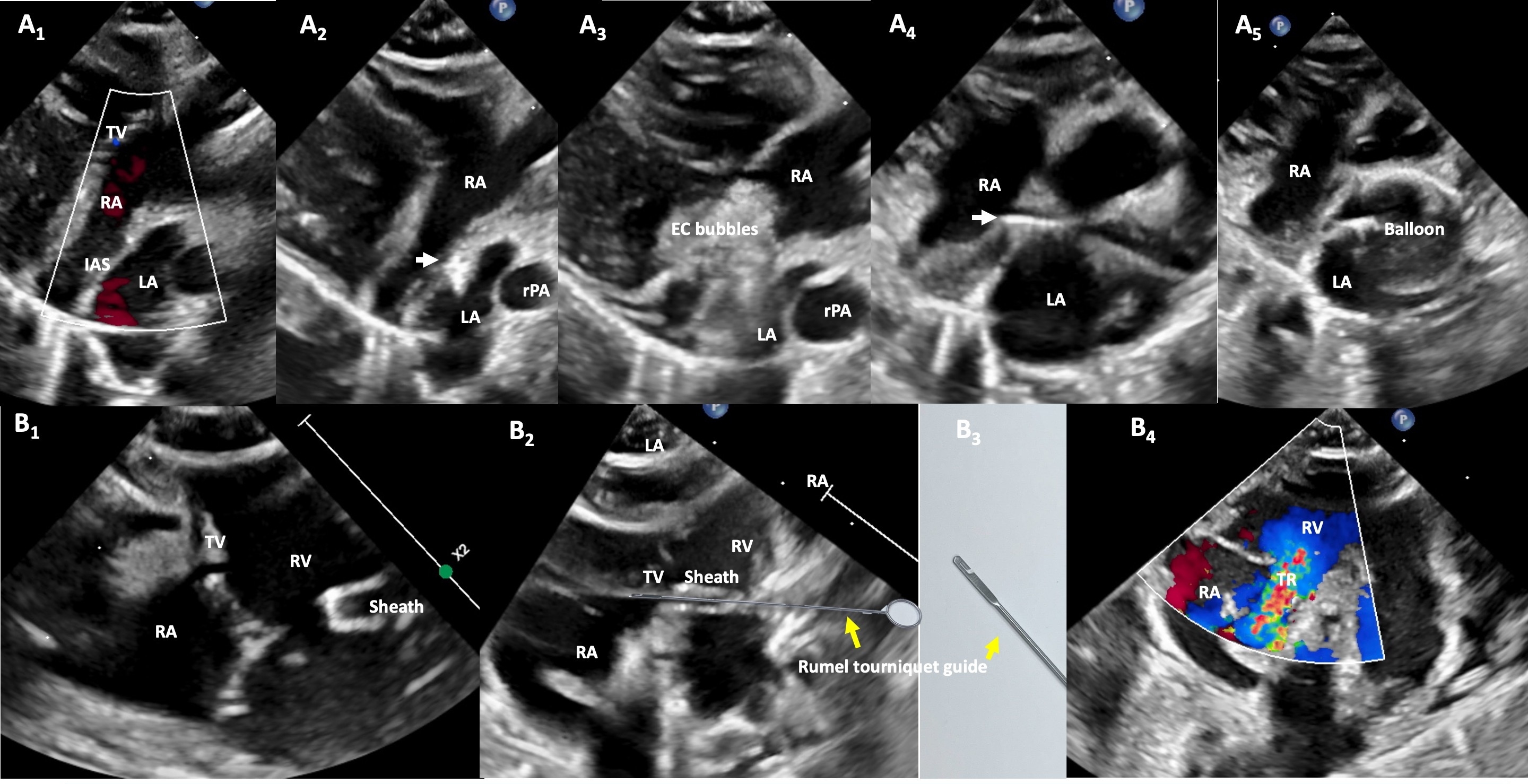
Neonatal pigs (n=8; weight 6.1±2.6 kgs) were used. A median sternotomy was performed. A 6-mm ring enforced PTFE graft was anastomosed end-side to the main pulmonary artery (MPA), end-end to the innominate artery and occluded with a vascular clamp. Under epicardial echocardiography guidance, the atrial septum was percutaneously perforated using electrocautery. (Figure 1A). Electrocautery was applied using a coaxial system of 4 Fr JR 3 catheter and a 0.014-inch coronary wire with its denuded tip at the atrial septum. Balloon atrial septostomy was performed using B. Braun Z-5 13.5 mm and/or the Edwards Miller septostomy balloon. To prevent RV distension, a per-ventricular Tricuspid valve (TV) avulsion was done using a Rumel tourniquet guide as a snare placed through a 7 Fr per-ventricular sheath (Figure 1B) . The systemic to pulmonary artery shunt (SPS) was unclamped, and antegrade pulmonary blood (APF) was interrupted by the occlusion of the MPA. Inotropic support was initiated. Donor pig blood was transfused for volume replacement. Hemodynamic and laboratory data were collected. The circulation was maintained for a minimum duration of 1 hour.

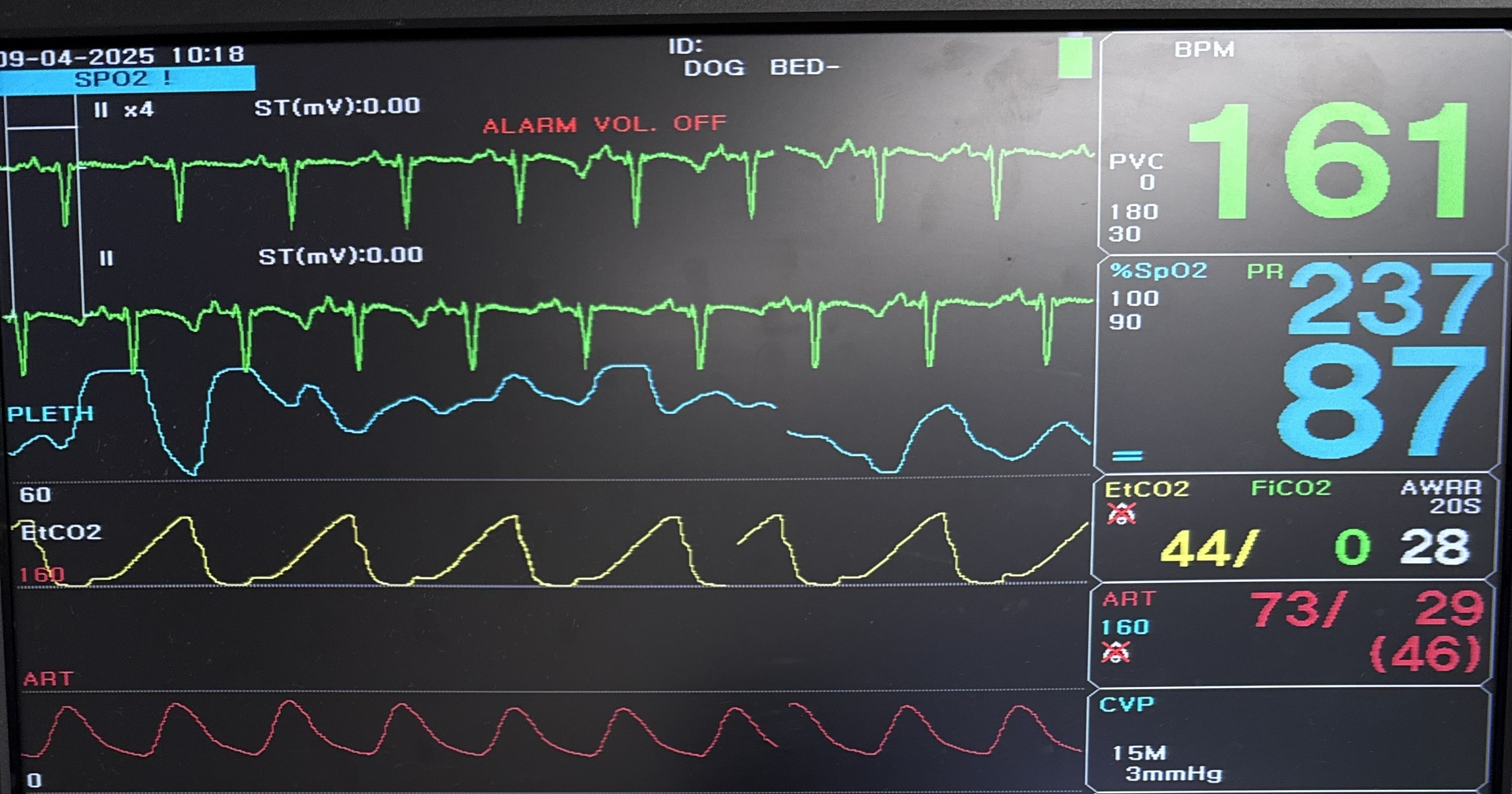
Results/Data: The SSV was successfully created in 6 out of 8 animals. The SSV circulation had a mean arterial pressure of 37.5±12 mmHg and a common atrial pressure of 12±6 mmHg. The mean aortic flow was 0.76±0.34 L/min, and the systemic to pulmonary artery shunt flow was 0.36±0.23 L/min. The mean Qp/Qs ratio was 1.27±1.14. The systemic saturation was 82±16%, and the mixed venous saturation was 58±17%.
Conclusions: A porcine animal model of an SSV circulation can be created without using cardiopulmonary bypass by performing a percutaneous atrial septostomy, per ventricular TV avulsion, placing a SPS and interrupting APF. This model effectively replicates the stage 1 SSV physiology.
  • Peer, Syed  ( University of Minnesota , Minneapolis , Minnesota , United States )
  • Berry, James  ( University of Minnesota , Minneapolis , Minnesota , United States )
  • Miyairi, Satoshi  ( University of Minnesota , Minneapolis , Minnesota , United States )
  • Sinha, Pranava  ( University of Minnesota , Minneapolis , Minnesota , United States )
  • Hiremath, Gurumurthy  ( University of Minnesota , Plymouth , Minnesota , United States )
  • Author Disclosures:
    Syed Peer: DO NOT have relevant financial relationships | James Berry: No Answer | Satoshi Miyairi: DO NOT have relevant financial relationships | Pranava Sinha: DO NOT have relevant financial relationships | GURUMURTHY HIREMATH: DO have relevant financial relationships ; Consultant:B.Braun Medical:Active (exists now)
Meeting Info:

Scientific Sessions 2025

2025

New Orleans, Louisiana

Session Info:

Fetal and Neonatal Cardiovascular Health: Maternal Influences, Genetics, and Early Life Outcomes

Sunday, 11/09/2025 , 11:50AM - 01:05PM

Moderated Digital Poster Session

More abstracts on this topic:
Divergent Transcriptomic Responses in Liver and Colon after ECMO resuscitation in an Infant Piglet Model

Zakrzewski Jack, Mancuso Christopher, Thomson Lindsay, Khailova Ludmila, Lehmann Tanner, Niemiec Sierra, Davidson Jesse

Acceptability and Gain of Knowledge of Community Educational Tools About Rheumatic Heart Disease Integrated With Screening In Low-Income Settings

Abrams Jessica, Nunes Maria, Diniz Marina, Fraga Lucas, Paula Luiza, Coelho Cecilia, Tacuri Chavez Luz Marina, Lemos Larissa, Correia Julliane, Ribeiro Antonio, Nascimento Bruno, Sable Craig, Spaziani Alison, Zuhlke Liesl, Cardoso Clareci, Vinhal Wanessa, Ribeiro Isabely, Oliveira Kaciane, Amaral Ingred Beatriz

More abstracts from these authors:
You have to be authorized to contact abstract author. Please, Login
Not Available