Impact of Diabetes and Glycemic Control on Cardiovascular Outcomes Following Left Atrial Appendage (LAA) Occlusion: A Propensity Matched Analysis.
Abstract Body (Do not enter title and authors here): Background: Diabetes mellitus is a known risk factor for adverse cardiovascular outcomes, particularly in patients with atrial fibrillation. While left atrial appendage occlusion (LAAO) has emerged as a viable alternative to long-term anticoagulation, the influence of glycemic control on post-procedural outcomes remains inadequately defined. This study aimed to evaluate cardiovascular outcomes among nondiabetic (NDM), well-controlled diabetic (WCDM; HbA1c <7%), and poorly controlled diabetic (PCDM; HbA1c ≥7%) patients undergoing LAAO.
Research Question: Does diabetes and its glycemic control status affect adverse cardiovascular outcomes following LAAO in atrial fibrillation patients?
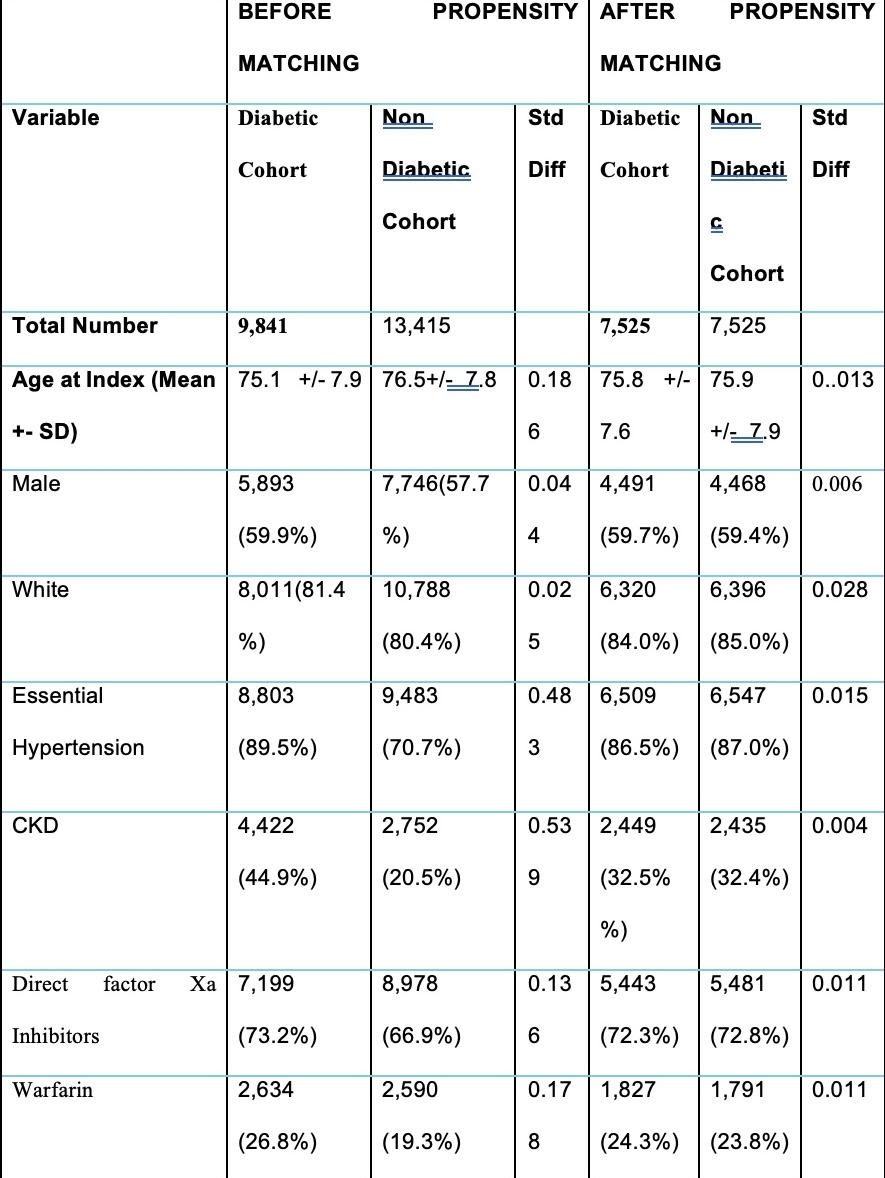
Methods: Using the TriNetX Global Collaborative Network, we identified adult AF patients who underwent LAAO between 2018 and 2024. Patients were stratified into three comparisons: Diabetics vs NDM, WCDM vs NDM, and PCDM vs NDM. Propensity score matching (PSM) was employed to balance 26 baseline covariates across cohorts. Outcomes including major adverse cardiovascular events (MACE), stroke and all-cause mortality were assessed over a 5-year follow-up. Risk analysis and Kaplan-Meier survival curves were used to derive hazard ratios (HR) and 95% confidence intervals (CI).
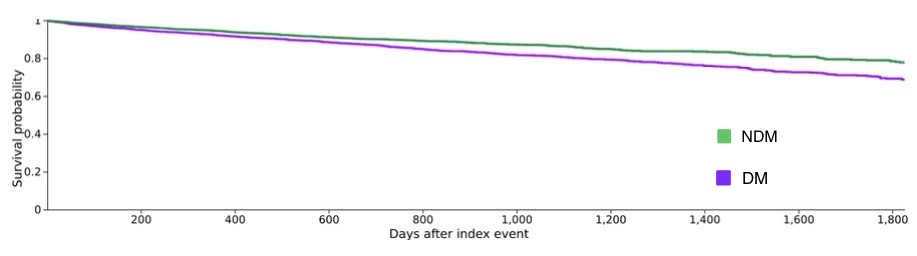
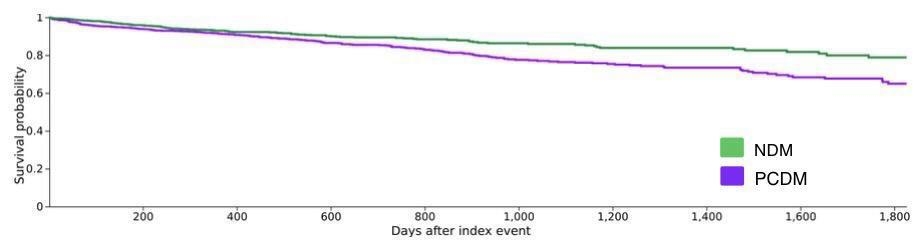
Results: In the overall analysis, major adverse cardiovascular events (MACE) occurred in 13.4% of diabetics versus 9.0% of non-diabetics (HR, 1.44; 95% CI, 1.28–1.62) and all-cause mortality in 15.2% versus 12.3% (HR, 1.15; 95% CI, 1.05–1.25). Stroke occurred in 5.1% versus 3.6% (HR, 1.30; 95% CI, 1.09–1.54), pulmonary embolism in 2.8% versus 2.1% (HR, 1.25; 95% CI, 1.02–1.54), and ventricular fibrillation in 1.0% versus 0.5% (HR, 1.81; 95% CI, 1.22–2.70). In the HbA1c >7% subgroup, MACE risk was further elevated (HR, 1.59; 95% CI, 1.25–2.00), whereas diabetics with HbA1c <7% still experienced increased risk (HR, 1.39; 95% CI, 1.21–1.60) compared with non-diabetics.
Conclusion: Poor glycemic control (HbA1c ≥7%) in diabetic patients with atrial fibrillation undergoing LAAO is associated with a significantly increased long-term risk of MACE, stroke, and mortality. Notably, both suboptimal and even controlled glycemic states appear to confer elevated cardiovascular risk, underscoring the complex interplay between diabetes and outcomes post-LAAO. These findings highlight the critical importance of individualized glycemic management and comprehensive cardiovascular risk reduction strategies in this high-risk population.
Olayiwola, Olalekan
(
Saint Peter's University Hospital
, New Brunswick , New Jersey , United States )
Otabor, Emmanuel
(
Jefferson Einstein Philadelphia
, Philadelphia , Pennsylvania , United States )
Daniel, Emmanuel
(
Trinity Health Ann Arbor
, Ypsilanti , Michigan , United States )
Okorigba, Efeturi
(
West Virginia University
, Morgantown , West Virginia , United States )
Hassan, Abdulraheem
(
Saint Peter's University hospital
, NEW BRUNSWICK , New Jersey , United States )
Ilelaboye, Ayodeji
(
Cook County Health
, Chicago , Illinois , United States )
Santos Argueta, Hector
(
Cook County Health
, Chicago , Illinois , United States )
Osineye, Busayo
(
Saint Peter's University Hospital
, New Brunswick , New Jersey , United States )
Agrawal, Ankit
(
Cleveland Clinic
, Cleveland , Ohio , United States )
Amin, Parthiv
(
Saint Peter's University Hospital
, New Brunswick , New Jersey , United States )
Author Disclosures:
Olalekan Olayiwola:DO NOT have relevant financial relationships
| Parthiv Amin:DO NOT have relevant financial relationships
| Emmanuel Otabor:DO NOT have relevant financial relationships
| Emmanuel Daniel:DO NOT have relevant financial relationships
| Efeturi Okorigba:DO NOT have relevant financial relationships
| Abdulraheem Hassan:DO NOT have relevant financial relationships
| Ayodeji Ilelaboye:DO NOT have relevant financial relationships
| Hector Santos Argueta:DO NOT have relevant financial relationships
| Busayo Osineye:DO NOT have relevant financial relationships
| Ankit Agrawal:DO NOT have relevant financial relationships