
Logo

American Heart Association

  29
  0


Final ID: Sa2019

Geographic Disparities in Female Mortality Due to Cardiac Arrhythmias: The Role of State Wealth, Healthcare Infrastructure, and Training Institutions

Abstract Body (Do not enter title and authors here):
Background:
Female mortality from cardiac dysrhythmias shows striking geographic variation across the U.S., yet the structural drivers of this disparity remain underexplored. Healthcare infrastructure, economic capacity, and access to specialized care may play a critical role.

Objective:
To investigate the association between state-level female arrhythmia-related mortality and institutional factors, including gross domestic product (GDP) per capita, number of hospitals, and cardiology fellowship programs.

Methods:
Age-adjusted female mortality rates from cardiac dysrhythmias (2019–2021) were obtained from the CDC Atlas of Heart Disease and Stroke. Institutional data included state-level GDP per capita (U.S. Bureau of Economic Analysis), number of hospitals (CMS), and cardiology fellowship programs (AMA FREIDA). States with mortality >21/100,000 (top quintile, n=9) were classified as “high-mortality.” Pearson correlation coefficients assessed relationships between mortality and institutional variables.

Results:
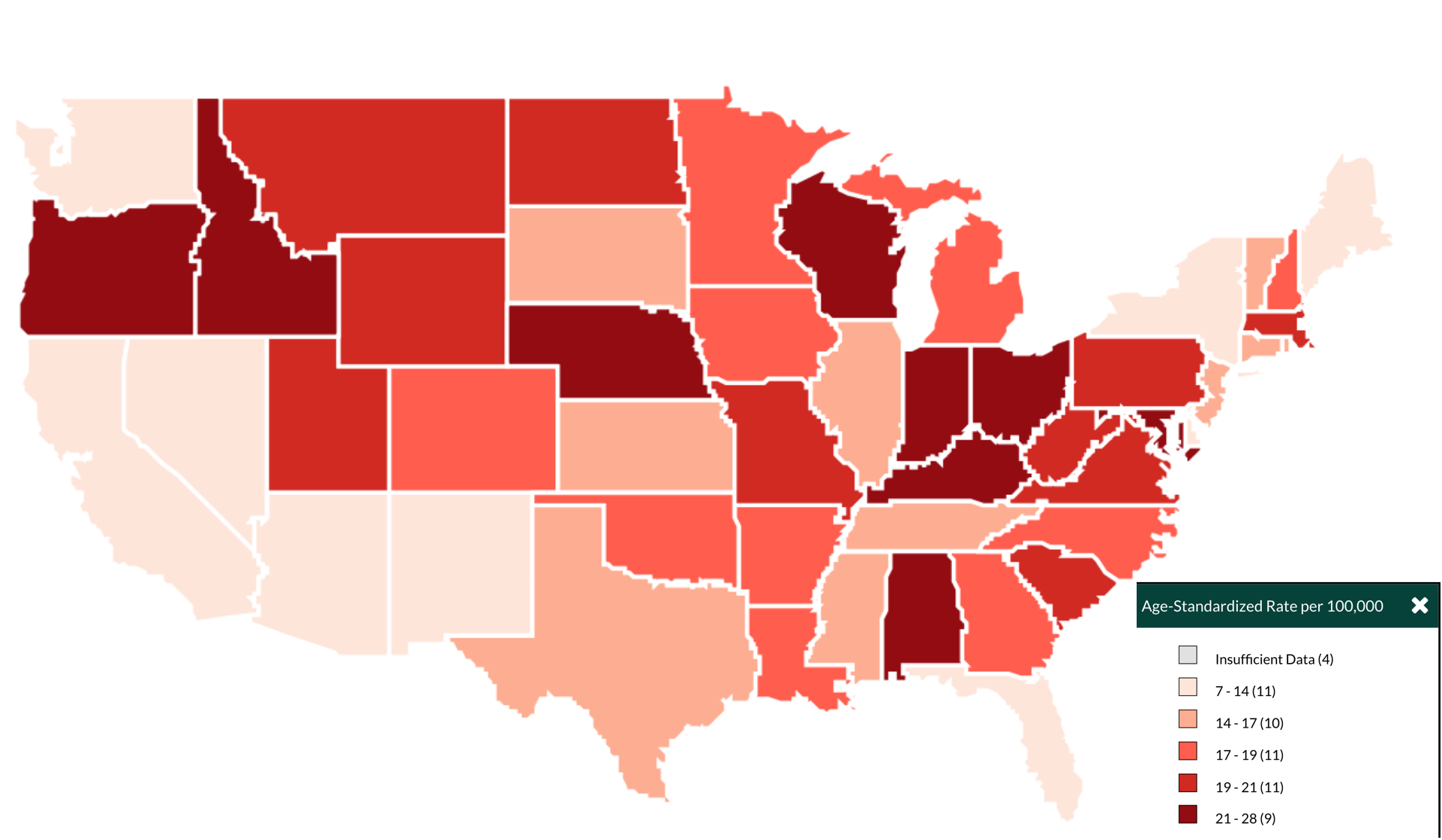
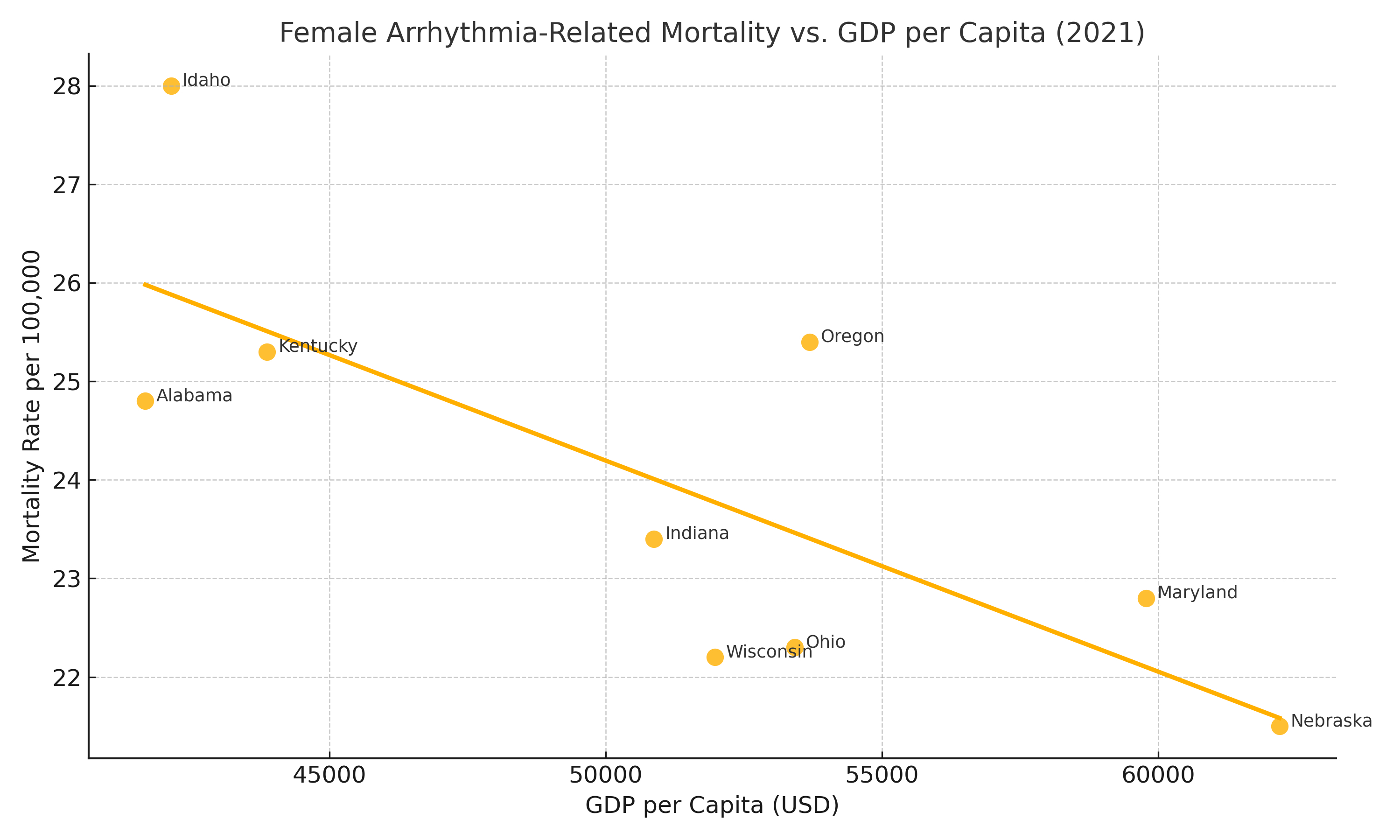
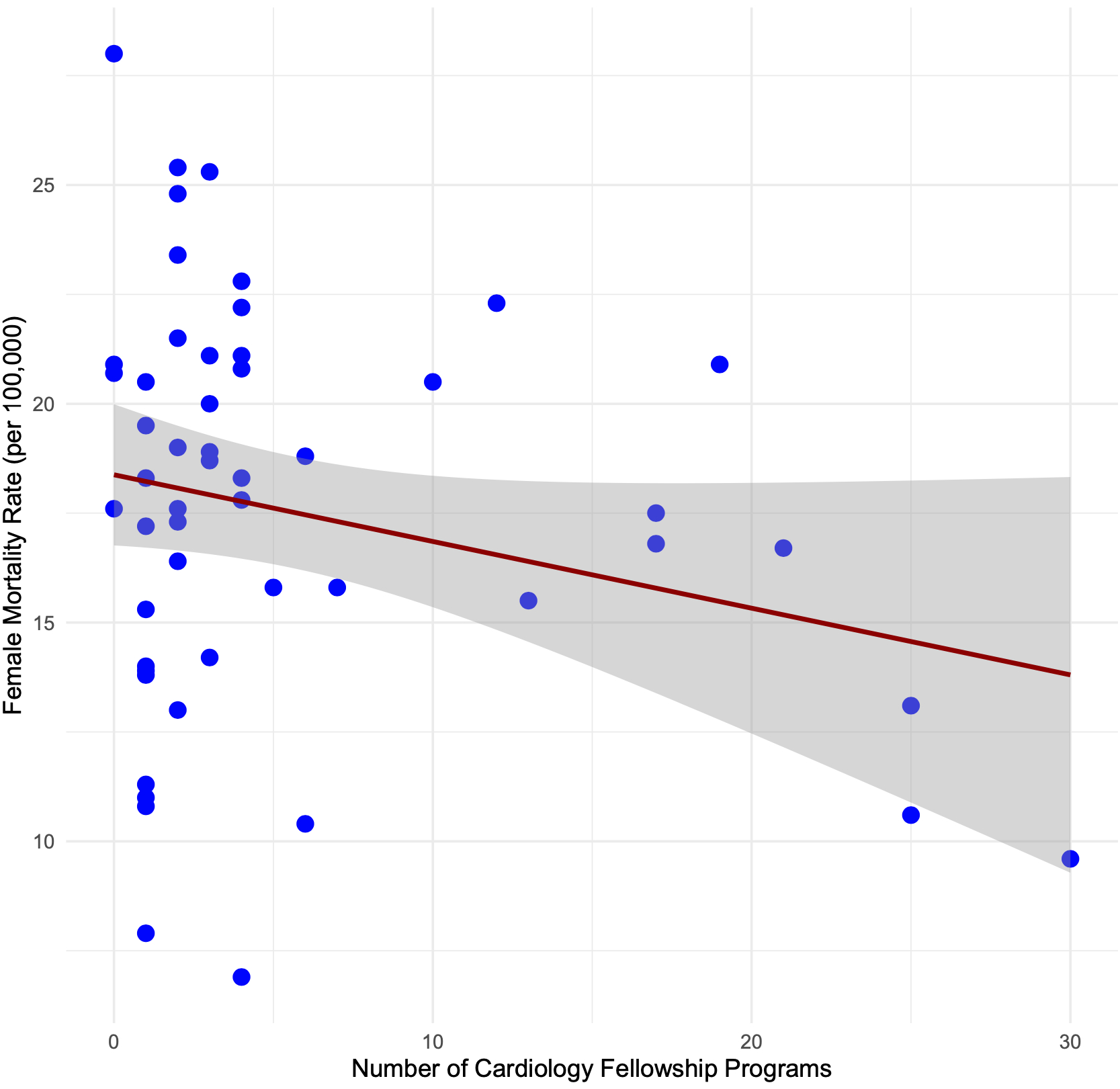
Across 52 U.S. jurisdictions (50 states, DC, and Puerto Rico), female arrhythmia-related mortality ranged from 6.9 to 28.0 per 100,000 (Figure-1). Hospital count per state showed a significant inverse correlation with mortality (r = –0.45; p < 0.01). Among high-mortality states, GDP per capita correlated strongly with lower mortality (r = –0.76; p = 0.018) (Figure-2). Cardiology fellowship programs per state were inversely associated with mortality but did not reach significance (r = –0.24; p = 0.09) (Figure-3).

Conclusion:
Female arrhythmia-related mortality exhibits substantial geographic disparities, inversely associated with state-level economic capacity and hospital density. Although the correlation with cardiology training programs did not reach statistical significance, the observed inverse trend may reflect the broader impact of specialist workforce distribution on access to cardiovascular expertise and longitudinal care. These findings underscore the need for strategic investment in healthcare infrastructure and specialist training programs—particularly in high-burden regions—to help reduce preventable arrhythmia-related deaths among women.
  • Khabsa, Mariam  ( Creighton University medical center , Omaha , Nebraska , United States )
  • Klisares, Mason  ( Creighton University Medical Center , Omaha , Nebraska , United States )
  • Li-jedras, May  ( Creighton University Medical Center , Omaha , Nebraska , United States )
  • Roka, Attila  ( Creighton University CHI , Omaha , Nebraska , United States )
  • Abuissa, Hussam  ( Creighton University CHI , Omaha , Nebraska , United States )
  • Author Disclosures:
    Mariam Khabsa: DO NOT have relevant financial relationships | Mason Klisares: DO NOT have relevant financial relationships | May Li-Jedras: DO NOT have relevant financial relationships | Attila Roka: DO NOT have relevant financial relationships | Hussam Abuissa: No Answer
Meeting Info:

Scientific Sessions 2025

2025

New Orleans, Louisiana

Session Info:

Evolving Patterns in Cardiovascular and Comorbidity-Linked Mortality: Insights from National Data

Saturday, 11/08/2025 , 02:30PM - 03:30PM

Abstract Poster Board Session

More abstracts on this topic:
A Meta-Analysis of Prospective Studies Comparing Short and Longterm Outcomes of Trans-Catheter Aortic Valve Replacement in Patient with and without Cancer:

Khan Muhammad Aslam, Haider Adnan, Haider Taimoor, Bhattarai Shraddha, Khan Bilal, Lamichhane Bikal, Shafique Nouman, Rahman Hammad, Aafreen Asna, Muhammad Anza, Bhatia Hitesh, Khan Abid Nawaz Khan, Akbar Usman, Khan Alamzaib

A Retrospective Analysis of Chronic Kidney Disease and Arrhythmias-Related Mortality Among Adults in the United States (1999-2020): Insights into Disparities by Gender, Race/Ethnicity, and Geography

Waseem Neha, Nouman Zainab, Chaudhry Sohaib Aftab Ahmad, Tariq Waleed, Khan Iftikhar, Shah Mazhar, Farooqi Hanzala Ahmed, Faiz Muneeb

More abstracts from these authors:
You have to be authorized to contact abstract author. Please, Login
Not Available