Gene positive vs. gene negative clinical and structural outcomes in hypertrophic cardiomyopathy patients: a meta-analysis and systematic review
Abstract Body (Do not enter title and authors here): Background: Hypertrophic cardiomyopathy (HCM) is a common inherited cardiovascular disease associated with increased risks of heart failure, sudden cardiac death (SCD), and stroke. Over 1,400 pathogenic variants, primarily in MYH7 and MYBPC3, have been identified, yet the prognostic significance of genetics remains unclear. Recent studies suggest genotype-positive (G+) HCM is linked to earlier diagnosis, greater disease severity, and poorer outcomes, necessitating further research to clarify the relationship between genotype, disease progression, and clinical management.
Objectives: 1. Examine the association between genetic mutations (MYBPC3, MYH7, TNNT2, TNNI3) and both clinical outcomes (AF, syncope, ventricular arrhythmias, SCD, stroke) and structural cardiac characteristics (left atrial/ventricular thickness, LVEF) in HCM patients. 2. Conduct a systematic review and meta-analysis to evaluate the prognostic significance of genotype-positive HCM, aiming to inform clinical risk stratification and management strategies.
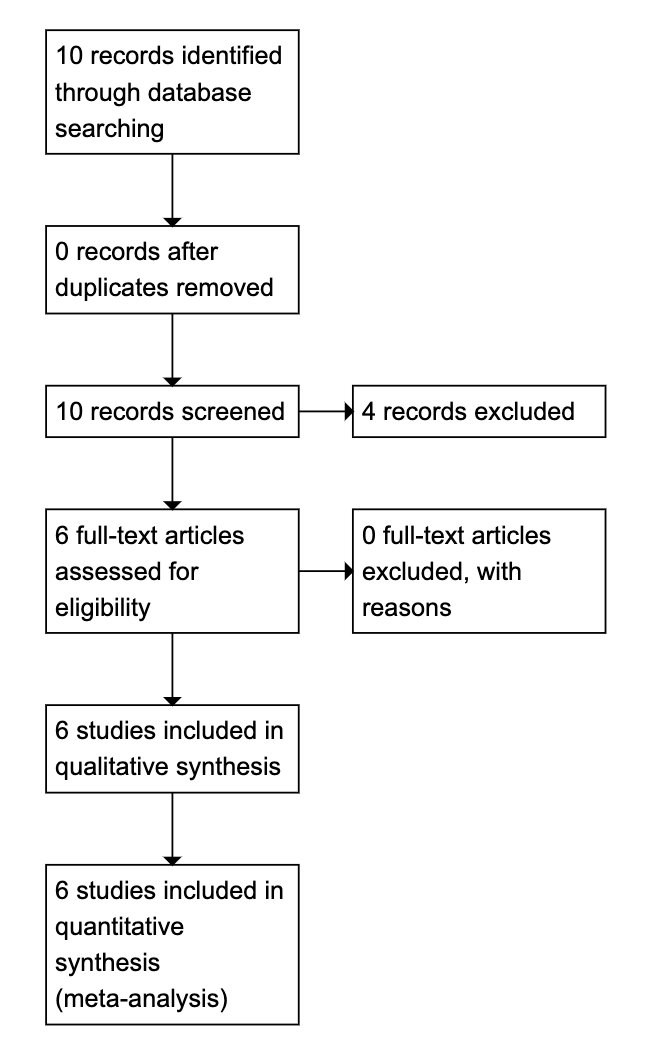
Methods: A systematic literature search in PubMed for English-language articles from 2000 onward using relevant Medical Subject Headings (MeSH) terms identified six studies meeting inclusion criteria. G+ HCM was defined as mutations in MYBPC3, MYH7, TNNT2, or TNNI3. Data analysis employed the Cochrane Database of Systematic Reviews, assessing outcomes via risk ratios and mean differences with random-effects models. Heterogeneity was evaluated using appropriate statistical methods.
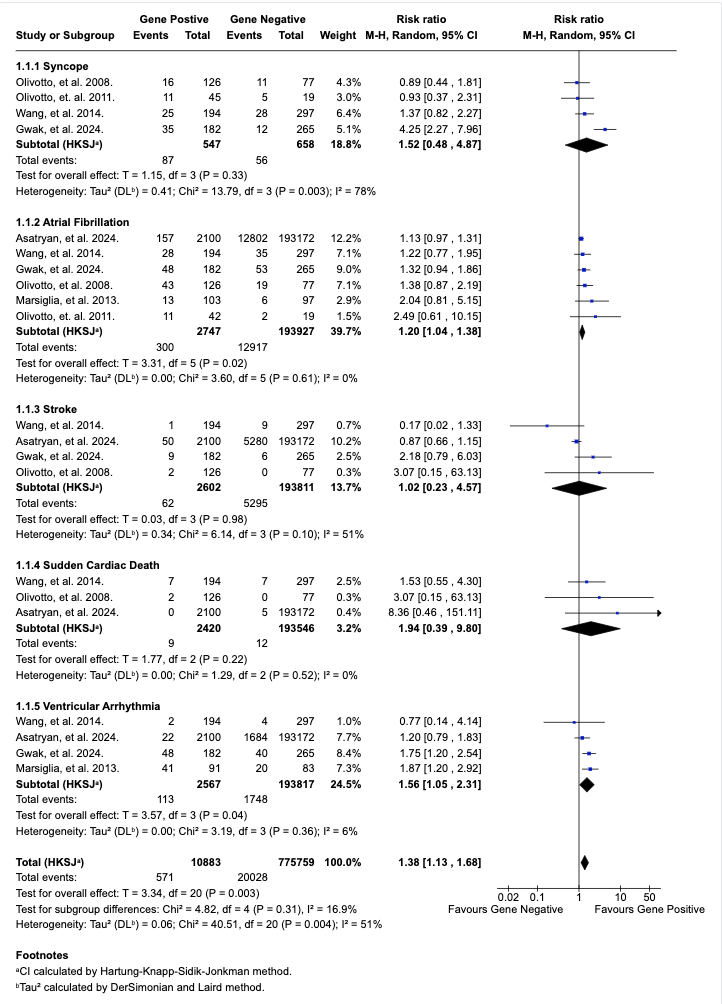
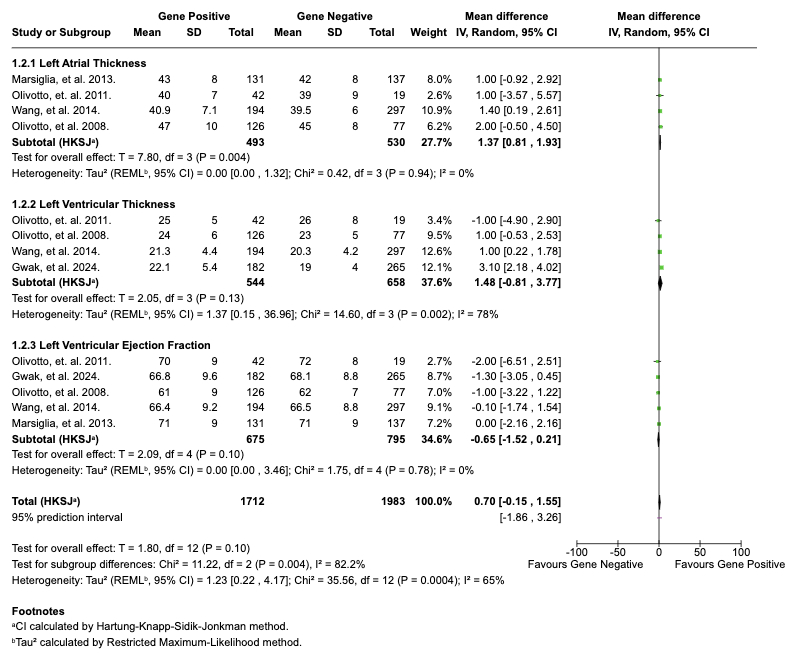
Results: G+ HCM showed significantly increased risk of AF (RR 1.20, p = 0.02) and ventricular arrhythmias (RR 1.56, p = 0.04), with greater left atrial thickness (p = 0.004). No significant differences were found in syncope (p = 0.33), stroke (p = 0.98), or SCD (p = 0.22), left ventricular thickness (p = 0.13), or LVEF (p = 0.10) between G+ and G- patients. These findings underscore the impact of genetic mutations on arrhythmic risk and structural remodeling in HCM.
Conclusions: Genetic mutations in MYBPC3, MYH7, TNNT2, and TNNI3 increase AF, ventricular arrhythmias, and left atrial remodeling risks in HCM patients, but do not significantly affect stroke, SCD, syncope, or left ventricular structure. Genetic status is crucial in risk assessment, necessitating close arrhythmia monitoring in G+ patients and further research to refine risk stratification and management strategies in HCM.
Weber, Maddison
(
Creighton University
, Council Bluffs , Iowa , United States )
Li-jedras, May
(
Creighton University
, Council Bluffs , Iowa , United States )
Brown Ton, Corinna
(
Creighton University
, Council Bluffs , Iowa , United States )
Kabach, Amjad
(
Creighton University
, Omaha , Nebraska , United States )
Author Disclosures:
Maddison Weber:DO NOT have relevant financial relationships
| May Li-Jedras:DO NOT have relevant financial relationships
| Corinna Brown Ton:DO NOT have relevant financial relationships
| amjad kabach:DO NOT have relevant financial relationships