Artificial intelligence-driven morbidity prediction in acute kidney injury after acute type A aortic dissection surgery
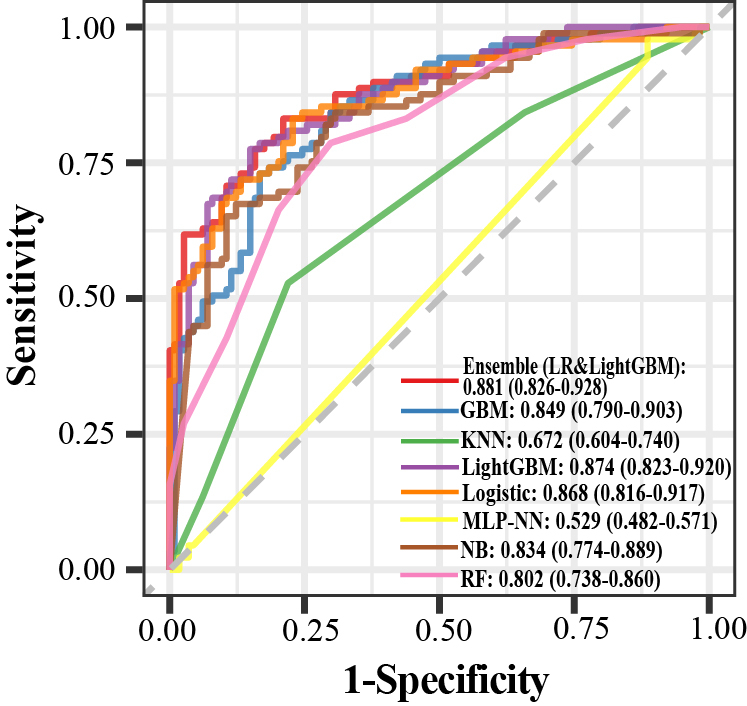
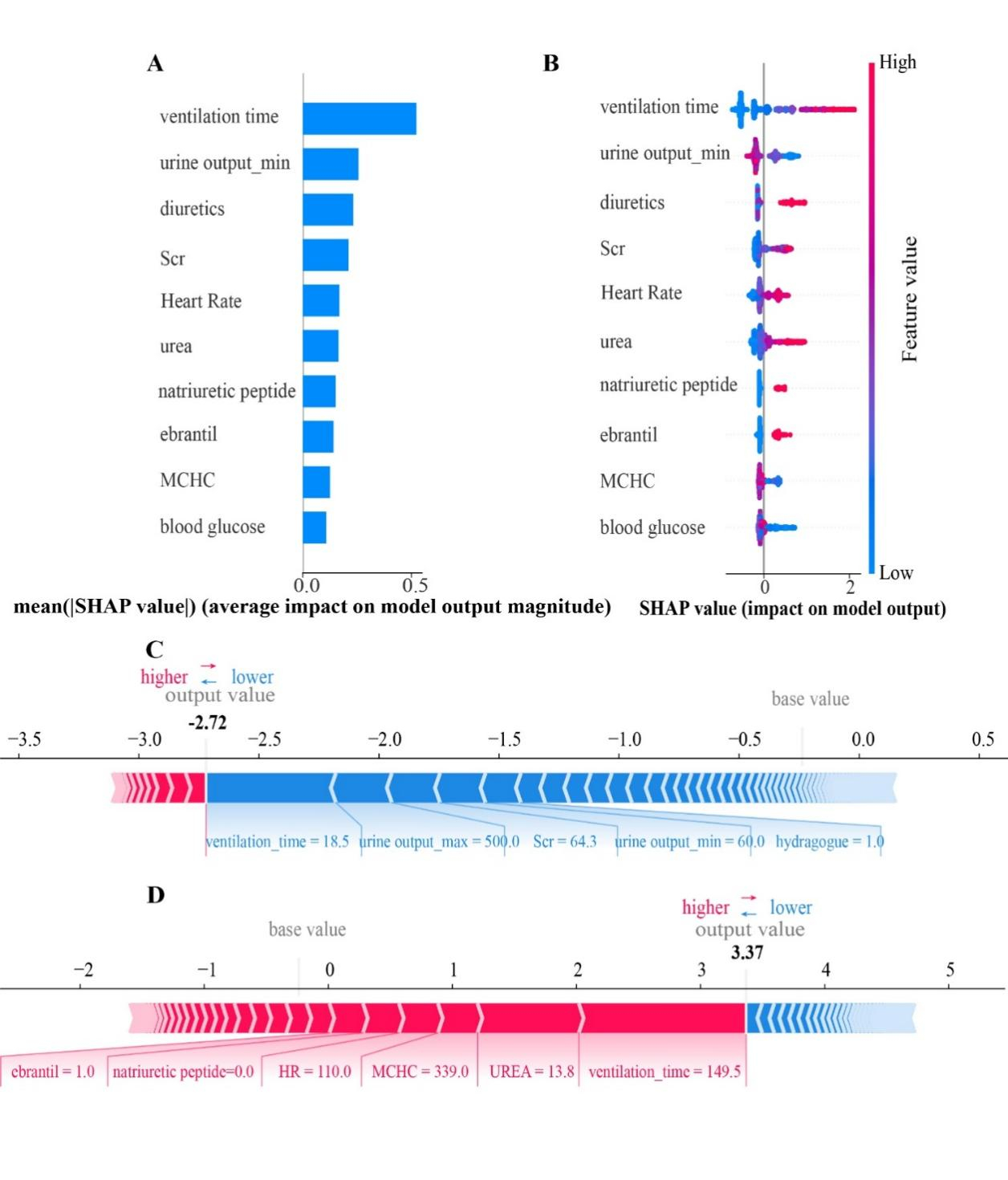
Abstract Body (Do not enter title and authors here): Background Acute kidney injury (AKI) often complicates acute type A aortic dissection (ATAAD), with elevated comorbidity rates and a significant tie to in-hospital mortality. Identifying risk factors early can mitigate AKI severity. Research Questions This research endeavors to develop and corroborate predictive models leveraging Machine Learning (ML) techniques from Artificial Intelligence to forecast AKI occurrences in ATAAD-afflicted individuals. Methods The study employed various machine learning (ML) algorithms including Gradient Boosting Machine (GBM), LightGBM, Random Forest (RF), K-Nearest Neighbors (KNN), Multi-Layer Perceptron Neural Network (MLP-NN), Naive Bayes (NB), Logistic Regression (LR), and ensemble methods (combining LR & LightGBM), employing tenfold cross-validation. Model performance was evaluated using SHapley Additive exPlanations (SHAP). A web-based tool for predicting AKI incidence was developed using Streamlit, based on the most effective model. The analysis involved 1350 ATAAD patients, among whom 586 (43.4%) developed post-operative AKI. Patients were divided into two cohorts: 85% for training and 15% for testing, with 126 features included in the predictive model. Results Incorporating top 10 features, LightGBM (AUROC=0.886, 95% CI 0.841-0.930) excelled in predictive accuracy, calibration, and clinical utility, identifying key factors such as ventilation time in ICU, hourly urine output post-surgery, diuretic use, Scr, heart rate, urea, administration of recombinant human brain natriuretic peptide and ebrantil, MCHC, and blood glucose as associated with ATAAD-AKI. Conclusion(s) These ML models are robust tools for predicting AKI in ATAAD patients, with LightGBM's superior predictive ability standing out. They offer valuable support for clinical decision-making in ATAAD management, helping optimize postoperative strategies to minimize AKI occurrence after surgery.
Zhihui Zhu:DO NOT have relevant financial relationships
| Zheyuan Chen:DO NOT have relevant financial relationships
| Nan Liu:No Answer
| Yongqiang Lai:No Answer