New internet-based warfarin anticoagulation management approach after mechanical heart valve replacement: prospective,
multicenter, randomized controlled trial
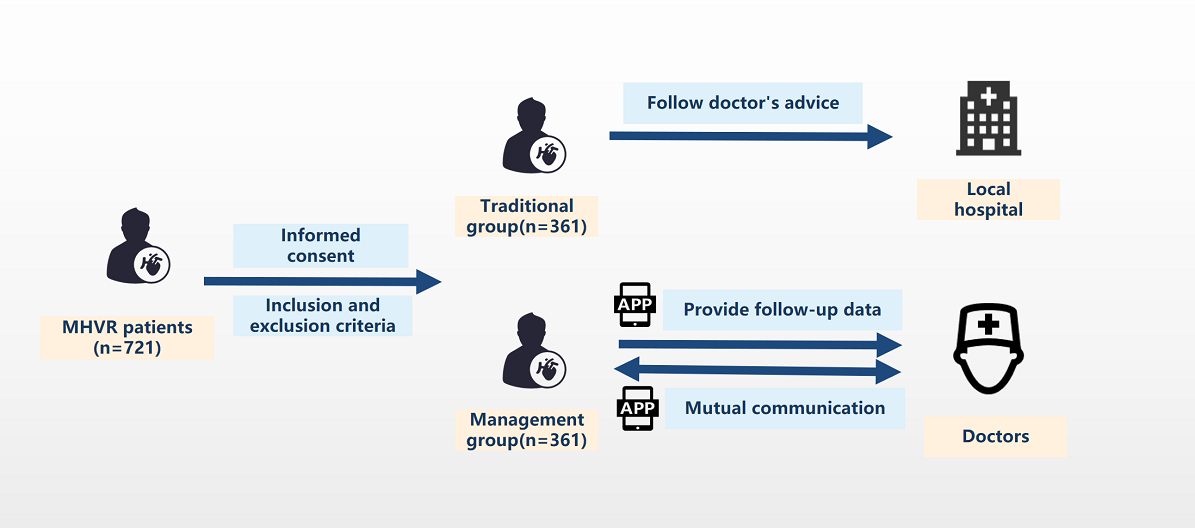
Abstract Body (Do not enter title and authors here): Background Mechanical heart valve replacement (MHVR) is an effective method for the treatment of severe heart valve disease. However, it subjects patients to lifelong warfarin therapy after MHVR, with the attendant risk of bleeding and thrombosis. Whether internet-based warfarin management reduces complications and improves patient quality of life remains unknown. Objective This study aimed to compare the effects of internet-based warfarin management and the conventional approach in patients who received MHVR in order to provide evidence regarding alternative strategies for long-term anticoagulation. Methods This was a prospective, multicenter, randomized, open-label, controlled clinical trial with a 1-year follow-up. Patients who needed long-term warfarin anticoagulation after MHVR were enrolled and then randomly divided into conventional and internet-based management groups. The percentage of time in the therapeutic range (TTR) was used as the primary outcome while bleeding, thrombosis, and other events were the secondary outcomes. Results A total of 721 patients were enrolled. The baseline characteristics did not reach statistical differences between the two groups, suggesting the random assignment was successful. As a result, the internet-based group showed a significantly higher TTR (mean 0.53, SD 0.24 vs. mean 0.46, SD 0.21; P < .001) and fraction of time in the therapeutic range (mean 0.48, SD 0.22 vs. mean 0.42, SD 0.19; P < .001) than did those in the conventional group. Furthermore, as expected, the anticoagulation complications, including bleeding and embolic events, had a lower frequency in the internet-based group than in the conventional group (6.94% vs. 12.74%; P = .01). Logistic regression showed that internet-based management increased the TTR by 7% (odds ratio [OR] 1.07, 95% CI 1.05-1.09; P < .001) and reduced the bleeding and embolic risk by 6% (OR 0.94, 95% CI 0.92-0.96; P = .01). Moreover, low TTR was found to be a risk factor for bleeding and embolic events (OR 0.87, 95% CI 0.83-0.91; P = .005). Conclusions Internet-based warfarin management is superior to the conventional method, as it can reduce anticoagulation complications in patients who receive long-term warfarin anticoagulation after MHVR.