Epidemiology and Forecasting of Mortality Attributable to Diabetes Mellitus and Stroke Insights From the Centers for Disease Control and Prevention Wide-Ranging Online Data for Epidemiologic Research From 1999 to 2043
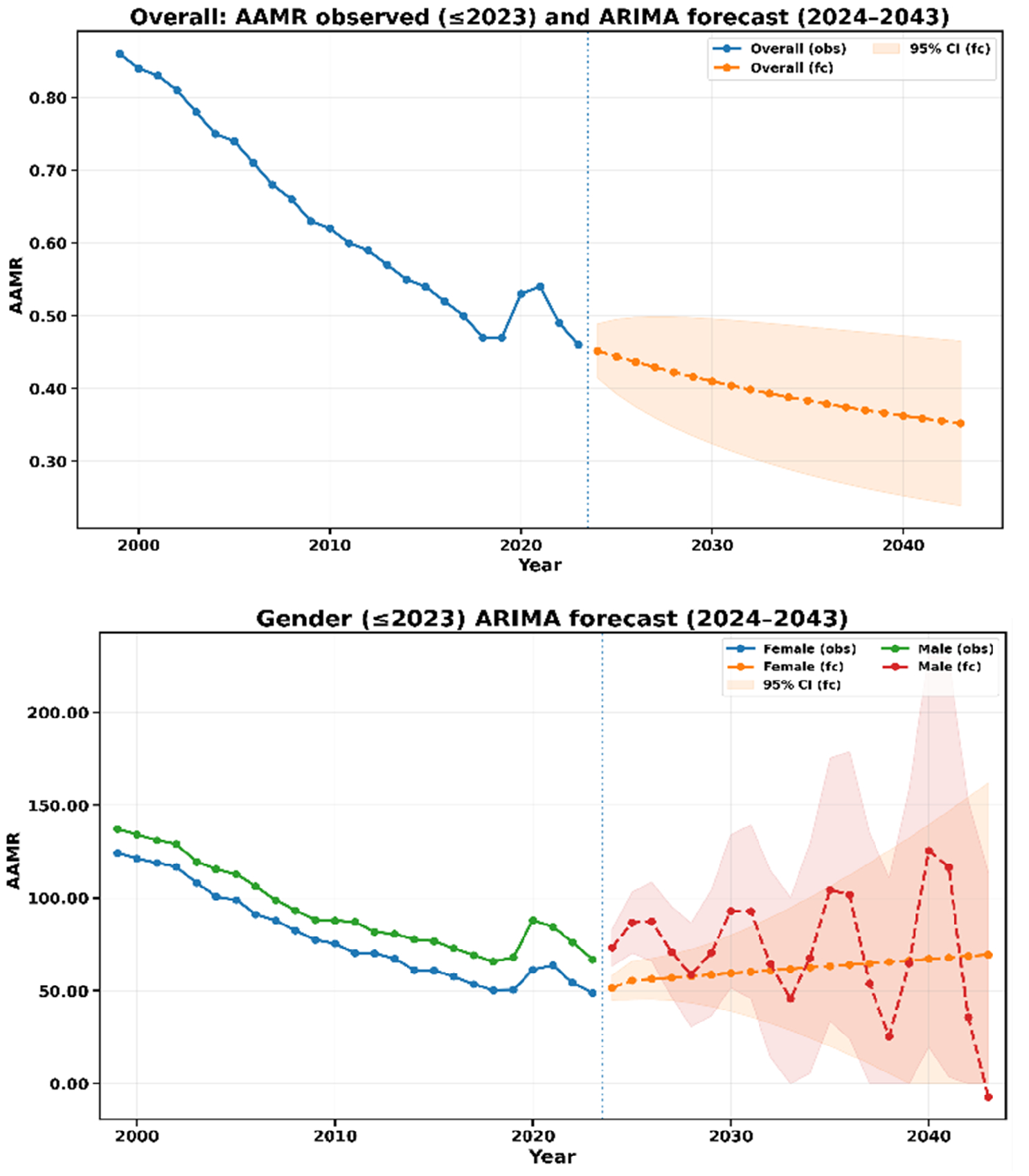
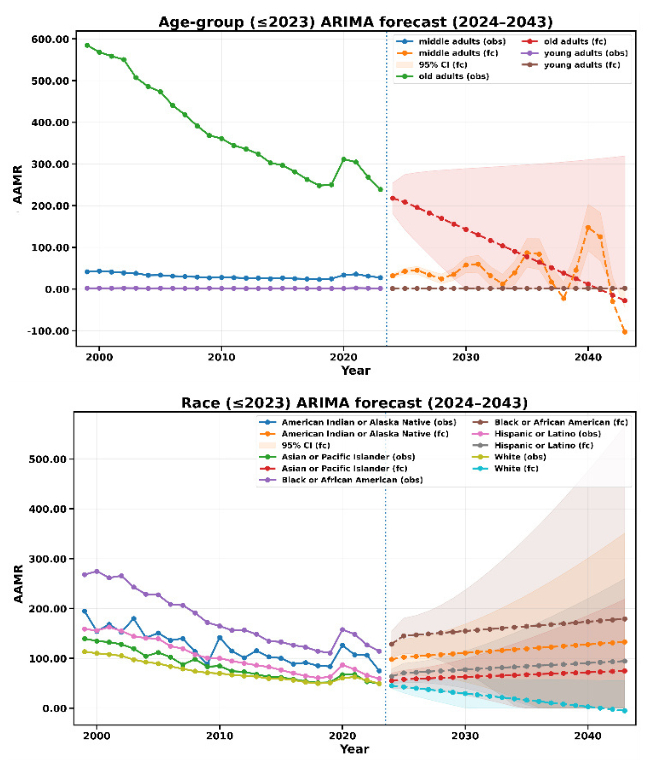
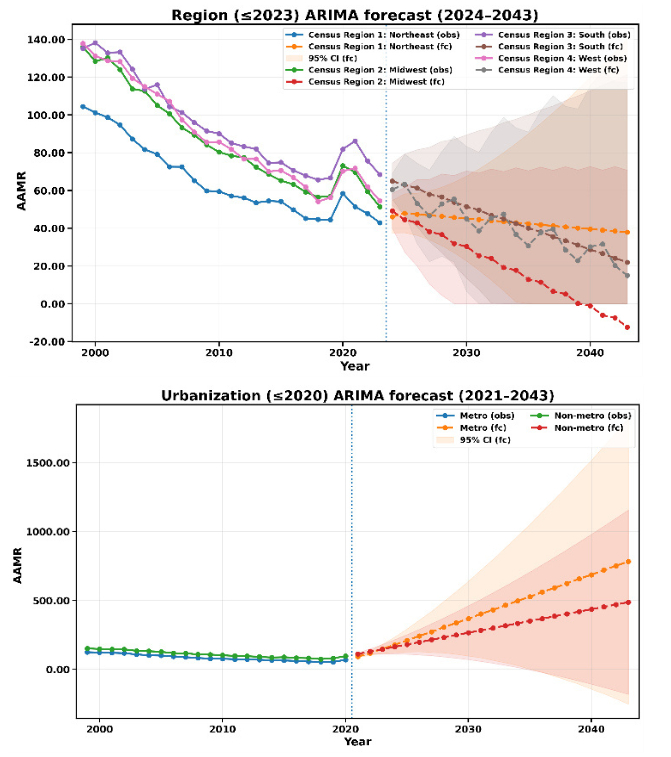
Abstract Body: Background: Diabetic patients have a far greater incidence of stroke than their normoglycemic counterparts, with the subsequent morbidity and mortality outcomes also being worse. While there is considerable research on the burden of stroke and diabetes mellitus (DM) separately, not enough is being done to delineate the long-term mortality trends among patients who have both of these maladies. In order to inform public health initiatives and healthcare spending, the assessment of these trends is nothing short of imperative. Methods: We conducted a population-based trend and forecasting analysis using the CDC Wide-ranging Online Data for Epidemiologic Research (WONDER) database. U.S. death certificates from 1999–2023 listing both diabetes mellitus (ICD-10 E10–E14) and stroke (ICD-10 I64) were analyzed among adults aged ≥25 years. Age-adjusted mortality rates (AAMR) per 1,000,000 population were calculated and stratified by sex, age, race/ethnicity, census region, and urbanization. Temporal trends were assessed using Joinpoint regression to estimate annual percent change (APC). Autoregressive integrated moving average (ARIMA) models were applied to project mortality through 2043. Results: Overall AAMR declined markedly from 129.5 in 1999 to 57.0 in 2023 (APC –4.34%, 95% CI –4.60 to –4.12), representing a >50% reduction. Mortality decreased steadily through 2018, rose transiently during 2018–2021 (coinciding with the COVID-19 pandemic), and declined again thereafter. Men consistently had higher mortality than women, and adults aged ≥65 years bore the greatest burden. Pronounced disparities persisted, with the highest mortality among non-Hispanic Black and American Indian/Alaska Native populations, residents of the Southern U.S., and non-metropolitan areas. ARIMA projections suggest stabilization of mortality at historically low levels through 2043, although demographic and geographic gradients are expected to persist, and long-term forecasts carry substantial uncertainty. Conclusions: A concerning, even if temporary, comeback in recent years highlights the vulnerability of high-risk populations and the fragility of hard-fought gains, especially during public health emergencies, that require consolidation, regardless of the decrease in total mortality from DM and stroke. Significant differences based on age, race and degree of urbanization underscore the need for more equitable access to healthcare and responsible policy formulation.
Patel, Tirath
(
Trinity Medical Sciences University School of Medicine
, Kingstown , Saint Vincent and the Grenadines )
Tariq Tagga, Muhammad Riyyan
(
CMH Multan Institute of Medical Sciences
, Multan , Pakistan )
Qureshi, Ahmar Jan
(
CMH Multan Institute of Medical Sciences
, Multan , Pakistan )
., Mashal
(
Abdul Wali Khan University Mardan
, KPK , Pakistan )
Fatima, Zehra
(
Dow University of Health Sciences
, Karachi , Pakistan )
Shah, Syeda Simrah
(
Dow Medical College
, Karachi , Pakistan )
Wamiq, Umer
(
Jinnah Sindh Medical University
, Karachi , Pakistan )
Shuja, Hafsa
(
Jinnah Sindh Medical University
, Karachi , Pakistan )
Javed, Bushra
(
CMH Multan Institute of Medical Sciences
, Multan , Pakistan )
Faisal, Abdul Rafae
(
CMH Multan Institute of Medical Sciences
, Multan , Pakistan )
Zaman, Asad
(
CMH Multan Institute of Medical Sciences
, Multan , Pakistan )
Hafeez, Ali Shan
(
CMH Multan Institute of Medical Sciences
, Multan , Pakistan )
Saeed, Muhammad Usama
(
CMH Multan Institute of Medical Sciences
, Multan , Pakistan )
Anand, Nikhilesh
(
University Of Texas Rio Grande Valley
, Edinburg , Texas , United States )
Author Disclosures:
Tirath Patel:DO NOT have relevant financial relationships
| Abdul Rafae Faisal:No Answer
| Asad Zaman:No Answer
| Ali Shan Hafeez:DO NOT have relevant financial relationships
| Muhammad Usama Saeed:DO NOT have relevant financial relationships
| Nikhilesh Anand:DO NOT have relevant financial relationships
| Muhammad Riyyan Tariq Tagga:No Answer
| Ahmar Jan Qureshi:DO NOT have relevant financial relationships
| Mashal .:No Answer
| Zehra Fatima:DO NOT have relevant financial relationships
| Syeda Simrah Shah:No Answer
| Umer Wamiq:No Answer
| Hafsa Shuja:No Answer
| Bushra Javed:No Answer