The Impact of Incident Atrial Fibrillation on Limb and Cardiovascular Outcomes Among Patients With Peripheral Artery Disease and Type 2 Diabetes
Abstract Body: Introduction Accumulating evidence suggests a close relationship between peripheral artery disease and atrial fibrillation. However, the relationship between PAD, incident Afib, and subsequent cardiovascular and limb outcomes remains unclear.
Hypothesis We hypothesized that PAD is associated with an increased risk of incident Afib and that, among patients with PAD, the development of Afib is associated with worse cardiovascular and limb-specific outcomes.
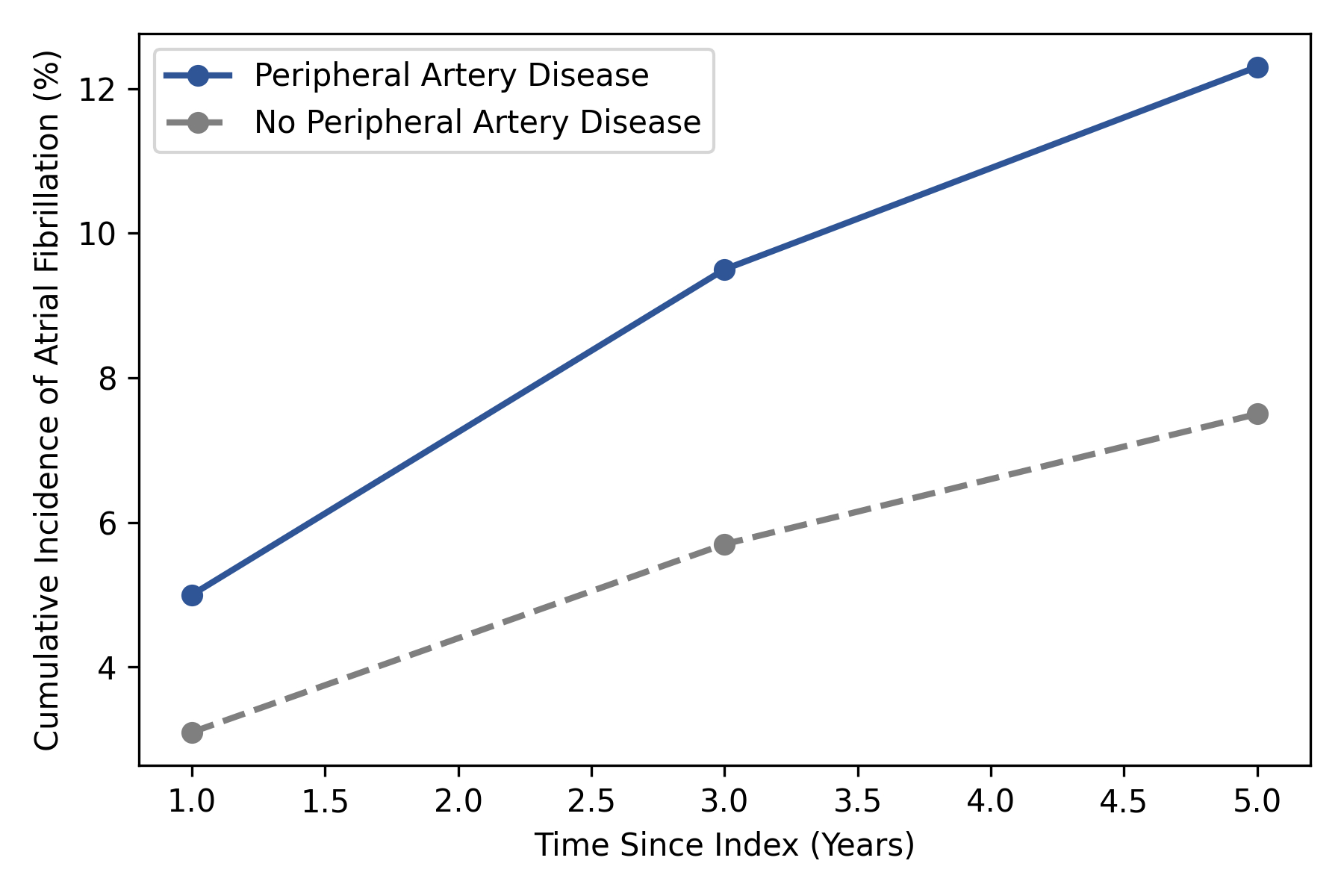
Methods We conducted a retrospective cohort study using the TriNetX research network, among adults with type 2 diabetes. For the primary analysis, patients with PAD were compared with those without PAD to assess the risk of incident Afib at 1, 3, and 5 years. For the secondary analysis, outcomes were compared among patients with PAD according to the development of Afib. PAD and incident Afib were identified using diagnostic codes. Propensity score matching was performed to balance demographics. Limb-specific and cardiovascular outcomes were assessed over 3 years follow-up.
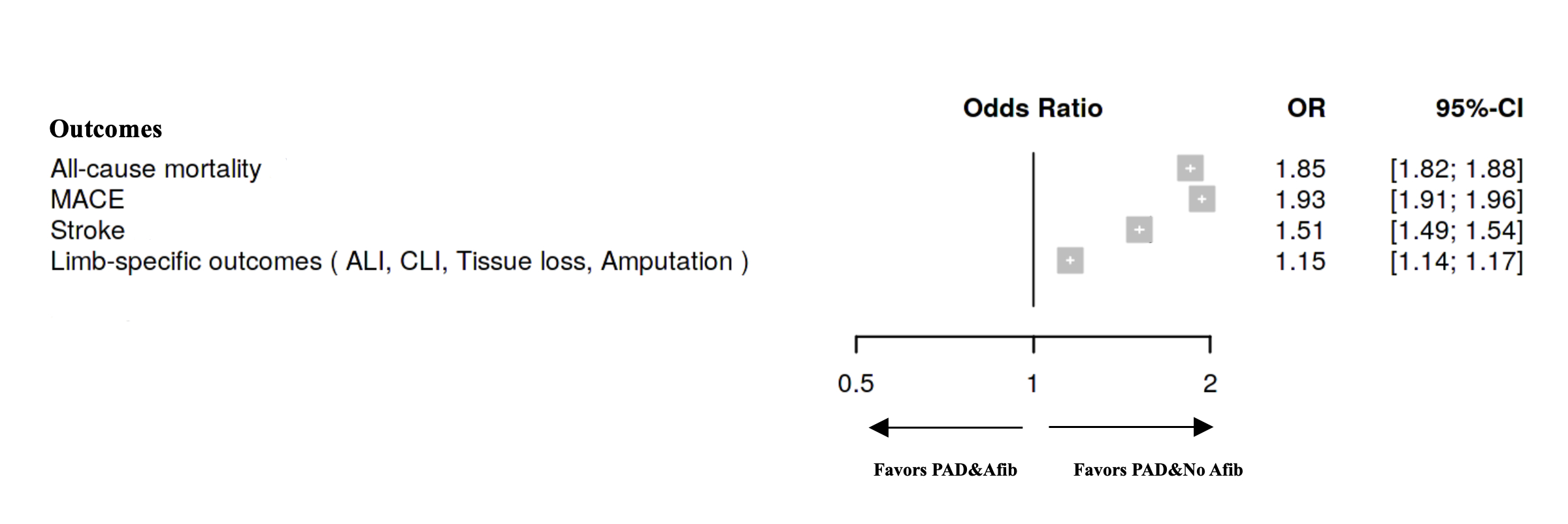
Results Among adults with type 2 diabetes, 966,733 patients with PAD and 8,771,683 patients without PAD were identified. After propensity score matching, 891,115 patients were included in each group. PAD was associated with a higher risk of incident Afib at 1, 3, and 5 years compared with no PAD, with consistently higher cumulative incidence across all time points. In the secondary analysis of patients with type 2 diabetes and PAD, 217,026 patients with Afib were matched to 217,026 patients without Afib. Over three years of follow-up, Afib was associated with higher all-cause mortality (odds ratio 1.85, 95% confidence interval 1.82–1.88), higher rates of major adverse cardiovascular events (odds ratio 1.93, 95% confidence interval 1.91–1.96), and higher stroke incidence (odds ratio 1.51, 95% confidence interval 1.49–1.54). Limb-specific peripheral artery disease outcomes were also more frequent among patients with Afib (odds ratio 1.15, 95% confidence interval 1.14–1.17).
Conclusion PAD was associated with an increased risk of incident Afib among patients with type 2 diabetes. Among patients with PAD, Afib identified a higher-risk subgroup with worse cardiovascular and limb-specific outcomes.
Alqudah, Qusai
(
University of central Florida
, Gainesville , Florida , United States )
Awad, Ali
(
DMC
, Detroit , Michigan , United States )
Mestarihi, Aseed
(
University of central Florida
, Gainesville , Florida , United States )
Assad, Ahmad
(
University of central Florida
, Gainesville , Florida , United States )
Author Disclosures:
Qusai Alqudah:DO NOT have relevant financial relationships
| Ali Awad:No Answer
| Aseed Mestarihi:No Answer
| Ahmad Assad:No Answer