Logo

American Heart Association

  1
  0


Final ID: Wed019

The Role of Pro-Inflammatory Monocyctes in Early Aortic Aneurysm Formation after Elastase Injury

Abstract Body: Introduction
Monocytes are known to respond to monocyte chemoattractant protein-1 (MCP-1) in early aneurysm pathogenesis, but this mechanism remain poorly understood. We developed a porcine model of aortic aneurysm utilizing a novel retrievable drug infusion stentgrant (RDIS) with targeted elastase administration, and we aimed to define mechanisms by which monocytes and cells of the aortic wall interface both in vitro and in our porcine animal model. We hypothesized that monocytes are key in the early immune response to the elastase-injured aorta and is mediated by MCP-1 expression.

Methods
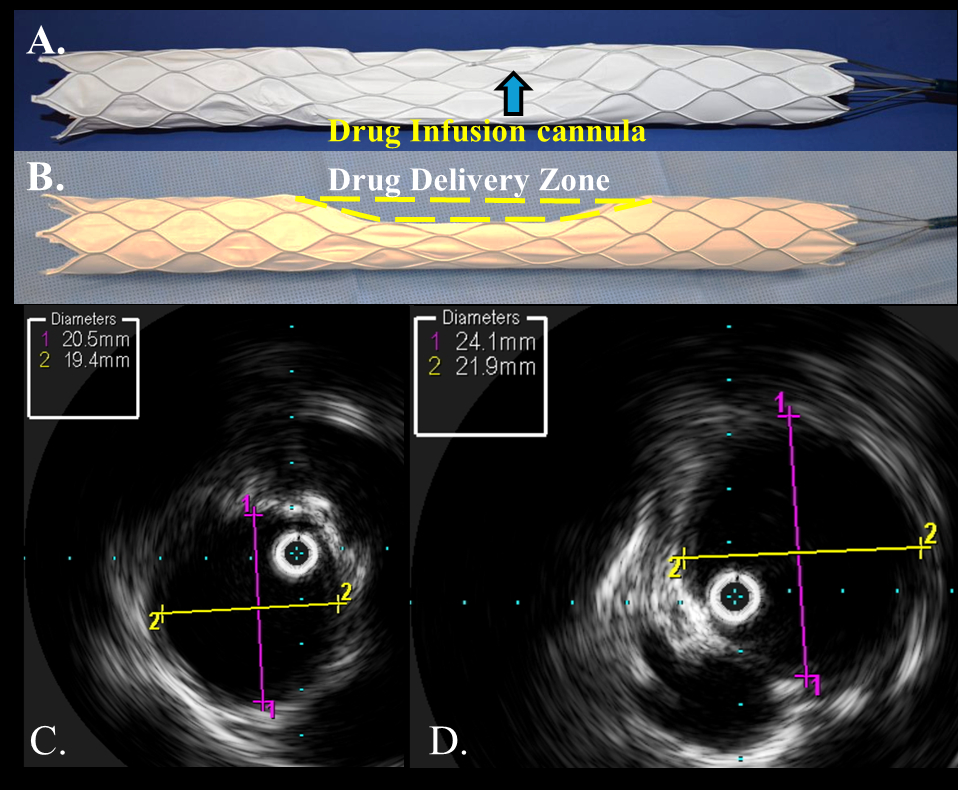
Primary aortic wall cells were cultured for 2 days and treated with MCP-1 (n=3), and supernatant underwent Luminex analysis. Next, Yorkshire pigs (n=4) underwent aneurysm induction using the RDIS to focally deliver elastase to the thoracic aorta for 30 minutes before RDIS removal (Figure 1). Two additional animals underwent aneurysm induction followed by delivery of autologous IFN-gamma stimulated monocytes 2 days after injury. Aortic explants at day 7 underwent Luminex analysis and ELISA for MCP-1 and were compared to aortic explants from 5 untreated animals. 3 control and 3 elastase injured vessels underwent tensile testing.

Results
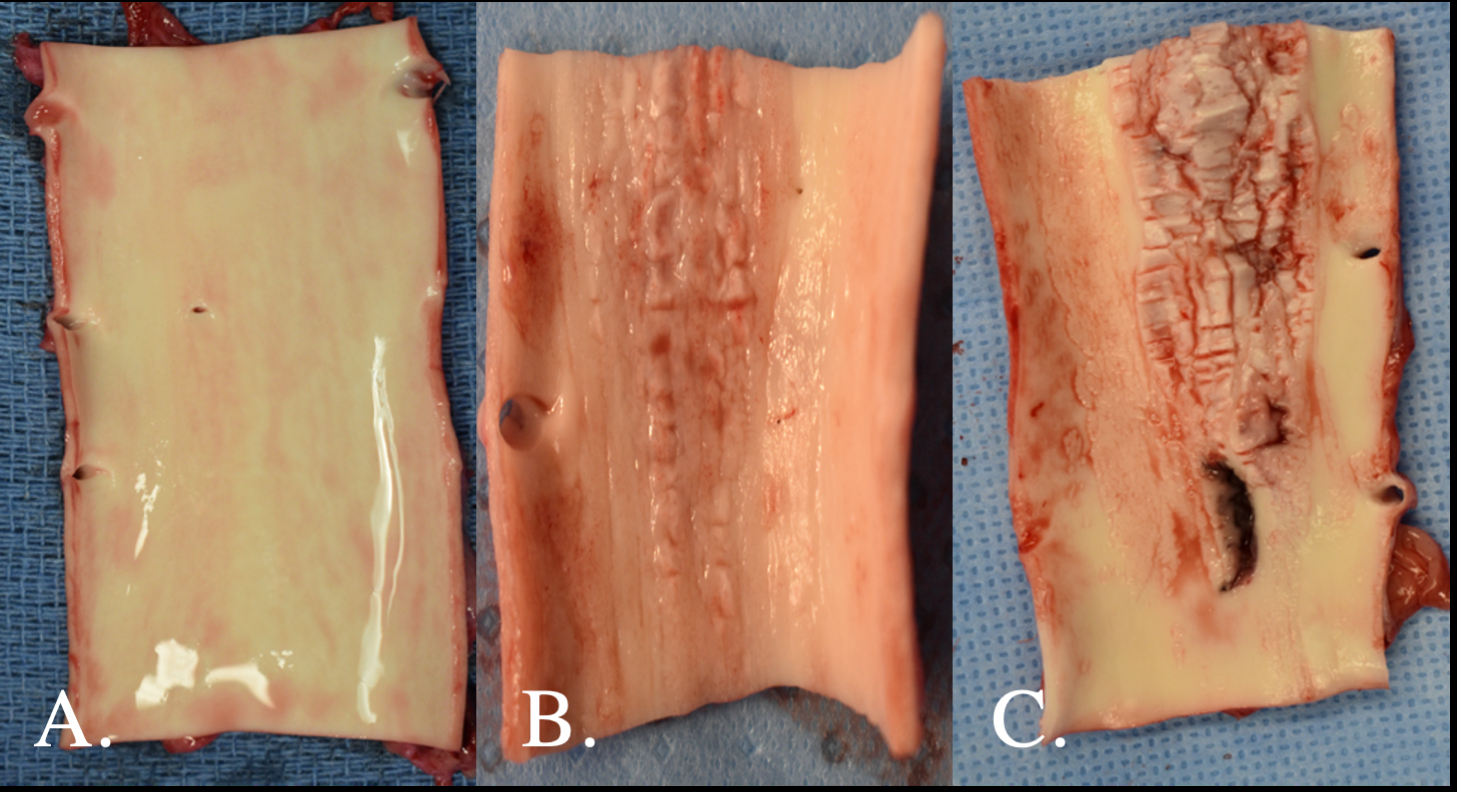
Aortic cell culture with MCP-1 revealed an increased IFN-gamma expression compared to controls (1.09 vs 0.32 ng/ml, respectively; p=0.004). Luminex of elastase injured aorta in vivo revealed elevated pro-inflammatory cytokines as compared to controls. IFN-gamma (11.3 vs 2.5 ng/mL; p=0.006), TNF-alpha (30.3 vs 6.6 ng/mL, p=0.01), and MMP-1 (15.9 vs 3.2 ng/mL, p=0.01). ELISA revealed an increase in MCP-1 in elastase-injured specimens compared to control (0.28 vs 0.065 ng/mL, respectively; p=0.007). Tensile testing showed an average of 65% decrease in tensile strength of elastase-injured specimens compared to control (11.0 vs 31.5 N, respectively; p=0.03). Finally, IFN-gamma primed monocyte treatment after elastase injury revealed a visibly worsened injury on the luminal surface (Figure 2).

Conclusion
MCP-1 increasing expression of IFN-gamma from aortic cell cultures suggests that it not only mediates monocyte chemotaxis but also fosters a pro-inflammatory environment. The RDIS-enabled elastase injury successfully mimics the cytokine profile and mechanical weakening seen in human disease. The accelerated pathology observed with IFN-gamma-primed monocytes may suggest an important role of pro-inflammatory monocytes in aortic structural integrity.
  • Gage, Daniel  ( The Ohio State University , Columbus , Ohio , United States )
  • Stafford, Jordan  ( The Ohio State University , Columbus , Ohio , United States )
  • Kenawy, Dahlia  ( The Ohio State University , Columbus , Ohio , United States )
  • Marshall, Jordin  ( The Ohio State University , Columbus , Ohio , United States )
  • Amari, Foued  ( The Ohio State University , Columbus , Ohio , United States )
  • Tillman, Bryan  ( The Ohio State University , Columbus , Ohio , United States )
  • Author Disclosures:
    Daniel Gage: DO NOT have relevant financial relationships | Jordan Stafford: No Answer | Dahlia Kenawy: DO NOT have relevant financial relationships | Jordin Marshall: No Answer | Foued Amari: DO NOT have relevant financial relationships | Bryan Tillman: No Answer
Meeting Info:
Session Info:

01. Poster Session 1 & Reception

Wednesday, 05/13/2026 , 06:00PM - 08:00PM

Poster

More abstracts on this topic:
More abstracts from these authors:
Novel Retrievable Drug Infusion Stentgraft Highlights the Benefits of Liquid Drug Delivery for the Treatment of Vascular Restenosis

Gage Daniel, Stafford Jordan, Kenawy Dahlia, Amari Foued, Tillman Bryan

Proinflammatory Changes in a Porcine Elastin Injury Model of Aneurysm

Gage Daniel, Stafford Jordan, Kenawy Dahlia, Amari Foued, Tillman Bryan

You have to be authorized to contact abstract author. Please, Login
Not Available