

Logo

American Heart Association

  2
  0


Final ID: Wed087

From Cholesterol Load to Cholesterol Signal: LYCHOS-Driven mTORC1 Activation as a Mechanism of Residual Cardiovascular Risk

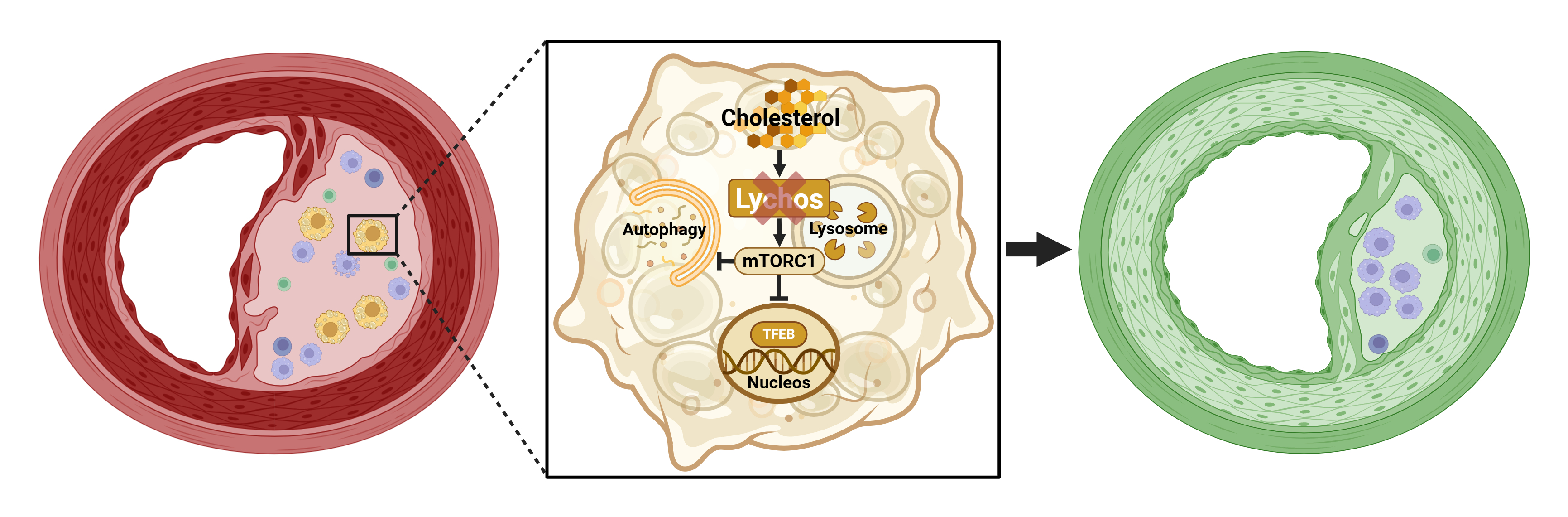
Abstract Body: Introduction: Atherosclerosis is a chronic inflammatory disease driven by excess lipids and maladaptive immune responses. Even with intensive LDL-C lowering, many patients retain residual cardiovascular risk, implying mechanisms beyond circulating LDL-C. We propose that LDL-derived cholesterol acts as an intracellular signal in monocytes/macrophages via the lysosomal cholesterol sensor LYCHOS (GPR155) to activate mTORC1, suppress autophagy programs, and promote inflammatory phenotypes.
Hypothesis: LDL-derived cholesterol activates monocyte/macrophage mTORC1 through LYCHOS, impairing autophagy-associated pathways and accelerating atherosclerosis.
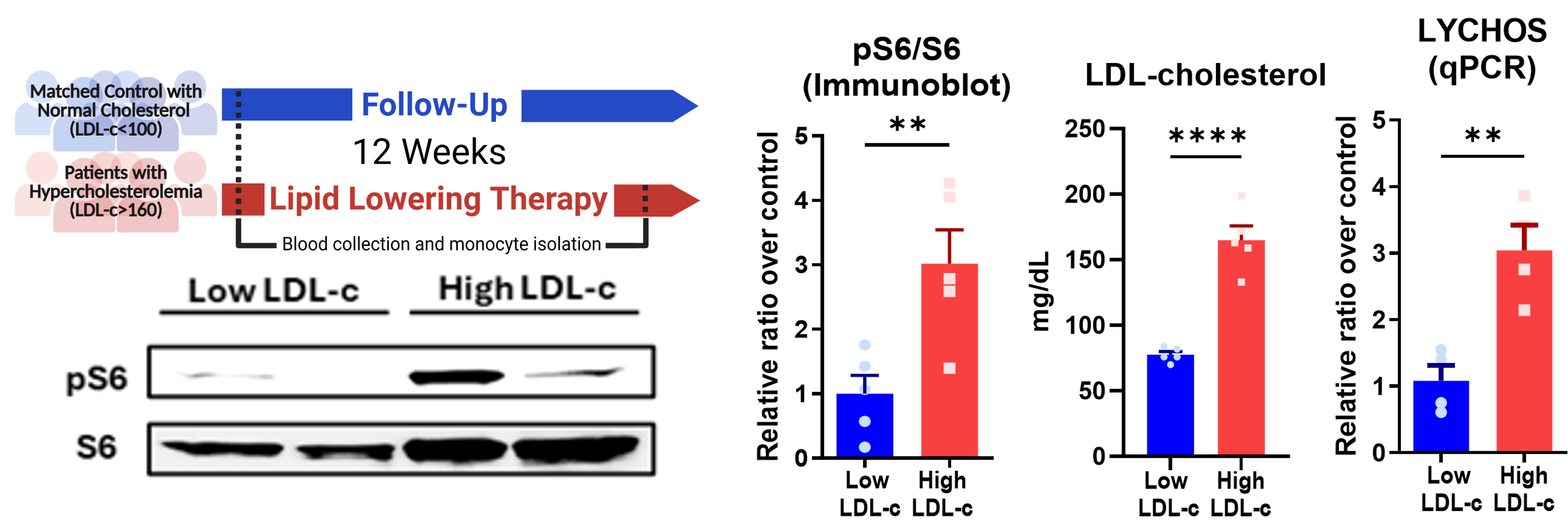
Methods: Mouse and human macrophages were cholesterol-depleted then repleted with LDL. mTORC1 activity was assessed by p-S6K/p-S6 and lysosomal mTOR recruitment. Autophagy-associated readouts included LC3 puncta and TFEB nuclear localization; apoptosis by caspase-3/7 activity. ApoE-/- mice were fed Western diet followed by chow re-feeding, assessing circulating monocytes and plaque macrophages. CD14+ monocytes were isolated from hypercholesterolemic and normocholesterolemic participants (n=10/group). LYCHOS expression was quantified by qPCR. Mechanistic studies included LYCHOS siRNA knockdown in human macrophages and preliminary analyses in myeloid-specific LYCHOS-deficient mice.
Results: LDL robustly activated mTORC1 in mouse and human macrophages, increased lysosomal mTOR recruitment, reduced TFEB nuclear localization, decreased LC3 puncta, and increased caspase-3/7 activity. In ApoE-/- mice, Western diet increased mTORC1 signaling and LYCHOS expression in circulating monocytes and plaque macrophages; both reversed with chow re-feeding. Hypercholesterolemic participants exhibited increased monocyte mTORC1 signaling, reduced autophagy-associated readouts, and elevated LYCHOS expression versus controls. LYCHOS knockdown blunted LDL-induced mTORC1 activation in human macrophages. Preliminary data from myeloid-specific LYCHOS-deficient mice suggest reduced atherosclerotic plaque burden.
Conclusions: These data support a conserved cholesterol–LYCHOS–mTORC1 axis linking LDL-derived cholesterol to suppressed autophagy-associated pathways in monocytes/macrophages and to atherogenesis. Targeting LYCHOS-dependent cholesterol sensing may mitigate residual inflammatory cardiovascular risk beyond LDL-C lowering.
  • Ajam, Ali  ( Pittsburgh University , Pittsburgh , Pennsylvania , United States )
  • Zhang, Xiangyu  ( University of Pittsburgh , Pittsburgh , Pennsylvania , United States )
  • Liu, Ziyang  ( University of Pittsburgh, UPMC , Pittsburgh , Pennsylvania , United States )
  • Peroumal, Doureradjou  ( University of Pittsburgh , Pittsburgh , Pennsylvania , United States )
  • Razani, Babak  ( University of Pittsburgh and UPMC , Pittsburgh , Pennsylvania , United States )
  • Author Disclosures:
    Ali Ajam: DO NOT have relevant financial relationships | Xiangyu Zhang: DO NOT have relevant financial relationships | Ziyang Liu: DO NOT have relevant financial relationships | Doureradjou Peroumal: DO NOT have relevant financial relationships | Babak Razani: DO NOT have relevant financial relationships
Meeting Info:
Session Info:

01. Poster Session 1 & Reception

Wednesday, 05/13/2026 , 06:00PM - 08:00PM

Poster

You have to be authorized to contact abstract author. Please, Login
Not Available