Pre-operative Aneurysm Neck Growth is Associated with Type 1a Endoleak after Endovascular Aneurysm Repair
Abstract Body: Introduction: Type 1a endoleak (T1a) is seen in up to 15% of endovascular aortic aneurysm repair (EVAR) within instructions for use (IFU). Involvement of the abdominal aortic aneurysm (AAA) neck may increase risk of T1a although current methods based on diameter/volume may miss slow/sub-maximal pre-operative growth in the AAA neck. VDM is an emerging method for quantifying aortic wall growth in 3D with sub-millimeter accuracy.
Hypothesis: We hypothesize that pre-operative 3D assessment of neck growth may better detect risk of T1a over standard measurements.
Aims: Determine the association of pre-EVAR neck growth with T1a using VDM.
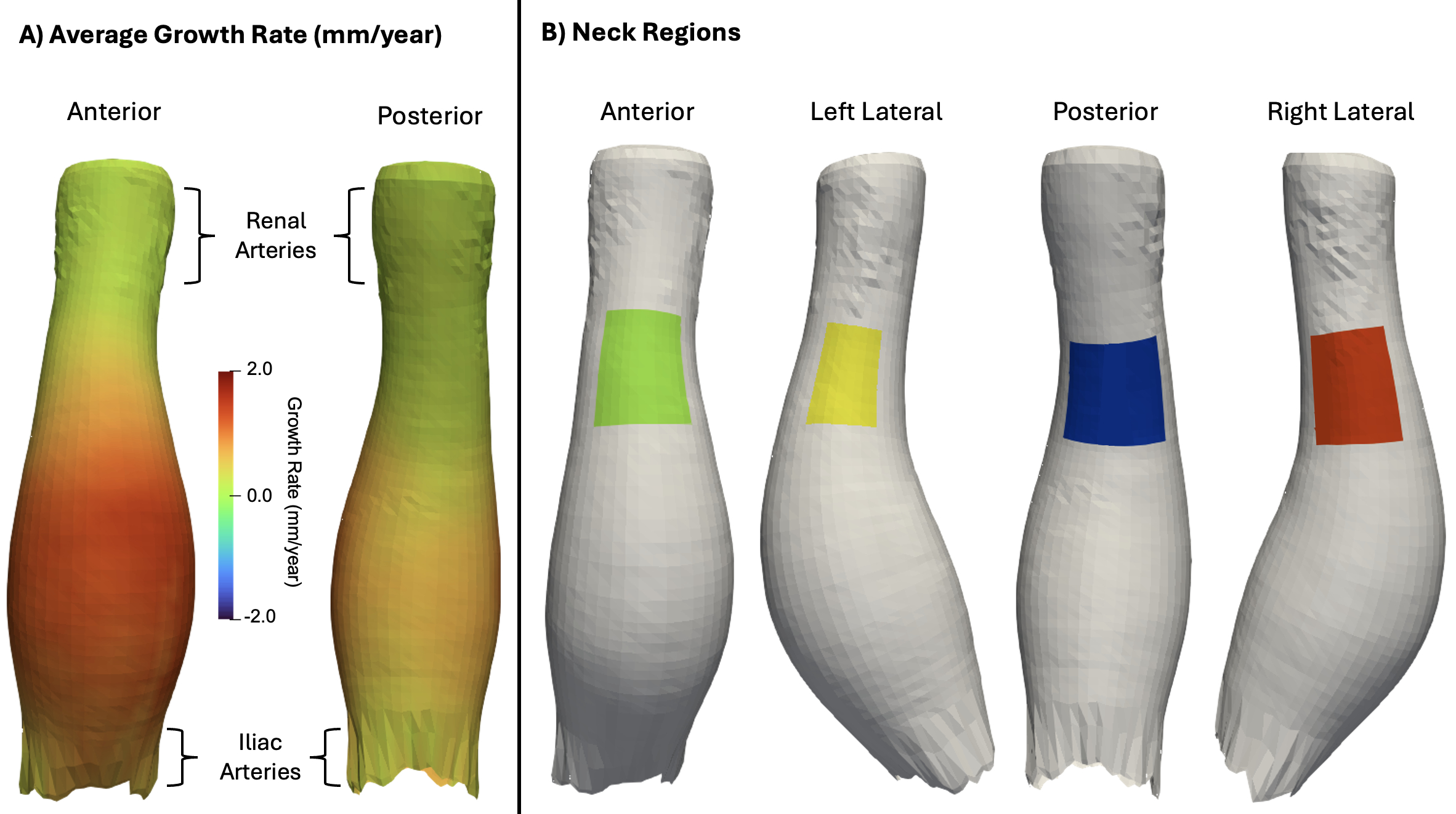
Methods: We identified patients with infra-renal AAA who underwent EVAR between 2010-2024. Patients were included if they had ≥2 pre-operative CTAs completed ≥6 months apart. Patients with non-contrast CT scans, off IFU, and treated with prophylactic endo-anchors were excluded. Patient sex and device type were collected. AAA neck features were measured from both pre-operative CTAs using PRAEVAorta (Nurea, Bordeaux, France) and changes over time were calculated. VDM, which involves a multi-step deformable image registration, was used to quantify 3D-growth of the aneurysm neck. Statistical shape modeling (SSM) was utilized to compare average 3D-growth patterns of the neck and four neck segments (anterior, posterior, left lateral, and right lateral) between patients with and without T1a. Figure 1 depicts an example of a 3D-growth map and the analyzed neck segments.
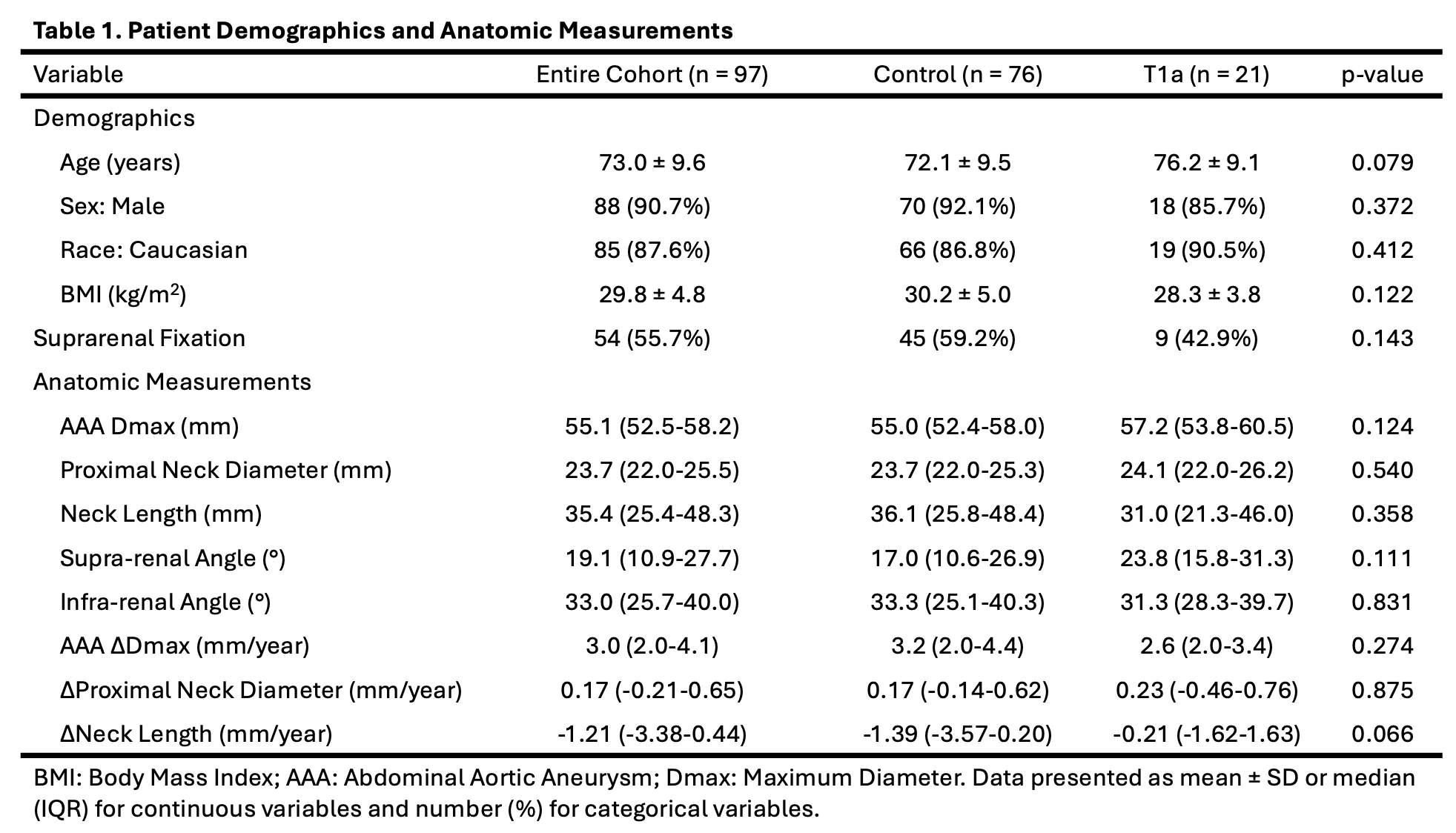
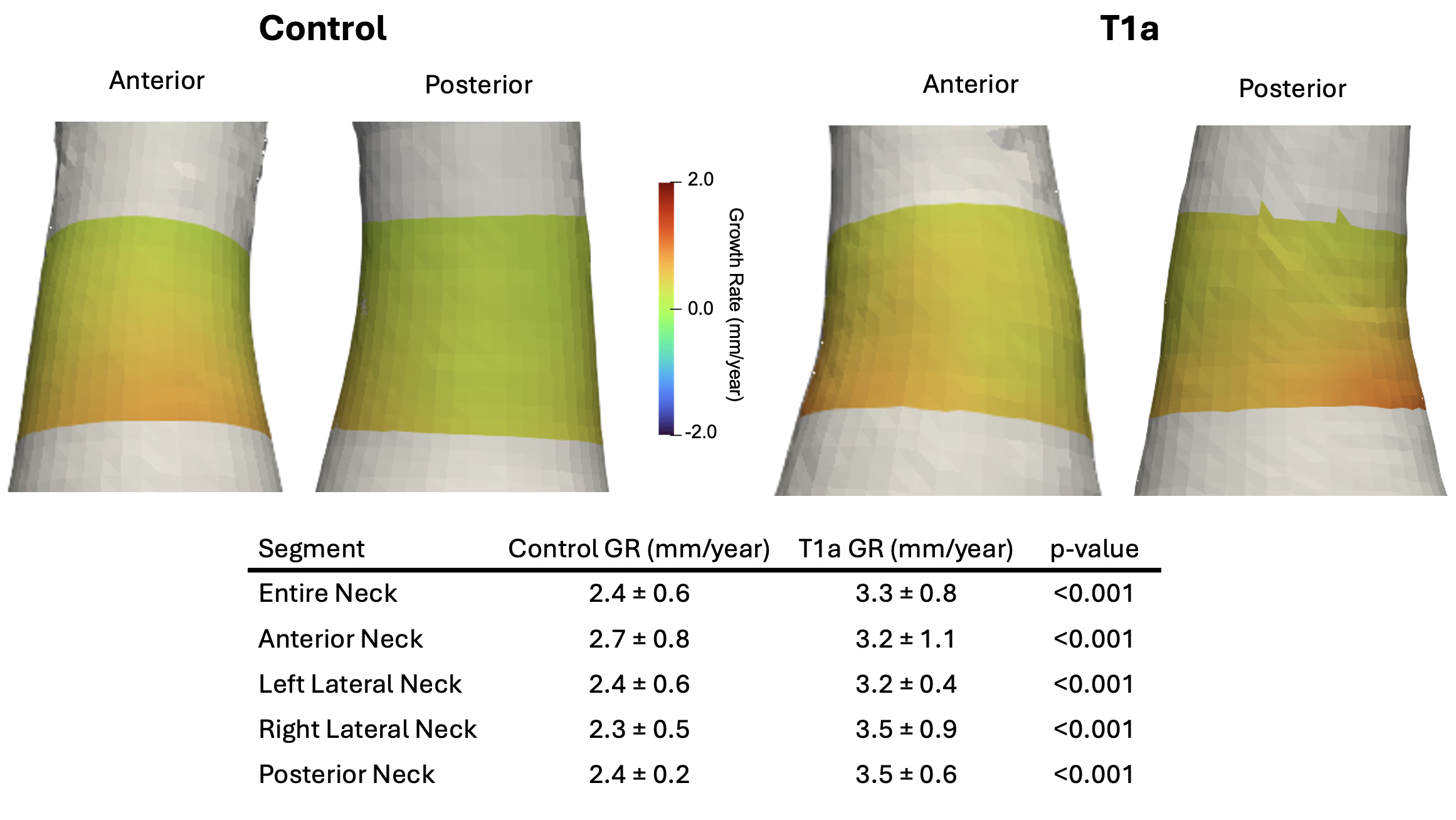
Results: The cohort included 97 patients of which 90.7% (88/97) were male. Average age was 73.0±9.6 years. Twenty-one (21.6%) developed T1a. T1a endoleak was not associated with patient demographics, neck diameter, neck length, or changes in neck features (p>0.05, for all, Table 1). However, patients with T1a had larger average 3D-growth in the aneurysm neck (3.3±0.8 vs 2.4±0.6 mm/year, p<0.001) and across all neck segments (p<0.001, for all) (Figure 2). Receiver operating characteristic analysis suggested that mean neck 3D-growth ≥ 2.7 mm/year as an appropriate cut-point for assessing risk of T1a (area under the curve=0.78, sensitivity=0.81, specificity=0.76).
Conclusions: Pre-operative 3D-growth of the aneurysm neck is a strong predictor of T1a, despite devices being on IFU. VDM can provide important information about aneurysm growth that is not captured via current standard methods. Pre-operative aneurysm neck growth should be considered for optimal EVAR planning.
Braet, Drew
(
University of Michigan
, Ann Arbor , Michigan , United States )
Carne, Paul
(
University of Michigan
, Ann Arbor , Michigan , United States )
Campello Jorge, Carlos Alberto
(
University of Wisconsin
, Madison , Wisconsin , United States )
Delbono, Luciano
(
University of Michigan
, Ann Arbor , Michigan , United States )
Eliason, Jonathan
(
University of Michigan
, Ann Arbor , Michigan , United States )
Figueroa, C
(
University of Michigan
, Ann Arbor , Michigan , United States )
Davis, Frank
(
University of Michigan
, Ann Arbor , Michigan , United States )
Burris, Nicholas
(
University of Wisconsin
, Madison , Wisconsin , United States )
Author Disclosures:
Drew Braet:DO NOT have relevant financial relationships
| Paul Carne:DO NOT have relevant financial relationships
| Carlos Alberto Campello Jorge:No Answer
| Luciano Delbono:No Answer
| Jonathan Eliason:No Answer
| C Figueroa:No Answer
| Frank Davis:DO NOT have relevant financial relationships
| Nicholas Burris:DO have relevant financial relationships
;
Royalties/Patent Beneficiary:Imbio:Active (exists now)