
Logo

American Heart Association

  97
  0


Final ID:

Targeting leucine metabolism in macrophages as a novel therapeutic strategy in atherosclerosis.

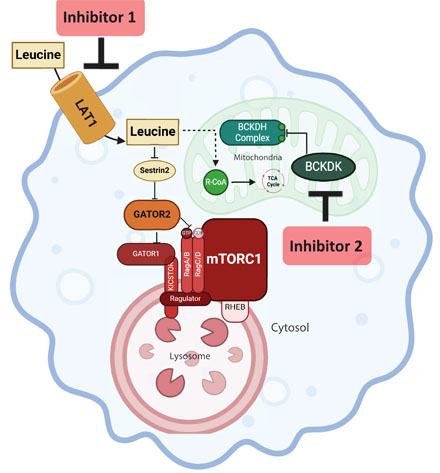
Abstract Body: Background: Despite numerous improvements in treatment and prevention, cardiovascular disease (CVD) remains one of the leading causes of morbidity and mortality in the world. Nutrients such as lipids have long been linked to CVD pathogenesis. However, the role of other nutrients such as amino acids remains poorly defined. Recently, we implicated amino acids in the stimulation of pathogenic mTOR signaling in macrophages to drive atherosclerosis. More importantly, we identified leucine as the predominant activator of this signaling pathway that solely explains the atherosclerosis phenotype. Therefore, selective inhibition of leucine-mediated mTORC1 activation in macrophages appears to be a highly promising therapeutic approach in CVD.
Methods: We utilize two independent approaches to target leucine metabolism in macrophages by inhibiting its uptake and stimulating its catabolism in order to reduce pathogenic mTOR signaling. Both murine and human primary macrophages in vitro and genetic and pharmacological approaches in vivo are used to conduct this work.
Results: First, we found leucine to be particularly enriched in lesional macrophages using PET/CT imaging of plaques via an F18-leucine analog. Immunofluorescence staining and scRNAseq profiling of murine and human plaques revealed concomitant increase in the major leucine transporter, LAT1/SLC7a5, as well as the critical inhibitor of leucine catabolism, BCKDK. Genetic or transcriptional silencing of either LAT1 or BCKDK were equally effective in reducing macrophage mTOR signaling which ameliorated mitochondrial dysfunction, apoptosis, and ROS generation via protective autophagy/mitophagy signaling. These data were recapitulated using pharamacological inhibitors of LAT1 and BCKDK in primary macrophages, circulating monocytes, and plaques of atherogenic ApoE-null mice. Utilizing macrophage-specific LAT1-null mice (on ApoE-null background) we observed significant reductions in plaque size and complexity. The pharmacological inhibition of LAT1 also abrogated leucine uptake in ApoE-null mice resulting in atheroprotection mirroring our genetic data.
Conclusions: Our study is the first to demonstrate that modulation of leucine metabolism in macrophages is a highly effective approach to suppress mTORC1 signaling and atherosclerosis with implications in CVD therapeutics.
  • Zhang, Xiangyu  ( University of Pittsburgh , Pittsburgh , Pennsylvania , United States )
  • Ajam, Ali  ( Pittsburgh University , Pittsburgh , Pennsylvania , United States )
  • Khan, Md Saifur Rahman  ( Pittsburgh University , Pittsburgh , Pennsylvania , United States )
  • Yeh, Yu-sheng  ( University of Pittsburgh and UPMC , Pittsburgh , Pennsylvania , United States )
  • Razani, Babak  ( University of Pittsburgh and UPMC , Pittsburgh , Pennsylvania , United States )
  • Author Disclosures:
    Xiangyu Zhang: DO NOT have relevant financial relationships | Ali Ajam: DO NOT have relevant financial relationships | Md Saifur Rahman Khan: No Answer | Yu-Sheng Yeh: No Answer | Babak Razani: DO NOT have relevant financial relationships
Meeting Info:
Session Info:

07. Concurrent Session 2b: Metabolism in Cardiovascular Disease

Wednesday, 04/23/2025 , 03:30PM - 05:00PM

Oral

More abstracts on this topic:
Associations of Dietary Zinc Intake with Cardiovascular Disease and Mortality: Results from the Prospective Urban and Rural Epidemiology (PURE-China) Study

Li Xiaocong, Cai Qiujing, Huang Yilin, Biyan Biyan, Li Wei

Activator protein 1 (AP-1) Complex in Antigen Presenting Cells contributes to Salt-Sensitive Blood Pressure in Humans

Ahmad Taseer, Desta Selam, Kirabo Annet, Saleem Mohammad, Mutchler Ashley Pitzer, Ertuglu Lale, Albritton Claude, Haynes Alexandria, Sheng Quanhu, Khan Mohd, Demirci Mert

More abstracts from these authors:
Intracellular Galectin-3 facilitates the lysosomal damage response in macrophages to protect against atherosclerosis

Liu Ziyang, Khan Md Saifur Rahman, Ajam Ali, Huang Jun, Peroumal Doureradjou, Cosme Carlos, Yeh Yu-sheng, Zhang Xiangyu, Razani Babak

Inflammasome-mediated Galectin-3 release limits its protective role in macrophage lysosomal damage response during atherosclerosis

Liu Ziyang, Khan Md Saifur Rahman, Huang Jun, Yeh Yu-sheng, Ajam Ali, Cosme Carlos, Zhang Xiangyu, Razani Babak

You have to be authorized to contact abstract author. Please, Login
Not Available