Logo

American Heart Association

  65
  0


Final ID: Th0085

Trends of Ischemic Stroke across 204 Countries 1990 - 2021: Comparative Global Analysis from The Global Burden of Disease 2021

Abstract Body: Introduction
Stroke is the 2nd leading cause of death and disability worldwide. In 2021, stroke accounted for 1 in 6 deaths from cardiovascular disease. About 87% (87 of 100) of all strokes are ischemic strokes, in which blood flow to the brain is blocked. A recent report from the World Stroke Organisation has projected a 50% increase in stroke-related deaths by 2050.
Methods
Using the global burden of disease data, we estimated deaths, annual percentage change (APC) in death rate, and disability-adjusted life years (DALYs). comparative analysis was conducted based on age, gender, and region.
Results
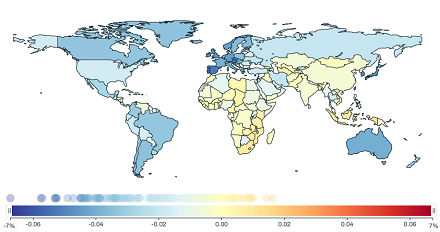
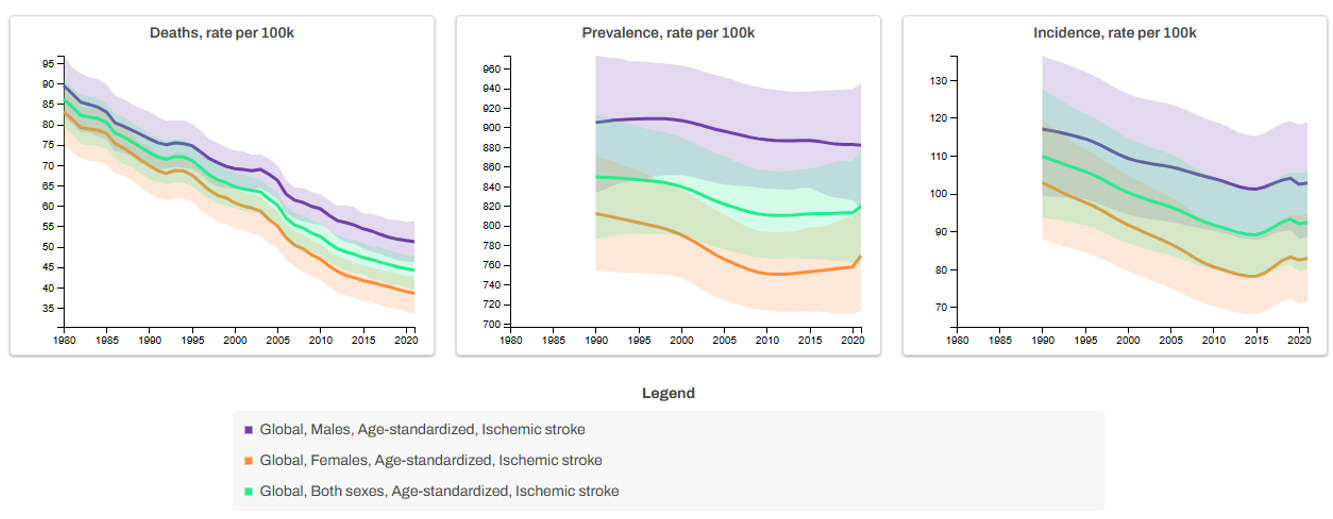
The total number of cases rose significantly from 34 million (95% CI: 32-37 million) in 1990 to 70 million (95% CI: 65-75 million) in 2021. Interestingly, the highest increase in APC for death rate is observed in Montenegro, by 1.62%, while Singapore experienced a greatest decline, of 6.72% from 1990 – 2021. APC decreased by 1.68% in the USA. The age-standardized death rate is also markedly lowered from 73.15 (95% CI: 66 - 78) in 1990 to 44.18 (95% CI: 39 - 48) in 2021. The age-standardized prevalence and incidence rate also declined between 1990 and 2016, however in the last five years (2017-2021) both have been raised. Overall males experienced a higher disease burden as compared to females in 2021 with a death rate (51.2 vs 38.5), and a DALYs rate (975.3 vs 719.52). The most noticeable finding of our study is that in the age group of less than 80 years, males have a higher burden however, in the 80+ years of age group female patients are more prominent. Among WHO regions, Eastern Mediterranean Region has the highest age-standardized death rate which is 73.36 and the Region of Americas has the lowest which is only 20.63.
Conclusion
In 2021, the total number of deaths from ischemic stroke is around 3.5 million. Remarkably the death rate has decreased in the past 30 years however, in the past 5 years incidence rate and prevalence rate have risen, which requires an urgent need for comprehensive healthcare strategies. Elderly females are more vulnerable than elderly males. Effective management including, robust screening of the elderly population, advancing diagnostic skills as well as enhancing patient care is essential for slashing the mortality rate.
  • Kakadiya, Jay  ( Government Medical College, Surat , Surat , India )
  • Varsadiya, Kush  ( Shri M. P. Shah Medical College, Jamnagar , Jamnagar , Gujarat , India )
  • Bhingaradiya, Dhruv  ( GMERS Medical College, Valsad , Valsad , Gujarat , India )
  • Avaiya, Aryan  ( SMIMER Hospital & Medical College , Surat , Gujarat , India )
  • Kakadiya, Chintan  ( SMIMER Hospital & Medical College , Surat , Gujarat , India )
  • Author Disclosures:
    JAY KAKADIYA: DO NOT have relevant financial relationships | Kush Varsadiya: No Answer | Dhruv Bhingaradiya: No Answer | Aryan Avaiya: No Answer | Chintan Kakadiya: No Answer
Meeting Info:
Session Info:

15. Poster Session 3 & Reception

Thursday, 04/24/2025 , 05:00PM - 07:00PM

Poster

More abstracts on this topic:
3-HKA Promotes the Vascular Remodeling after Stroke by Modulating the Activation of A1/A2 Reactive Astrocytes

Chen Jun-min, Shi Guang, Yu Lulu, Shan Wei, Zhang Xiangjian, Wang Qun

Association Between Social Support and Health Status Among Adults After Myocardial Infarction

Liu Olivia, Li Yiwei, Reynolds Harmony, Spruill Tanya, Arabadjian Milla

More abstracts from these authors:
You have to be authorized to contact abstract author. Please, Login
Not Available