Trends of Cardiomyopathy attributable to high alcohol use across 204 Countries and territories: Comparative Global Analysis from the Global Burden of Disease 2021
Abstract Body (Do not enter title and authors here): Introduction Cardiomyopathies are a group of pathological disorders that lead to heart failure and ultimately death. Among multiple risk factors, high alcohol consumption is one of the leading causes of cardiomyopathy. Approximately, 25-35% of cardiomyopathies are attributable to high alcohol use. Due to the behavior of taking alcohol increasing nowadays, it is an emerging health challenge. A thorough analysis of demographic patterns and other risk factors is essential to slash morbidities and mortalities.
Methods Using the global burden of disease data, we estimated deaths, annual percentage change (APC) in death rate, disability-adjusted life years (DALYs), Prevalence. comparative analysis was conducted based on age, gender, and region.
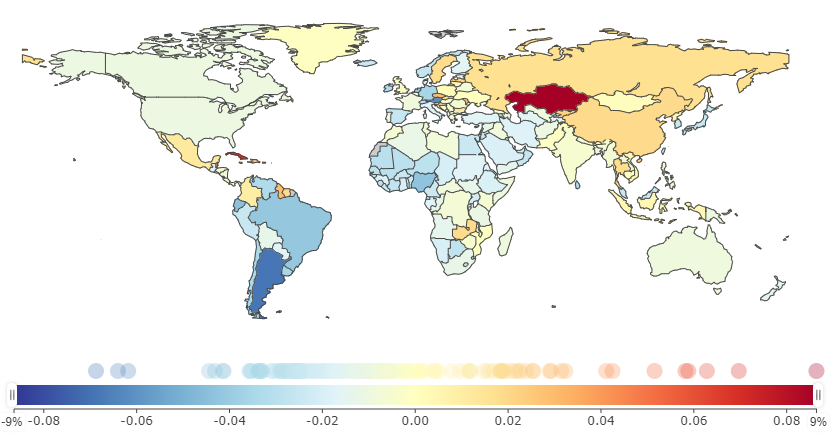
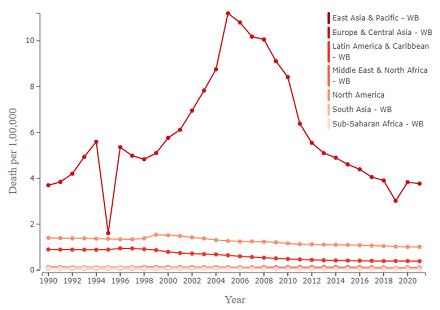
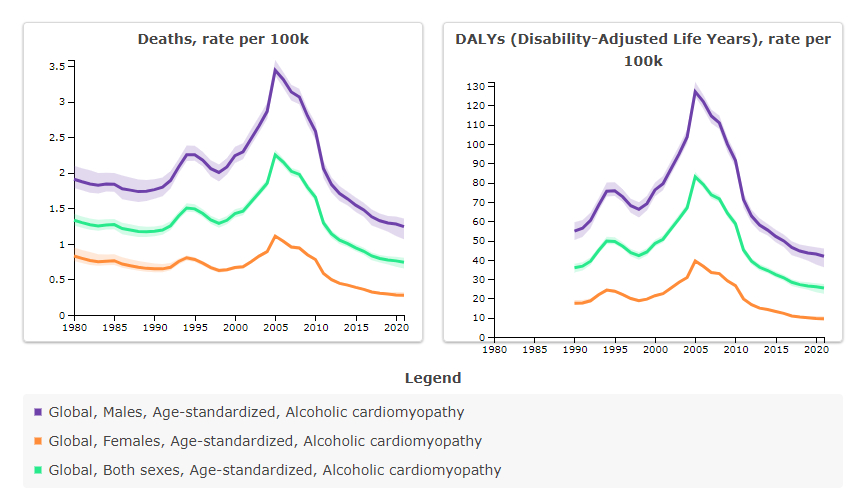
Results The death rate due to cardiomyopathy attributable to high alcohol consumption decreased from 1.18 (95% UI: 1.11-1.24) in 1990 to 0.74 (95% UI: 0.65-0.81) in 2021. Interestingly, the highest increase in APC for death rate is observed in Kazakhstan, by 8.64%, while Argentina experienced the greatest decline, by 6.88% from 1990 – 2021. APC is also reduced by 1.05% of the USA. Importantly, males face a higher burden as compared to females in 2021, with a death rate (1.24 vs 0.28), and DALYs (41.82 vs 9.44) Data revealed the highest death rate in the age group of 95+ years, which is 7.53 (95% UI: 5.83 – 8.39) in 2021. European and Central Asian countries showed higher trends, with 3.77(95% UI: 3.40 – 4.10) deaths and 142.42 (95% UI: 128.71 – 154.75) DALYs per 100,000. North America also has a high prevalence rate (17.43), however as compared to the prevalence, death rate is significantly lower, which is 1.01 only.
Conclusion Trends of high alcohol intake-related cardiomyopathies show a downfall in cases in the last 10-12 years. European and Central Asian countries have the highest death rate, significantly higher than other regions. Notably, as compared to a prevalence of Alcoholic cardiomyopathies, deaths are remarkably lower in North America. Analysis demonstrated that elderly, males are more prone as compared to young, and females. Preventive measures, periodic screening, and proper management are essential for reducing disease burden.
Kakadiya, Jay
(
Government Medical College, Surat
, Surat , India )
Kaur, Paawanjot
(
Detroit Medical Center
, Detroit , Michigan , United States )
Varsadiya, Kush
(
Shri M. P. Shah Medical College, Jamnagar
, Jamnagar , Gujarat , India )
Nasit, Yash
(
Government Medical College, Surat
, Surat , India )
Vaghani, Manthanbhai
(
Government Medical College, Surat
, Surat , India )
Prajapati, Hem
(
medical college baroda
, Vadodara , India )
Author Disclosures:
JAY KAKADIYA:DO NOT have relevant financial relationships
| Paawanjot Kaur:No Answer
| Kush Varsadiya:DO NOT have relevant financial relationships
| Yash Nasit:DO NOT have relevant financial relationships
| Manthanbhai Vaghani:No Answer
| Hem prajapati:DO NOT have relevant financial relationships