Logo

American Heart Association

  172
  0


Final ID: WP309

Long-Term Efficacy And Safety Of Patent Foramen Ovale Closure In Elderly Patients Over 60 Years With Cryptogenic Stroke: A Systematic Review And Meta-Analysis

Abstract Body: Background: Patent foramen ovale (PFO) is commonly diagnosed in patients over 60-65 years with cryptogenic stroke. Despite robust evidence and guidelines supporting PFO closure in individuals aged 18-60, the efficacy of this intervention in preventing recurrent ischemic strokes in elderly patients (>60 years) with PFO and cryptogenic stroke remains uncertain, as existing evidence is inconclusive.

Objective: We aimed to synthesize findings from observational studies until July 2024 to evaluate the long-term efficacy and safety of PFO closure in elderly patients over 60 years of age, with the primary outcome focused on its impact on reducing the composite risk of recurrent ischemic stroke/transient ischemic attack (TIA).

Methods: We analyzed data using RevMan 5.4 with a random effects model, employing the inverse variance method pooling outcomes as odds ratios (OR) with 95% confidence intervals (CI). Our study protocol is registered in PROSPERO (CRD42024564171).

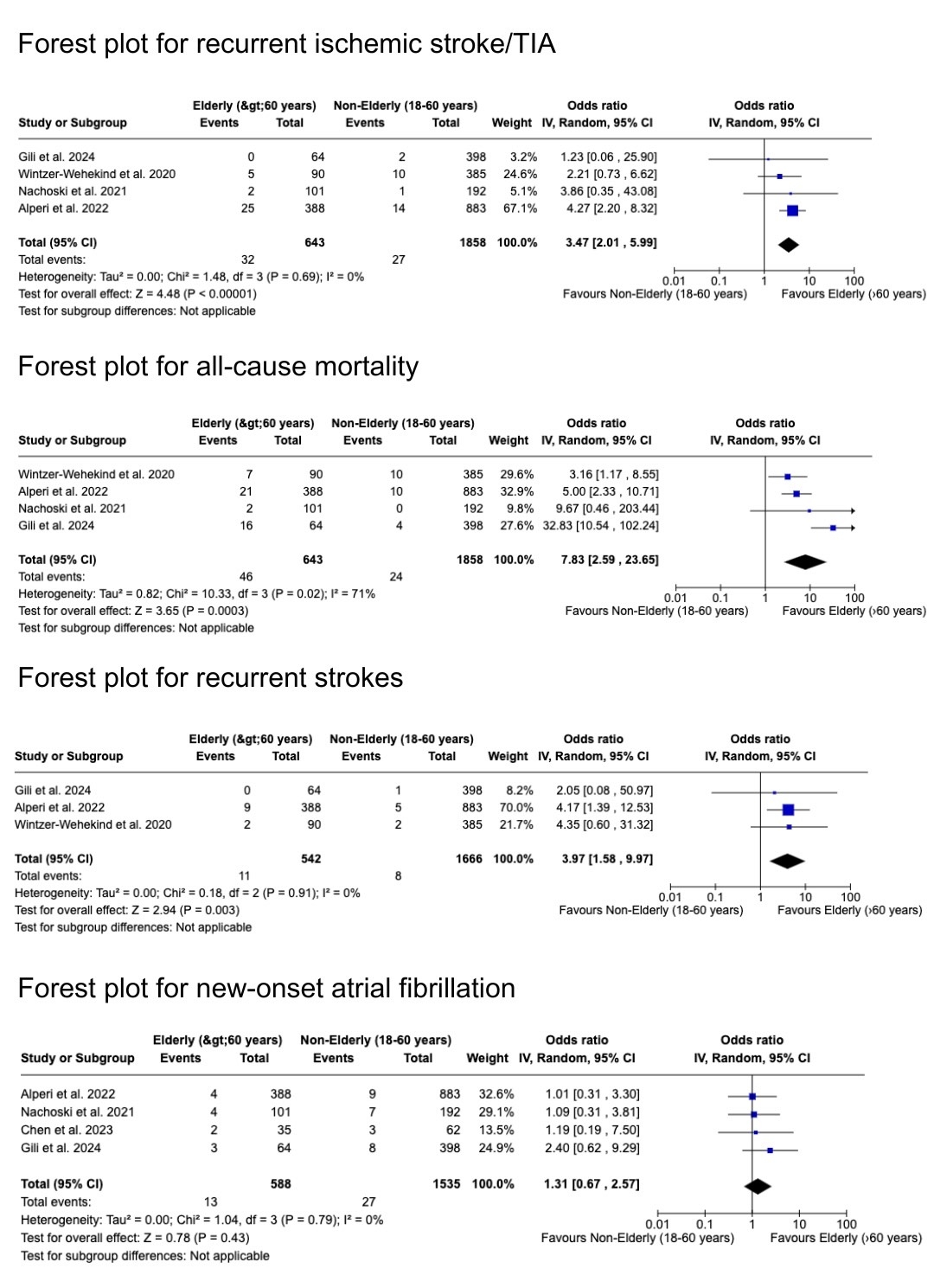
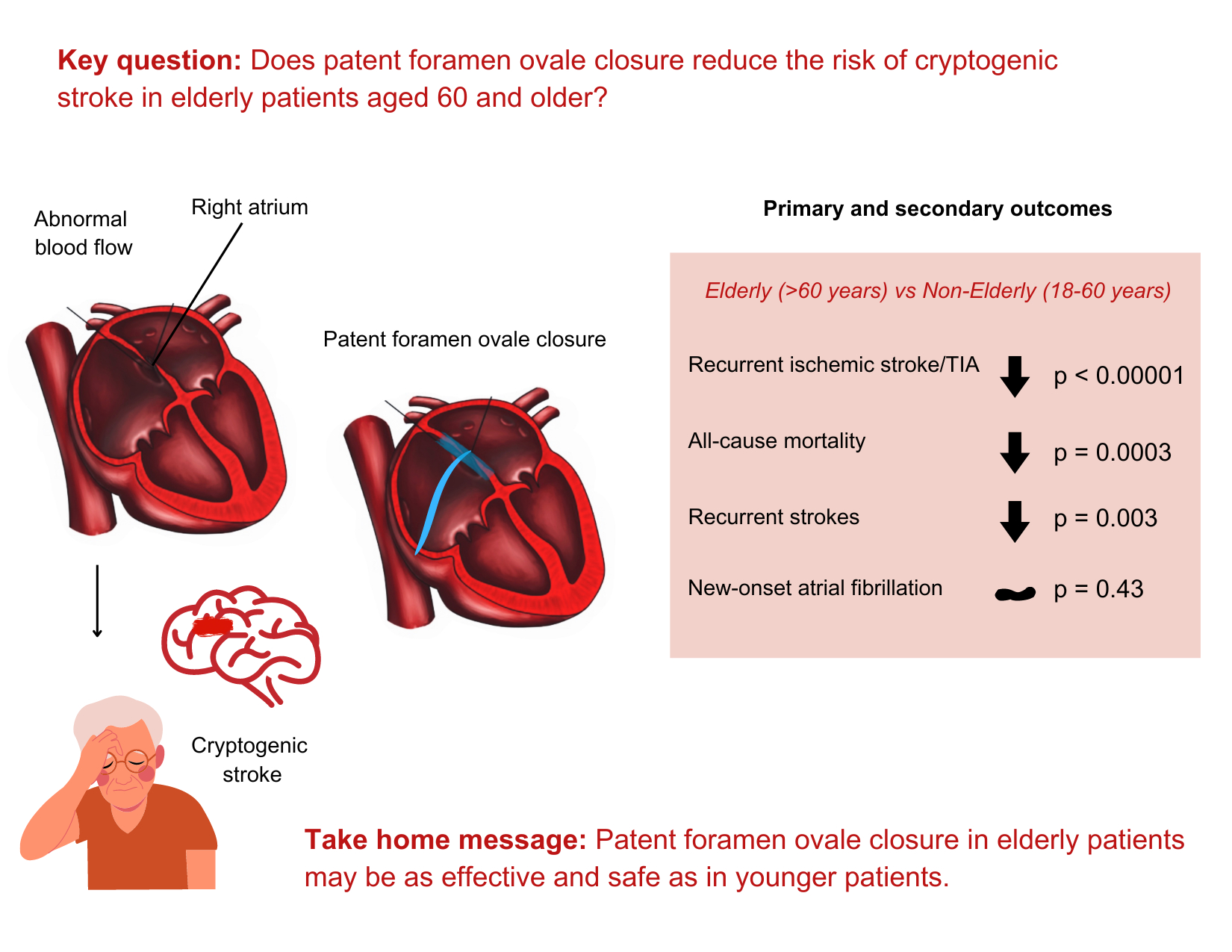
Results: Our study included 9 observational studies comprising 3,525 subjects, of whom 1,572 were elderly patients aged over 60 years. The average follow-up period ranged from 2.5 to 14 years. Upon pooled analysis comparing the primary composite outcome of recurrent ischemic stroke/TIA after PFO closure, the elderly cohort (aged >60 years) demonstrated a significant reduction in risk compared to the non-elderly (18-60 years), with an OR of 3.47 (95% CI: 2.01 to 5.99, p < 0.00001), and no significant heterogeneity was observed. Secondary outcomes revealed a statistically significant reduction in all-cause mortality among the elderly following PFO closure (OR: 7.83, 95% CI: 2.59 to 23.65, p = 0.0003), as well as a decreased incidence of recurrent strokes (OR: 3.97, 95% CI: 1.58 to 9.97, p = 0.003). Furthermore, there was no statistically significant difference in the occurrence of post-procedure new-onset atrial fibrillation between elderly and younger patients (OR: 1.31, 95% CI: 0.67 to 2.57, p = 0.43).

Conclusion: PFO closure in elderly patients may be as effective and safe as in younger patients. However, there is a pressing need for further multicenter large randomized controlled trials to specifically include patients over 60 years of age. These trials should evaluate the safety and long-term efficacy of PFO closure, with the goal of reassessing and refining current treatment guidelines to optimize outcomes for elderly patients with PFO and cryptogenic stroke.
  • Sebastian, Sneha Annie  ( Azeezia Medical College , Kollam , India )
  • Dominic, Jerry Lorren  ( Allegheny Health Network , Pittsburgh , Pennsylvania , United States )
  • Paul, Haris  ( Allegheny Health Network , Pittsburgh , Pennsylvania , United States )
  • Dhulipala, Vishal  ( Mount Sinai Hospital , New York , New York , United States )
  • Author Disclosures:
    Sneha Annie Sebastian: DO NOT have relevant financial relationships | Jerry Lorren Dominic: DO NOT have relevant financial relationships | Haris Paul: No Answer | Vishal Dhulipala: DO NOT have relevant financial relationships
Meeting Info:
Session Info:

Risk Factors and Prevention Posters I

Wednesday, 02/05/2025 , 07:00PM - 07:30PM

Poster Abstract Session

More abstracts on this topic:
Association of thrombectomy with clinical outcomes in elderly patients presenting beyond 24 hours of last known well – A secondary analysis of SELECT LATE study

Pujara Deep, Sitton Clark, Wu Teddy, Blasco Jordi, Sangha Navi, Arenillas Juan, Opaskar Amanda, Mccullough-hicks Margy, Wallace Adam, Arthur Adam, Grotta James, Kleinig Timothy, Parsons Mark, Ribo Marc, Albers Gregory, Campbell Bruce, Sarraj Amrou, Hassan Ameer, Cardona Pedro, Ortega-gutierrez Santiago, Abraham Michael, Manning Nathan, Goyal Nitin, Blackburn Spiros

A Delayed Diagnosis of Anti-HMG-CoA Reductase Immune-Mediated Necrotizing Myopathy

Jadhav Reshma, Shekar Arush, Westenhaver Zack, Skandhan Amith

You have to be authorized to contact abstract author. Please, Login
Not Available

Readers' Comments

We encourage you to enter the discussion by posting your comments and questions below.

Presenters will be notified of your post so that they can respond as appropriate.

This discussion platform is provided to foster engagement, and simulate conversation and knowledge sharing.


You have to be authorized to post a comment. Please, Login or Signup.


   Rate this abstract  (Maximum characters: 500)