Burden of Chronic Kidney Disease Due to Hypertension Attributable to Dietary Risk Factors: Global Trends and Regional Inequities (1990–2021)
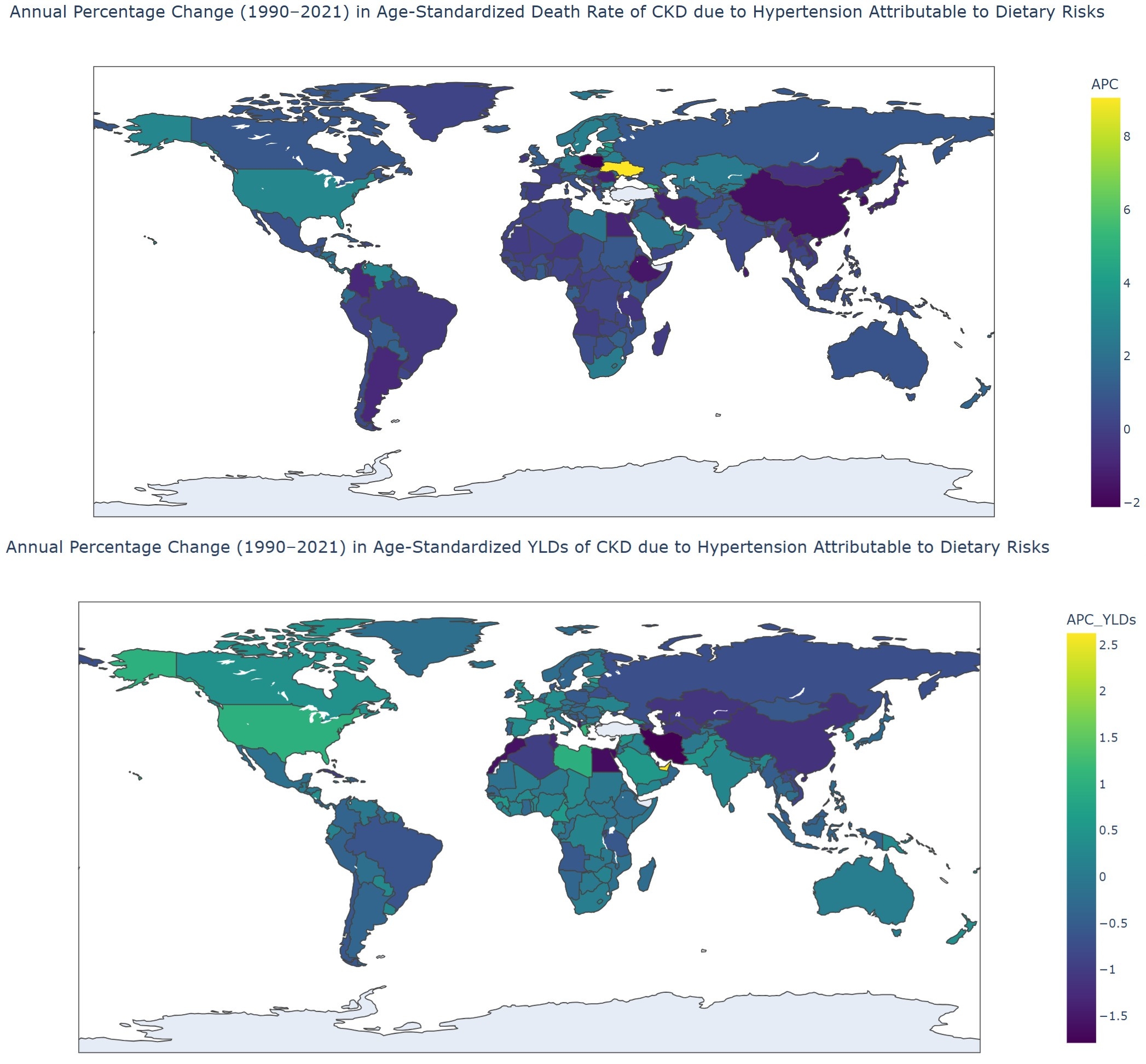
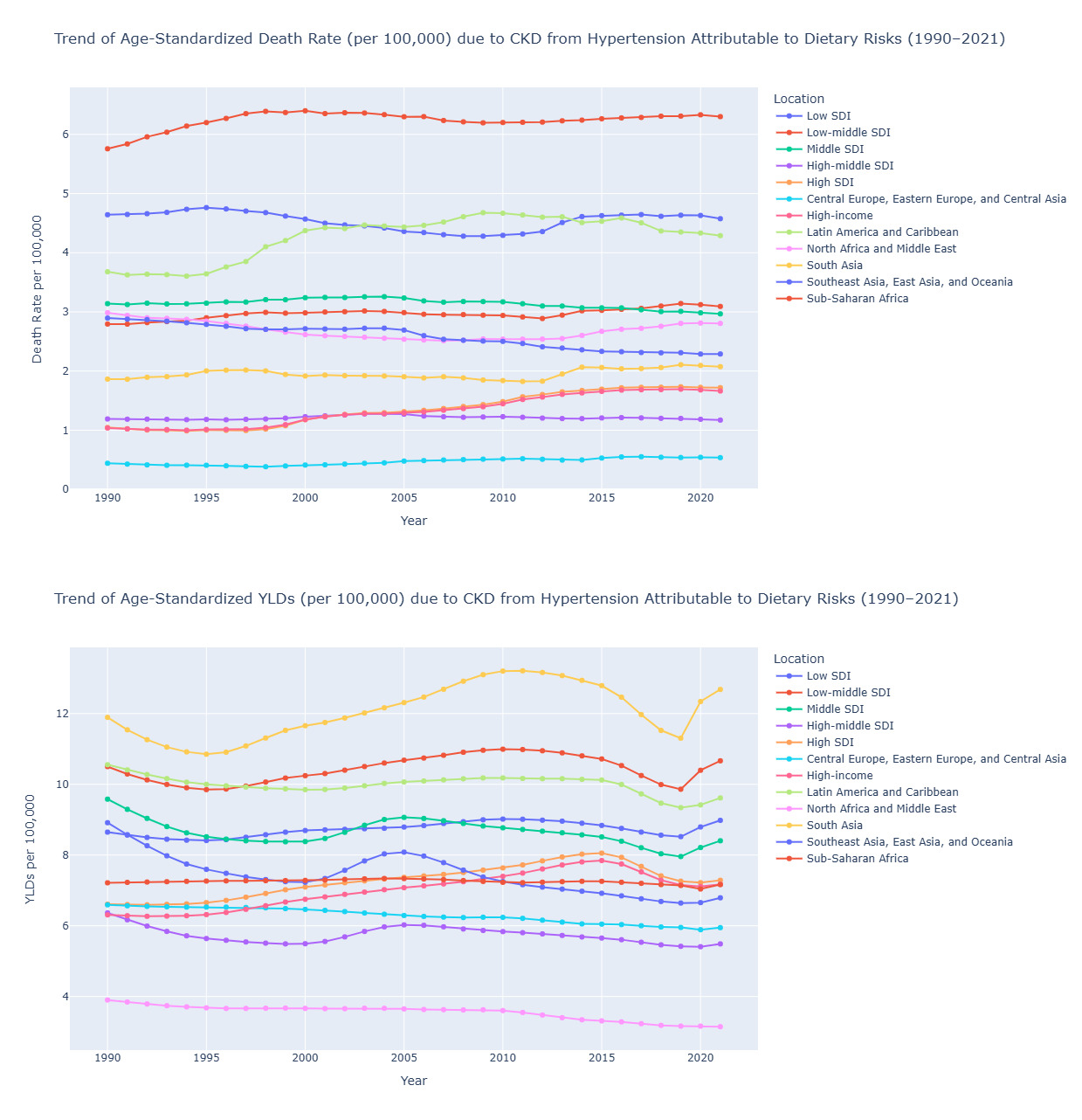
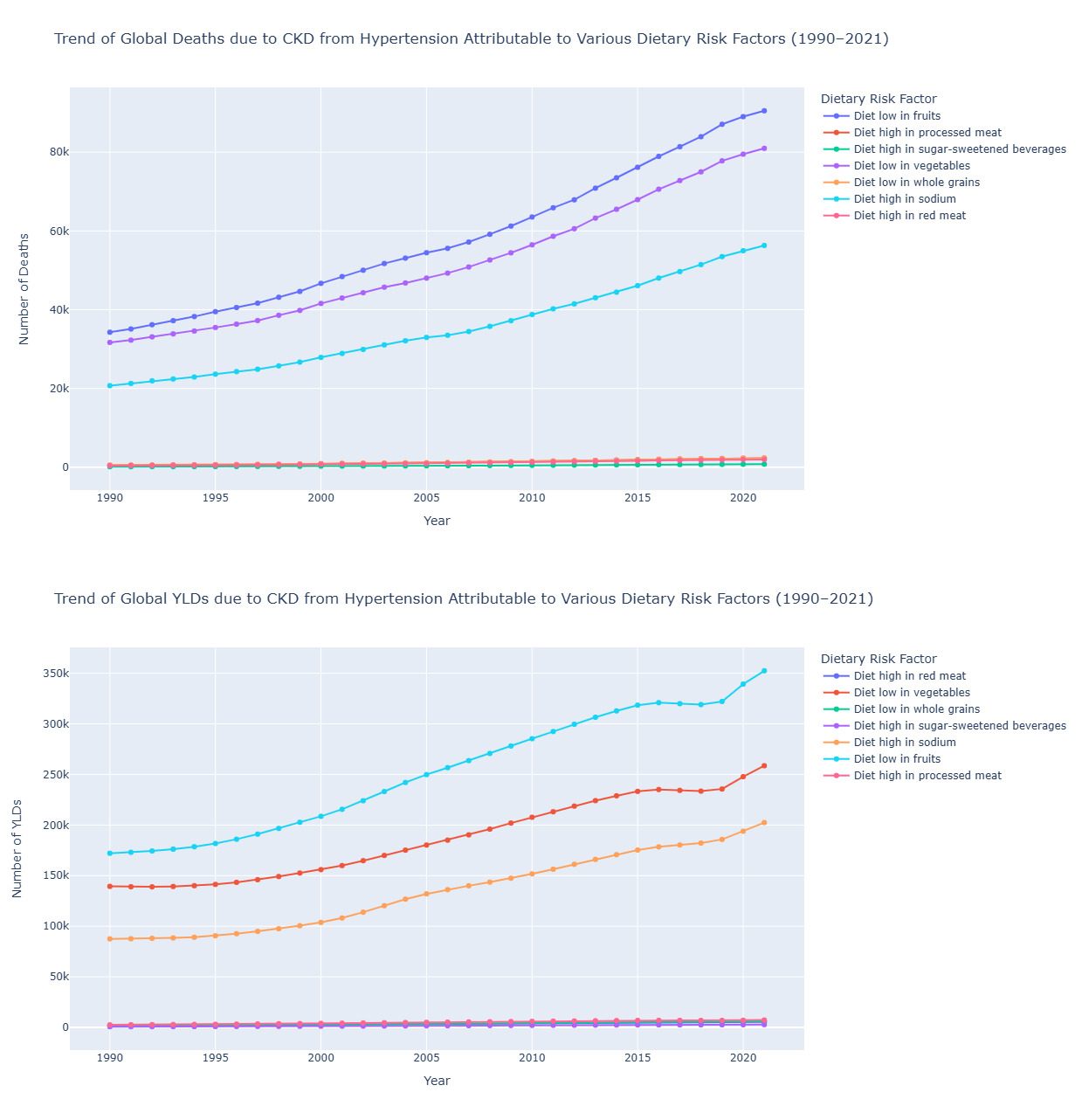
Abstract Body: Background: Chronic kidney disease (CKD) due to hypertension (HTN) remains a critical contributor to global morbidity and mortality. Dietary risk factors—modifiable elements of lifestyle—play a substantial role in exacerbating this burden. However, limited global analyses have quantified the impact of diet-attributable CKD-HTN over time across demographic strata and regions. Methods: Utilizing the Global Burden of Disease 2021 analytical framework, we examined temporal trends from 1990 to 2021 in deaths, disability-adjusted life years (DALYs), and years lived with disability (YLDs) due to CKD secondary to HTN attributable to dietary risks across 204 countries and territories. Results were disaggregated by age, sex, region, and individual dietary components. Uncertainty intervals (UIs) were reported at the 95% level. Results: Globally, diet-attributable CKD-HTN deaths rose from 70,274 (95% UI: 42,972–95,462) in 1990 to 193,938 (119,845–264,010) in 2021. DALYs surged from 1.9 (1.2–2.6) million to 4.7 (2.9–6.3) million, while YLDs increased from 320,431 (184,246–451,929) to 675,286 (385,021–957,572). The highest total percentage change (TPC) in death counts was observed in High SDI countries (275%), followed by Latin America and the Caribbean (269%), High-income regions (265%), and South Asia (191%). Mortality was most prominent among individuals aged 80–84 (25,275; 14,192–37,754) and 85–89 years (25,086; 13,724–37,762). DALYs peaked in the 65–69 (557,602) and 70–74 (520,254) age groups in 2021. Female individuals consistently bore a higher burden than males across metrics—TPC for deaths (182% vs. 171%), DALYs (137% vs. 137%), and YLDs (107% vs. 114%). Among dietary components, the greatest relative increase in deaths was linked to diets high in sugar-sweetened beverages (490%), processed meat (401%), red meat (372%), and low intake of whole grains (323%), fruits (164%), and vegetables (156%). Conclusion: Over the past three decades, the global burden of CKD due to hypertension attributable to poor dietary habits has more than doubled, with sharp escalations in high-income regions and older adults. The disproportionate rise in sugar- and meat-based dietary exposures demands urgent nutritional policy interventions. Targeted dietary reforms, especially among the aging population and females, are imperative to mitigate future renal and cardiovascular sequelae globally.
Dudhat, Kushal
(
International American University College of Medicine,St. Lucia
, Saint Lucia , Saint Lucia )
Patel, Vishva
(
GMERS Medical college and Civil Hospital,Sola.
, Ahmedabad , India )
Zinzala, Hardik
(
Jonelta foundation school of medicine.
, Las Pinas , Philippines )
Patel, Ker
(
Surat Municipal Institute of Medical Education and Research
, Surat , India )
Sakariya, Dhrumil Chhaganbhai
(
Davao Medical School Foundation Poblacion District,, Davao City,Philippines
, Davao , Pitcairn )
Patel, Kevin
(
Gujarat adani institute of medical sciences,Bhuj
, Bhuj , India )