Silent Surge: Hypertensive Disease Mortality Trends From 1999-2020 in Women Based on U.S. Death Records
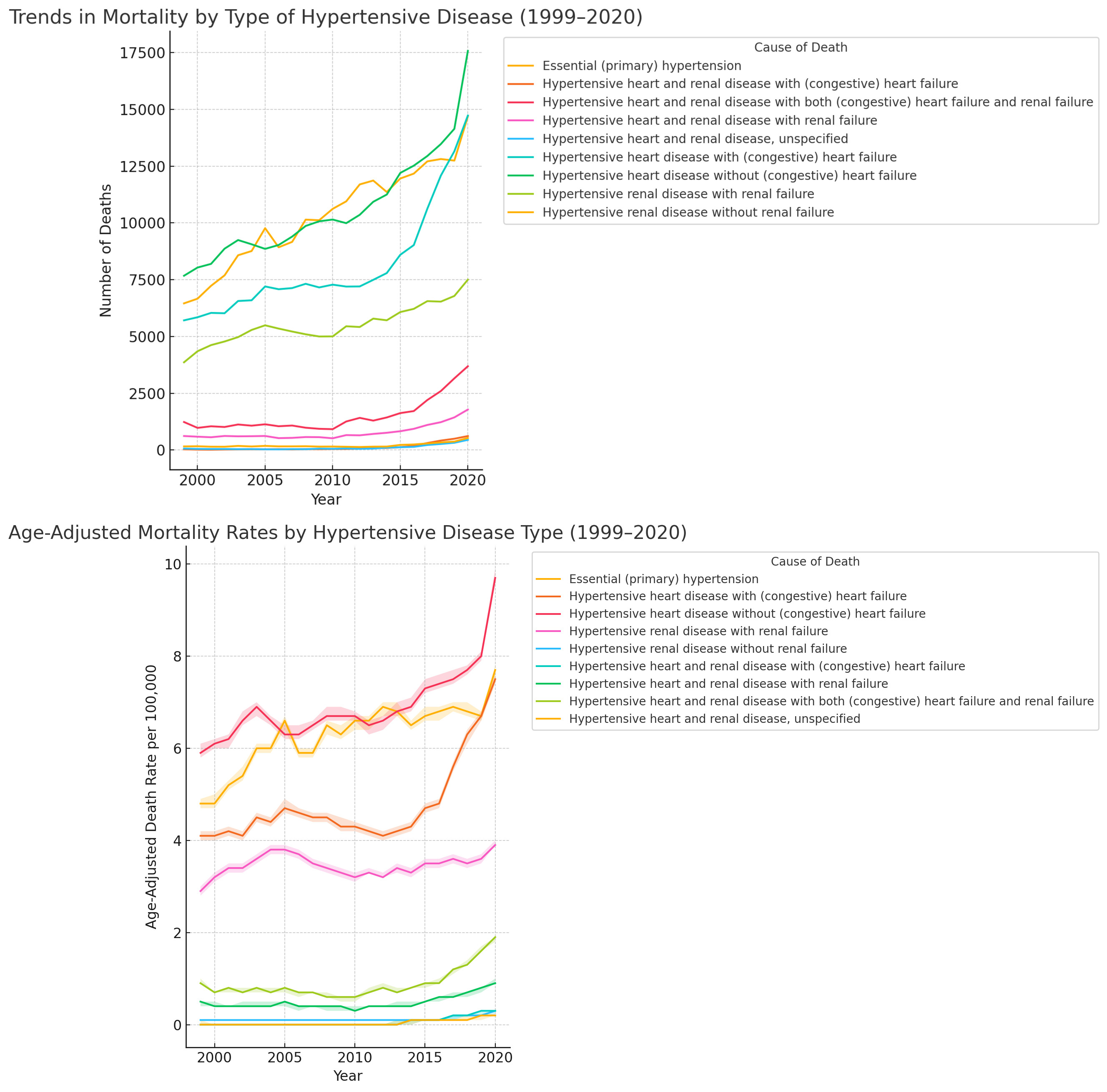
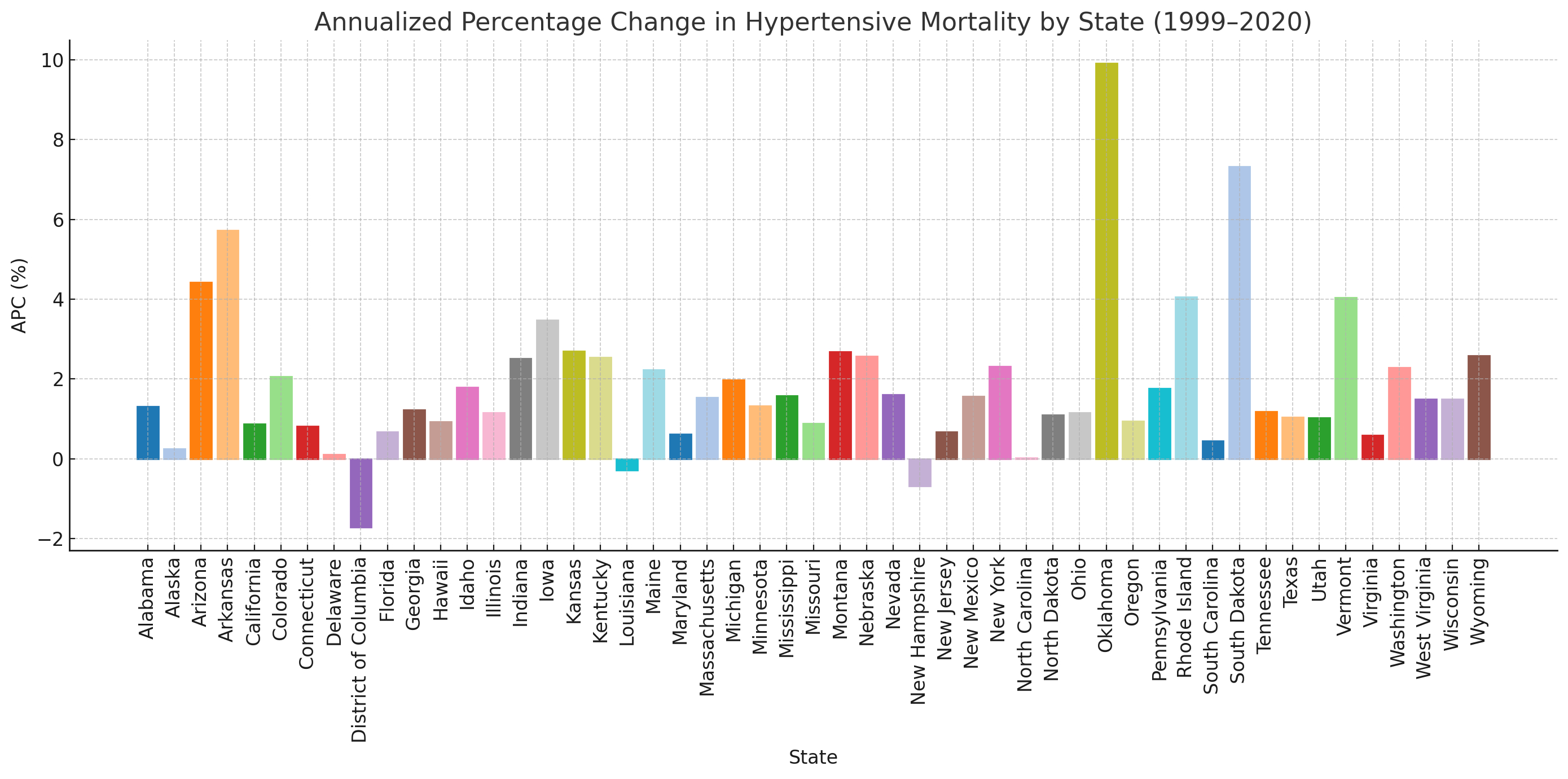
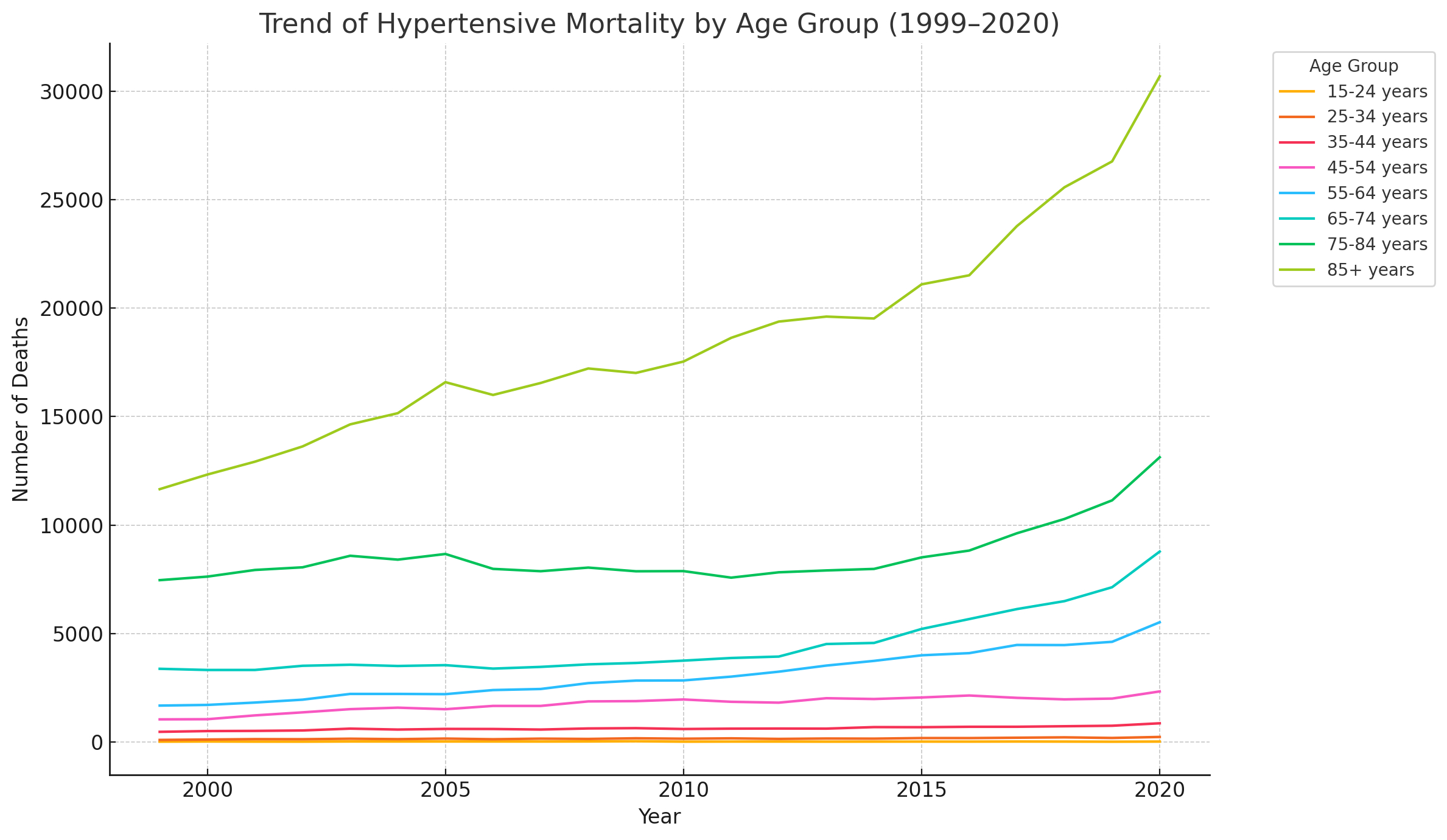
Abstract Body: Background: Hypertensive diseases (HD) remain a persistent contributor to cardiovascular mortality among women in the USA. Despite national efforts to improve BP control, long-term mortality patterns in women reveal disparities that are often masked in sex-aggregated data.A focused analysis is essential to guide gender-responsive public health strategies. Method: We utilized the CDC WONDER underlying Cause of Death database to examine age-adjusted mortality rates due to HD among U.S. women(1990-2020). Annual Percentage Change(APC) was calculated using log-linear regression models.Temporal patterns were further analyzed across race,age,and region to identify disparities & shifts in mortality burden. Result: Between 1999 and 2020,total deaths due to HD rose from 25,803 to 61,574,reflecting an annual increase of 3.37%,while the age-adjusted mortality rate climbed from 15.2(95% UI:15.0–15.4) to 25.5(25.3–25.7) per 100,000, with an APC of 1.56%.From 1999-2020, the highest rise in mortality was observed in hypertensive heart and renal disease with Congestive HF (APC: +18.09%),followed by unspecified hypertensive heart and renal disease (+10.96%), while essential hypertension showed a steady increase (APC: +3.43%). In terms of Census region, the highest rise observed in the Northeast (APC: +1.82%), followed by the Midwest (+1.67%), West (+1.45%), and South (+1.33%). From 1999 to 2020, HD mortality rose among Hispanic or Latino (APC: +1.06%) and Not Hispanic or Latino populations (APC:+1.67%). Based on 2013 urbanization level, highest increased observed in NonCore Nonmetro areas (APC:+2.76%) and Micropolitan regions (+2.11%), followed by Medium Metro (+1.74%), Small Metro (+1.73%), Large Fringe Metro (+1.38%), and Large Central Metro (+1.23%). Based on racial groups, the highest rise observed among American Indian or Alaska Native (APC: +2.66%) and White populations (+2.05%), a modest increase in Asian or Pacific Islanders (+0.65%), while a slight decline was observed in Black or African Americans (APC: −0.44%). In terms of age group, highest rise observed in the 55–64 years (APC: +5.53%),65–74 years (+4.03%), and 85+ years (+3.89%), while a slight decline was noted in the 15–24 years group (APC: −0.58%). Conclusion: From 1999-2020,HD mortality in women rose substantially, with sharp increases in deaths tied to cardio-renal complications, older age, and rural settings.These trends demand urgent,targeted strategies to mitigate future burden and close emerging disparities.
Abubaker, Mohammad
(
Wellstar Spalding hospital, Griffin, Georgia
, Griffin , Georgia , United States )
Modi, Mahir
(
GCS Medical College Hospital and Research Centre
, Ahmedabad , GUJARAT , India )
Viramgama, Fagun
(
Surat Municipal Institute of Medical Education and Research (SMIMER) 395010, India Surat, India
, Surat , India )
Patel, Ishan
(
Smt NHL medical college, Ahmedabad
, Ahmedabad , GUJARAT , India )
Patel, Kevin
(
Gujarat Adani Institute of Medical
, Ahmedabad , India )
Parikh, Jainil
(
GMERS MEDICAL COLLEGE, GOTRI, VADODARA
, Vadodara , India )
Gopi, Gokul
(
Ascension Sacred Hearts Hospital, Pensacola, Florida
, Pensacola , Florida , United States )
Amin, Vishrant
(
JFK University Medical Center
, Milltown , New Jersey , United States )
Patel, Ridham
(
HCA
, Austin , Texas , United States )
Sami, Shahzad Ahmed
(
Hospitalist, DCH regional medical center/university of Alabama, Tuscaloosa, AL, 35401
, Tuscaloosa , Alabama , United States )
Desai, Hardik
(
Independent Clinical and Public Health Researcher
, Ahmedabad , GUJARAT , India )
Sharma, Kamal
(
Gujarat University
, Ahmedabad , India )
Author Disclosures:
Mohammad Abubaker:DO NOT have relevant financial relationships
| SHAHZAD AHMED SAMI:No Answer
| HARDIK DESAI:No Answer
| kamal sharma:DO NOT have relevant financial relationships
| Mahir Modi:DO NOT have relevant financial relationships
| Fagun Viramgama:No Answer
| Ishan Patel:No Answer
| Kevin Patel:No Answer
| Jainil Parikh:DO NOT have relevant financial relationships
| Gokul Gopi:No Answer
| VISHRANT AMIN:DO NOT have relevant financial relationships
| Ridham Patel:DO NOT have relevant financial relationships