Cardiovascular Outcomes in Hypertensive Adults Treated with GLP-1 Receptor Agonists: A Retrospective Cohort Study
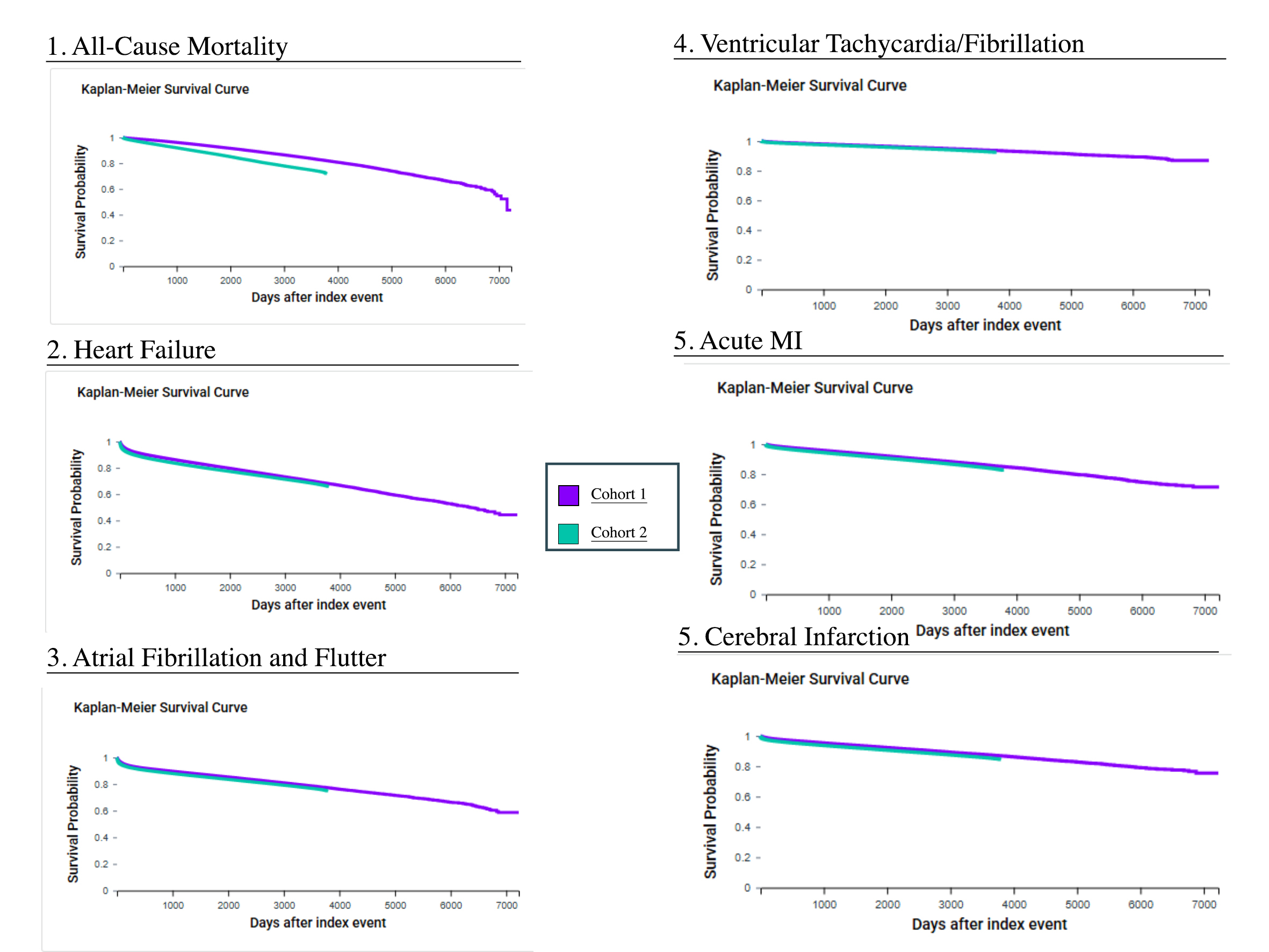
Abstract Body: Introduction: Glucagon-like peptide-1 analogs (GLP-1A), which are used in the treatment of DM, have been found to exert antihypertensive effects. These effects are partly attributed to weight loss, which is associated with a reduction in BP. Additionally, GLP-1A has been shown to promote natriuresis and reduce levels of aldosterone and renin, further contributing to BP reduction. However, their role in the management of HTN has not been well studied. Hypothesis: We assess the CVD outcomes of patients with HTN on GLP-1A compared to those with HTN and not on GLP-1A. Methods This retrospective cohort study utilized the TriNetX Global Collaborative Network from January 2007 to May 2025 to evaluate CVD outcomes among hypertensive adults (≥18 years) treated with GLP-1 A. After propensity matching for demographics, comorbidities and medication, two cohorts were analyzed: 1,117,597 hypertensive patients receiving GLP-1 analogs (cohort 1) and an equal number not receiving GLP-1 analogs (cohort 2). The study population's mean age was 58 at index diagnosis (41% females, 56% males) The primary outcomes included all-cause mortality, HF, acute myocardial infarction (AMI), CVA, and atrial fibrillation (A)F. Risk ratio (RR) and hazard ratio(HR) were calculated with 95% CI and p-value using TrinetX platform. Results: All-cause mortality was 4.13% in cohort 1 vs. 13.17% in cohort 2 (RR 0.314, 95% CI: 0.311–0.317; HR 0.514, 95% CI: 0.509–0.520; p<0.0001). HF incidence was 12.63% in cohort 1 vs. 19.39% in cohort 2 (RR: 0.651, 95% CI: 0.647–0.656; HR: 0.842, 95% CI: 0.836–0.848; p<0.0001). AMI was 4.31% in cohort 1 vs. 8.15% in cohort 2 (RR: 0.529, 95% CI: 0.523–0.534; HR: 0.779, 95% CI: 0.770–0.788; p<0.0001). In cohort 1, 4.32% had CVA compared to 7.92% in cohort 2 (RR: 0.545, 95% CI: 0.540–0.551; HR: 0.749, 95% CI: 0.740–0.757; p<0.0001). AF occurred in 9.52% in cohort 1 vs. 14.09% in cohort 2 (RR: 0.676, 95% CI: 0.671–0.681; HR: 0.856, 95% CI: 0.849–0.863; p<0.0001). Conclusion: In hypertensive adults, treatment with GLP-1 A was associated with significantly reduced risks of mortality, HF, AMI, CVA, and AF compared to those not on GLP-1 therapy. There is a need for RCTs regarding GLP-1A use in patients with HTN.
Sabri, Muhammad
(
Abington Jefferson Hospital
, Horsham , Pennsylvania , United States )
Sharma, Shaival
(
Jefferson Abington Hospital
, Philadelphia , Pennsylvania , United States )
Collins, Matthew
(
Jefferson Abington Hospital
, Philadelphia , Pennsylvania , United States )
Haas, Donald
(
Abington Jefferson Health
, Abington , Pennsylvania , United States )
Author Disclosures:
Muhammad Sabri:DO NOT have relevant financial relationships
| Shaival Sharma:DO NOT have relevant financial relationships
| Matthew Collins:No Answer
| Donald Haas:DO NOT have relevant financial relationships