Logo

American Heart Association

  59
  0


Final ID: TH195

Trends in Hypertension-Associated Neoplasm Mortality Before and During the COVID-19 Era in the United States: A Population-Based Analysis, 2018–2023

Abstract Body: Background: Neoplasms are a major cause of death in the United States, yet the impact of coexisting conditions like hypertension on neoplasm-related mortality remains poorly characterized. Understanding this relationship can shed light on broader patterns of chronic disease burden across diverse U.S. populations.

Methods:
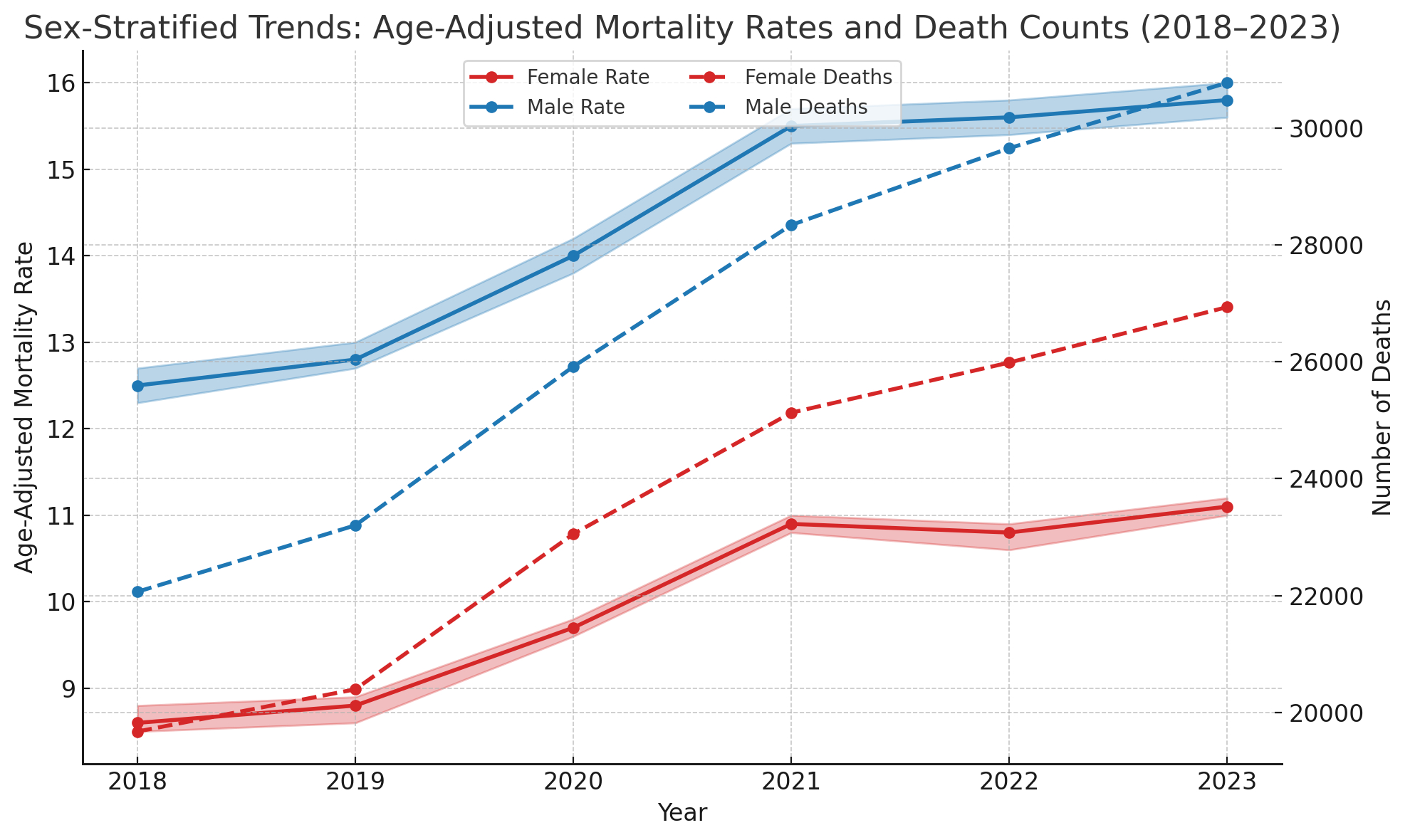
We analyzed U.S. mortality data (2018–2023) from the CDC WONDER database, including deaths where neoplasms were the underlying cause and essential or secondary hypertension was a contributing cause. Age-standardized death rates and annual percentage change (APC) were calculated and stratified by age, sex, year, U.S. Census region, state, education level, and urbanization status.

Result:
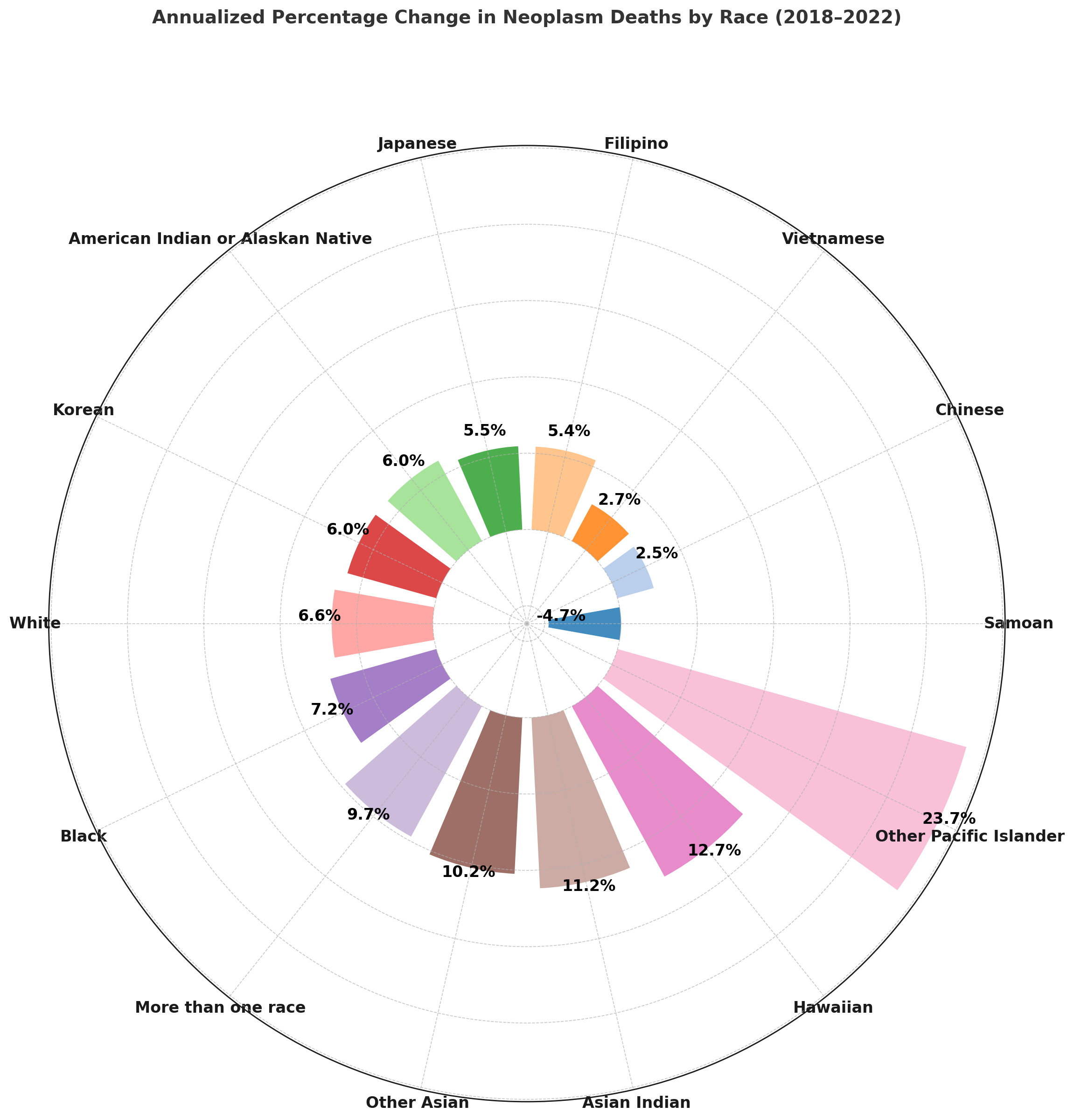
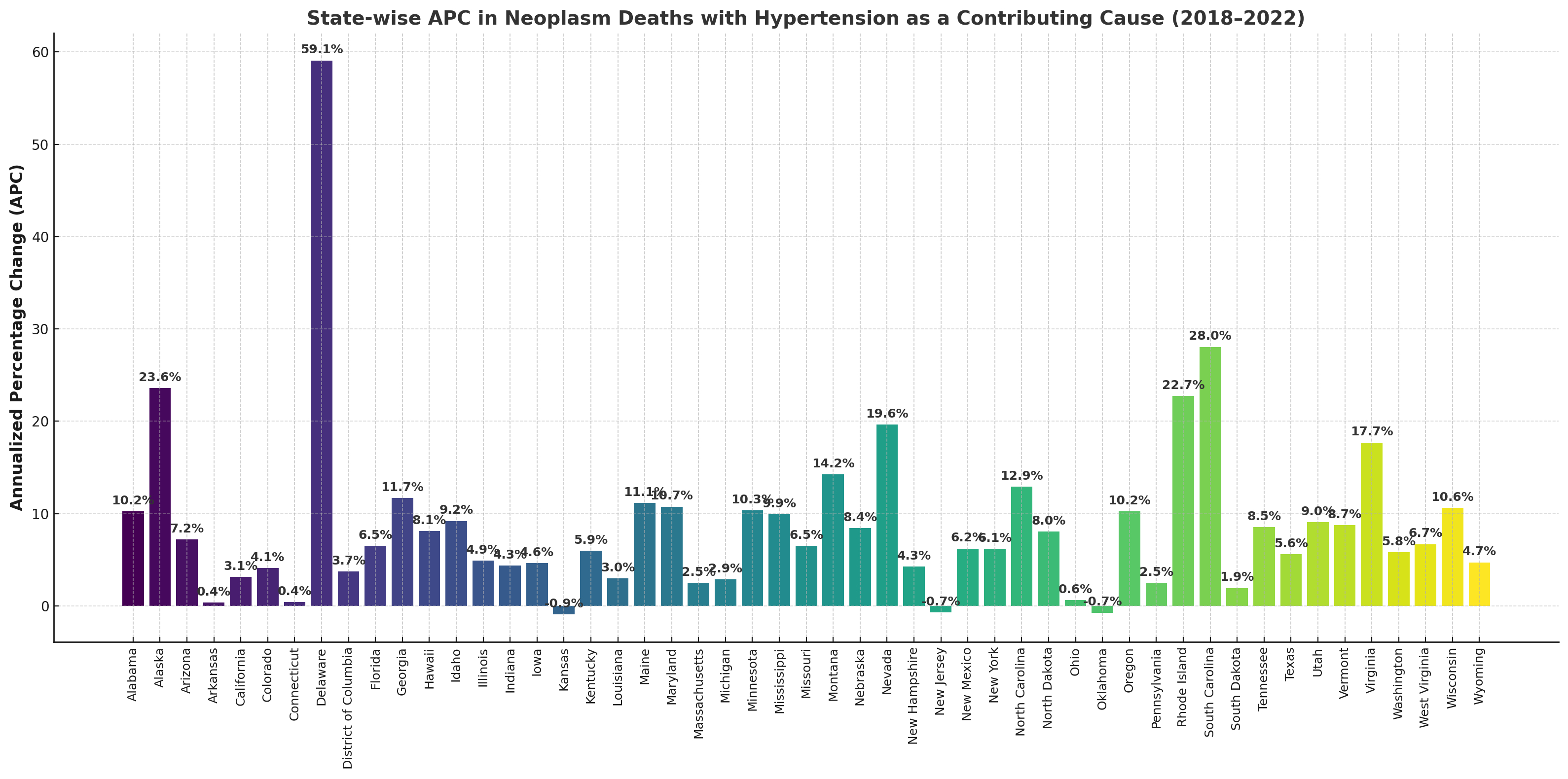
The age-adjusted neoplasm mortality with hypertension as a contributing cause rose at an annualized rate of 1.94% pre-COVID (2018–2019) and 4.40% during the COVID era (2020–2023). From 2018 to 2022, the highest increase was observed among Asian Indians (+11.2%), followed by Black (+7.2%) and American Indian or Alaskan Native (+6.0%) populations. From 2018 to 2022, the South showed the highest increase in APC in neoplasm deaths with hypertension as a contributing cause (+8.8%), followed by the West (+5.3%), Midwest (+5.0%), and Northeast (+4.2%). Based on urbanization level, the highest increase observed in medium metro areas (+8.4%), followed by micropolitan nonmetro (+6.8%) and large fringe metro areas (+6.7%). Based on education level, the highest increase in APC among individuals with an associate degree (+6.7%), followed by those with doctorate or professional degrees (+6.1%) and bachelor's degrees (+6.1%), while a decline was noted among those with education up to 8th grade (−3.7%). Based on age group, the highest rise occurred among individuals aged 35–44 years (+8.1%), followed by 25–34 years (+6.6%).
Conclusion:
Disproportionate rises in neoplasm mortality with hypertension—from younger adults to metro and educated populations—reflect a shifting epidemiologic pattern that challenges conventional risk profiles and underscores the urgency for integrated hypertension surveillance in oncology care and policy planning.
  • Modi, Mahir  ( GCS Medical College Hospital and Research Centre , Ahmedabad , GUJARAT , India )
  • Sharma, Kamal  ( Gujarat University , Ahmedabad , India )
  • Abubaker, Mohammad  ( Wellstar Spalding hospital, Griffin , Griffin , Georgia , United States )
  • Soni, Zeal  ( Smt NHL Municipal Medical College, Ellisbridge, Paldi - 380001 , Ahmedabad , Gujarat , India )
  • Vora, Nancy  ( Grodno State Medical University , Hrodna , Belarus )
  • Gopi, Gokul  ( Ascension Sacred Hearts Hospital, Pensacola, Florida , Pensacola , Florida , United States )
  • Amin, Vishrant  ( HMH JFK University Medical Center , Edison , New Jersey , United States )
  • Sami, Shahzad Ahmed  ( Hospitalist, DCH regional medical center/university of Alabama , Tuscaloosa , Alabama , United States )
  • Patel, Ridham  ( HCA , Austin , Texas , United States )
  • Desai, Hardik  ( Gujarat Adani Institute of Medical , Ahmedabad , India )
  • Author Disclosures:
    Mahir Modi: DO NOT have relevant financial relationships | kamal sharma: DO NOT have relevant financial relationships | Mohammad Abubaker: DO NOT have relevant financial relationships | Zeal Soni: No Answer | Nancy Vora: DO NOT have relevant financial relationships | Gokul Gopi: No Answer | VISHRANT AMIN: DO NOT have relevant financial relationships | SHAHZAD AHMED SAMI: No Answer | Ridham Patel: DO NOT have relevant financial relationships | HARDIK DESAI: No Answer
Meeting Info:
Session Info:

Poster Session 1 and Reception (includes TAC Poster Competition)

Thursday, 09/04/2025 , 05:30PM - 07:00PM

Poster Session

More abstracts on this topic:
Burden of Non-Rheumatic Valvular Heart Disease in High-income Asia Pacific from 1990-2019: A Benchmarking analysis

Shaikh Salomi, Amin Vishrant, Desai Hardik, Sharma Kamal, Shandilya Ashwinikumar, Patel Khushbu, Waqas Muhammad, Syed Saif, Lakkimsetti Mohit, Bhalodia Paritaben, Islam Hamza, Patel Juhi

Ambulatory QT Interval Prolongation and Reduced T-Amplitude Help Identify Veterans with Heart Disease

Shah Amit, Colon-motas Kay, De Leon Katalina, Murtala Abdulkareem, Osei Jeffery, Mourad Rama, Chang Sarah, Ko Yi-an, Zeng Zhaohua, Sheikh Shafa-at, Xu Ying, Koscova Zuzana, Kim Kain, Akoto Natalie, Santana Eric, Alexander Abigail, Suvada Kara, Roberts Tatum, Stefanos Lewam, Vaccarino Viola, Clifford Gari, Li Qiao, Sameni Reza, Bahrami Rad Ali, Karimi Sajjad, Lampert Rachel, Mathew Lejy, Alagar Nikila

More abstracts from these authors:
Hypertensive Disease as a Contributor to Mortality in Mental and Behavioral Disorders: Insights from CDC WONDER database

Gopi Gokul, Sami Shahzad Ahmed, Desai Hardik, Sharma Kamal, Dhillon Nimrat, Abubaker Mohammad, Patel Nivid, Viramgama Fagun, Upadhyay Devangi, Patel Kesar, Amin Vishrant, Patel Ridham

Silent Surge: Hypertensive Disease Mortality Trends From 1999-2020 in Women Based on U.S. Death Records

Abubaker Mohammad, Sami Shahzad Ahmed, Desai Hardik, Sharma Kamal, Modi Mahir, Viramgama Fagun, Patel Ishan, Patel Kevin, Parikh Jainil, Gopi Gokul, Amin Vishrant, Patel Ridham

You have to be authorized to contact abstract author. Please, Login
Not Available