Logo

American Heart Association

  50
  0


Final ID: TH211

Geographic and Demographic Disparities and Trends in Hypertension and Sleep Disorder Related Mortality in United States Adults Aged 25 Years and Older From 1999 to 2020

Abstract Body: Introduction: Sleep disorders are increasingly identified as comorbid conditions in adults with hypertension, yet national mortality trends involving both remain understudied. This study examines deaths involving both hypertension and sleep disorders in adults aged ≥25 years from 1999 to 2020 in US, with a focus on disparities by sex, race/ethnicity, and geographic region.

Hypothesis: We hypothesized that mortality involving hypertension with sleep disorders has increased over time, with significant disparities across sex, racial/ethnic, and geographic groups.

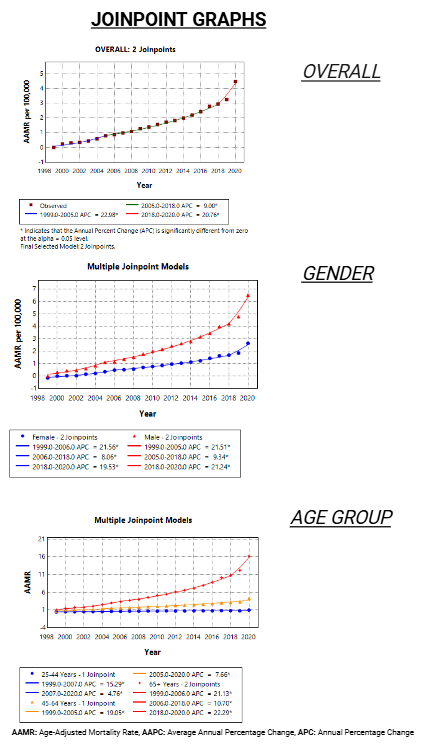
Methods: We conducted a retrospective analysis of US mortality data from the CDC WONDER Multiple Cause of Death database (1999–2020) for adults aged ≥25 years. Deaths listing both hypertension (ICD-10: I10–I15) and sleep disorders (ICD-10: G47) as contributing causes were included. Age-adjusted mortality rates (AAMRs) per 100,000 persons were calculated. Temporal trends were assessed using Joinpoint regression to estimate annual percent change (APC) and average annual percent change (AAPC), stratified by sex, race/ethnicity, US Census region, and urbanization.

Results:
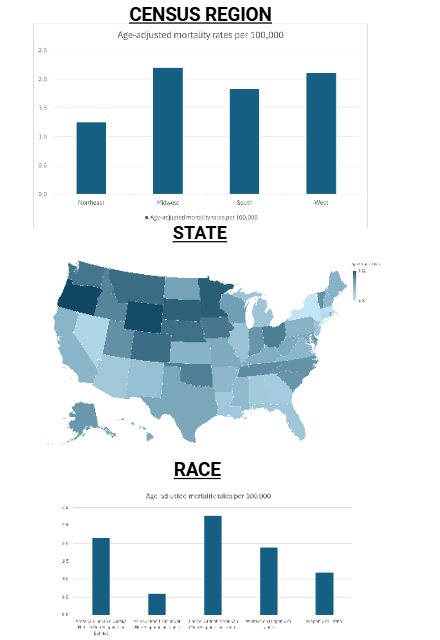
Between 1999 and 2020, 89,948 deaths occurred among adults aged 25 and older due to hypertension associated with sleep disorders. The overall AAMR increased from 0.22 in 1999 to 4.69 in 2020, with a significant AAPC of 13.93 (95% CI: 12.19 to 15.69; p < 0.000001). Men had a higher AAMR (2.71) compared to women (1.21), with both sexes experiencing a significant increase (AAPC: 13.80 in men; 13.47 in women; p < 0.000001 for both). Racial disparities revealed the highest AAMRs among non-Hispanic (NH) Blacks (2.78), followed by NH American Indians/Alaska Natives (2.16), NH Whites (1.88), Hispanics (1.19), and NH Asians/Pacific Islanders (0.59). Geographically, AAMR varied widely among states, ranging from 3.92 in Oregon to 0.78 in New York, with the highest regional mortality rates observed in the Midwest region (2.21). Nonmetropolitan areas showed higher AAMRs (2.15) than metropolitan areas (1.82). Adults aged ≥65 years had the highest AAMR (5.83) and the steepest increase over time (AAPC: 15.16; p < 0.000001

Conclusion: From 1999 to 2020, mortality involving both hypertension and sleep disorders has been increasing sharply. The findings highlight the importance of recognizing sleep disorders as critical comorbidities in hypertensive patients, and the need for targeted interventions and greater clinical attention to this high-risk comorbidity.
  • Humayun, Zainab  ( University of Missouri Kansas City , Kansas city , Missouri , United States )
  • Majeed, Mir Wajid  ( Government Medical College Srinagar , Srinagar , India )
  • Imran, Nur  ( University of Dhaka , Dhaka , Bangladesh )
  • Asif, Talal  ( University of Missouri Kansas City , Kansas city , Missouri , United States )
  • Author Disclosures:
    Zainab Humayun: DO NOT have relevant financial relationships | Mir Wajid Majeed: DO NOT have relevant financial relationships | Nur Imran: DO NOT have relevant financial relationships | Talal Asif: No Answer
Meeting Info:
Session Info:

Poster Session 1 and Reception (includes TAC Poster Competition)

Thursday, 09/04/2025 , 05:30PM - 07:00PM

Poster Session

More abstracts on this topic:
A Retrospective Analysis of Chronic Kidney Disease and Arrhythmias-Related Mortality Among Adults in the United States (1999-2020): Insights into Disparities by Gender, Race/Ethnicity, and Geography

Waseem Neha, Nouman Zainab, Chaudhry Sohaib Aftab Ahmad, Tariq Waleed, Khan Iftikhar, Shah Mazhar, Farooqi Hanzala Ahmed, Faiz Muneeb

25-Year Decline in Aortic Aneurysm and Dissection Mortality in the U.S.: Impact of Endovascular Repair and Forecast to 2030

Ali Manzer, Umar Haddaya, Nazir Tahira, Nizam Muhammad, Steafo Lark, Sharif Ayesha, Jehangir Hanzala, Arham Muhammad, Hamza Anfal, Hassan Arbaz, Amjad Ans, Ali Iman, Zuha Zuha

You have to be authorized to contact abstract author. Please, Login
Not Available