Blood pressure control, cardiovascular complications, cardiovascular risk profile, and cardiovascular health among people with hypertension in rural communities in Thailand: a nationwide cross-sectional study
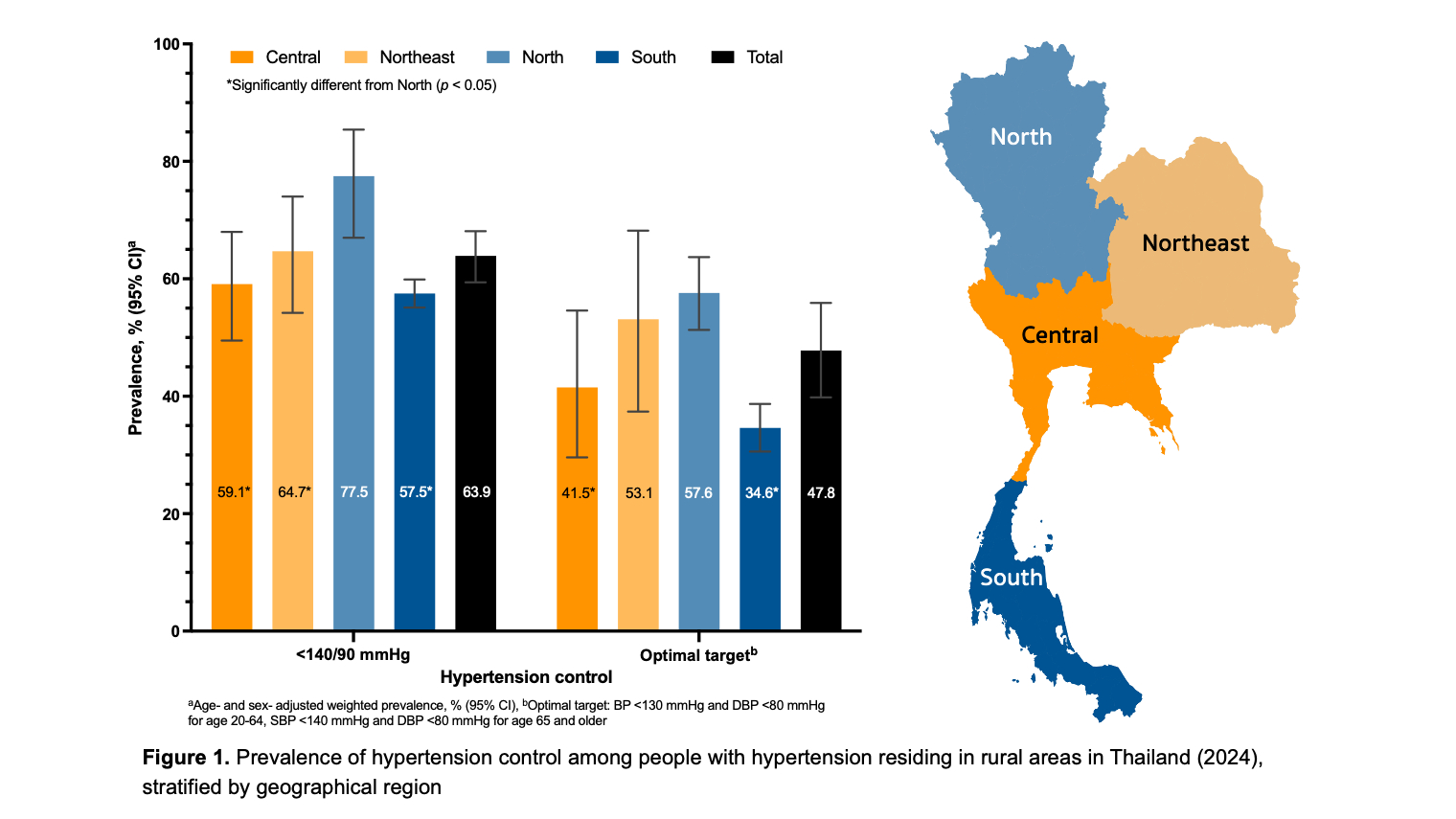
Abstract Body: Background One-fourth of Thai adults have hypertension (HTN), and an estimated half of those (~7 million) reside in rural areas. The characteristics and clinical outcomes of people with HTN in rural communities have not been comprehensively characterized. We aim to examine factors associated with HTN control and overall cardiovascular health (CVH) among Thai people with HTN in rural communities nationwide. Methods We conducted a cross-sectional study in rural areas of Thailand in 2024. A multistage sampling scheme was used, and adults with HTN receiving care from 36 primary care units across four geographical regions participated in the study. The study involved a face-to-face interview, medical record review, physical examination, and laboratory testing. We used multilevel logistic regression modeling to examine factors associated with BP control. Results A total of 1,000 participants were included in the analysis - mean participants aged 64.1 years, 68% women. HTN control rates were 63.9% at a threshold of <140/90 mm Hg. Using an optimal threshold definition of <130/80 mmHg in those aged 20–64 and <140/80 in those aged 65 and above, HTN control rates declined to 47.8%. These rates varied by geographical region (Figure 1). Factors associated with HTN control included demographic characteristics, physical activity, routine use of salt to food before eating, and obesity. The prevalence of achieving the target LDL cholesterol level (<100 mg/dL) was 41.3%, while the prevalence of BMI ≥ 25 kg/m2 was 51.5%. The prevalence of CVD complications was as follows: stroke (10.3%), ischemic heart disease (1.4%), atrial fibrillation (1.2%), and left ventricular hypertrophy (6.0%). For those without a history of CVD, the prevalence of high predicted 10-year CVD risk (>10%) was 7.9% overall, with rates of 12.7% in men and 5.0% in women. According to Life’s Essential 8, the percentages for poor, moderate, and high CVH were 8.8%, 83.3%, and 7.8%, respectively, and these rates varied by sex, age, and geographical region. Conclusion We highlight an opportunity to improve the HTN control rate among Thai adults in rural areas. Socioeconomic status, lifestyle, and metabolic factors are associated with BP control. CVD complications were still a concern for this population. The study findings will inform health programs to improve HTN care and heart health and will guide government healthcare planning for rural communities in Thailand.
Sakboonyarat, Boonsub
(
Phramongkutklao College of Medicine
, Bangkok , Thailand )
Lakshminarayan, Kamakshi
(
University of Minnesota
, Minneapolis , Minnesota , United States )
Rangsin, Ram
(
Phramongkutklao College of Medicine
, Bangkok , Thailand )
Mungthin, Mathirut
(
Phramongkutklao College of Medicine
, Bangkok , Thailand )
Jongcherdchootrakul, Kanlaya
(
Phramongkutklao College of Medicine
, Bangkok , Thailand )
Poovieng, Jaturon
(
Phramongkutklao College of Medicine
, Bangkok , Thailand )
Author Disclosures:
Boonsub Sakboonyarat:DO have relevant financial relationships
;
Research Funding (PI or named investigator):University of Minnesota:Past (completed)
| Kamakshi Lakshminarayan:DO have relevant financial relationships
;
Consultant:Abbott Labs:Active (exists now)
| Ram Rangsin:No Answer
| Mathirut Mungthin:No Answer
| Kanlaya Jongcherdchootrakul:No Answer
| Jaturon Poovieng:No Answer